Pages

Showing posts with label politics. Show all posts

Monday, September 26, 2011

Monday Afternoon in Williamsburg: Dominican Election Poster on Graham and Metropolitan Avenues


Like the U.S., the D.R. is looking forward to the next election, and candidates' workers have been "sniping" (putting up posters) Metropolitan Avenue and Graham Avenue with signs exhorting people to get out and vote for their candidates for the Chamber of Deputies. This is from the leftist opposition party PRD, and we're sure there will soon be other posters around the neighborhood.

Friday, April 2, 2010

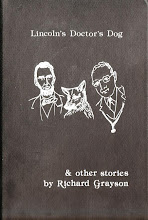
HORSING AROUND IN POLITICS by Richard Grayson now available at Amazon Kindle Store


Richard Grayson's Horsing Around in Politics is now available at Amazon's Kindle Store for 99¢.

Here is the promo material for the 143-page $7.99 paperback edition from Art Pants Company:

In these alternatingly hilarious and earnest memoirs, satirist and political activist Richard Grayson recounts moments in the 1960s, 1970s, and 1980s on the campaign trail and the political barricades.

There are reports from the police riot of the 1968 Democratic National Convention in Chicago, and the takeover of the party by Grayson's young peaceniks four years later in Miami Beach; scenes from the New York headquarters of the October 1969 Moratorium, a nationwide general strike to protest the war in Vietnam; accounts of the first Earth Day celebration in Brooklyn, with a bike-riding Gov. Nelson Rockefeller and a rock band dressed as pigs singing about pollution, and later the same year, a now-historic 1970 "Women's Lib" action to celebrate the fiftieth anniversary of female suffrage featuring feminist icons Betty Friedan and Bella Abzug.

Grayson also reports on his own political mischief-making: getting 26% of the 1982 vote for a seat on the Town Council in Davie, Florida, running on a platform of giving horses the right to vote; creating a political scandal involving Florida lawmakers in "Legislators in Love," and the wacky press coverage in USA Today, The Wall Street Journal, U.S. News & World Report, The New York Times, People Magazine, and many news outlets of Grayson's joke candidacy for President in 1984, when he famously picked as his running mate the star of TV's "Falcon Crest," the actress Jane Wyman, because of "her experience in dumping Ronald Reagan."

Monday, March 29, 2010

Monday Night in Williamsburg: Story-Based Strategies for Action Design with Doyle Canning + Patrick Reinsborough at The Change You Want to See Gallery


This evening, just as the emergency workers at the rubble of 34 Conselyea Street's building collapse were quitting for the night, we walked over a few blocks to Not an Alternative's space at 84 Havemeyer, The Change You Want to See Gallery, for "Decolonizing the Revolutionary Imagaination: Story-Based Strategies for Action Design," an exciting talk by SmartMeme's Doyle Canning and Patrick Reinsborough, authors of Re:Imagining Change.

We got to the space early but it soon filled up. Video cameras were livestreaming the event, starting when Beka Economopoulos came out, and before her introduction, talked about Not an Alternative’s work around the interstices of art, activism, technology and theory and its growth as a group and movement stemming out of the 2004 Republican National Convention demonstrations.

Not An Alternative Product from Not An Alternative on Vimeo.


She talked also about the power structure’s idea of artists as engines of gentrification who are then priced out of the neighborhoods whose transformation they triggered, and how 84 Havemeyer Street was on the verge of becoming unaffordable with Williamsburg’s changes. Then she segued to the relevance of the work of SmartMeme and Patrick and Doyle in the local campaign to “open-source the city.”

Patrick began their program by discussing how movements for social, economic and environmental justice need to become better storytellers and to more effectively strategize what narrative frames and devices they use in their efforts. SmartMeme provides training tools, partnerships, and conceptual help for movements, and out of this work came the basis for Patrick and Doyle’s book, which includes case studies, tools and sample workshops.

Basically the question they are both asking and answering is: How can social movements use the power of narrative? We are in a moment in history when dramatic change seems to be accelerating exponentially, and the development of shared narratives around social movements is essential to achieving their goals.

The speakers gave some examples of successful local movements they've helped, like this environmental group in the Northwest.

Social justice-minded people, Doyle said, must frame the conversation effectively, for this can be more crucial than networking. She and Patrick both spoke about the power of branding, about the irresistible human impulse toward narrative, and about the concept of memes. (They seemed to define memes as units of self-replicating cultural information and frames as the larger story structures and boundaries of particular narratives.)

They had us pair up, with one partner telling a story to another. (We spoke with a friend of theirs who’s associated with the Witness.org.) Then, after some feedback, Patrick and Doyle spoke about what we’ve always talked about when we‘ve talked about writing fiction in our creative writing classes; namely, that crucial elements of storytelling include: conflict, characters, imagery (the lethal “show, don’t tell”), foreshadowing, and shared underlying assumptions between the teller and her audience.

Patrick and Doyle spoke about the difference between truth and meaning; leftist groups often think that if they just present the facts clearly enough, people will be on their side, but the salient and satisfactory lies that make good stories prove otherwise. (Our own thought: many Americans did believe in “death panels” in the health care bill because it was a satisfying story that meshed with their political preconceptions).

“Humans are narrative animals,” Patrick said. (No kidding.) “The currency of narrative is not truth but rather meaning.” (Double no kidding, though we guess it’s news to some.) He discussed how our conception of Santa Claus, and thereby Christmas, stems from the successful narrative strategies of the 1920s Coca-Cola ad campaigns. (Calling Ed Bernays!)

Doyle showed us Heidi Cody's corporate alphabet, and yes, audience members could name the corporation behind every last letter, almost in a visceral way. As Doyle said, the real obstacle in trying to change things is not ignorance – what people don’t know – but what they DO know, the dominant stories in our culture. (The narrative of the first Thanksgiving, with its attendant imagery, was just one of the examples they gave; another was the Hurricane Katrina white “finders”/black
“looters” captioned news photos.)

Anyway, this was a thoughtful and exciting presentation (reminding us a lot of a book we just read, Farhad Manjoo’s True Enough: Learning to Live in a Post-Fact Society), and we were as impressed with the questions asked by others in the audience as by the responses of Doyle Canning and Patrick Reinsborough. Re:Imagining Change looks like it can provide a lot of much-needed information for social activist groups.

Tuesday, August 5, 2008

Monday in Night in DUMBO: "The Candidate" at the new Galapagos Art Space


At 6:15 p.m. last evening, on our way to the G train, we mailed in our early ballot for the September 2 Arizona Republican primary (that's right: we are currently registered in the GOP because there's this really weird liberal Republican running for Congress from a Phoenix district that we like).

At 7 p.m., we were at the new Galapagos Arts Space facility on Main Street in Dumbo, just one block from the water at, duh, Water Street. While we miss having the old Galapagos close by to our Dumbo Books HQ (which is, anomalously and anonymously, in Williamsburg), this new space is much larger, more inviting and comfortable, prettier and greener - well worth the subway ride and the pleasant walk from the A/C High Street exit (if we avoid getting killed crossing where cars rush off the BQE without stopping).

Holding 175 seated and around 230 standing, Galapagos continues to focus on hosting "theater, dance, performance art, cinema, puppetry, classical and world music, lectures, literary events and fundraising events for non profits and local cultural groups," director Robert Elmes told Gothamist (to whom we thank for the photos of the exterior on top and the interior below)

The curved seating, over the same kind of walkway over a pool that greeted visitors when they entered the old North 6th Street space, provides unobstructed views of the huge stage and makes the audience area cozy and comfortable.

There's a mezzanine above, and we walked around exploring a little, impressed by the dark, cool hallway with a feel that's both totally contemporary and classic. And the men's bathroom has faucetless sinks and the most futuristic urinal we've seen lately!

And as WNYC's Leonard Lopate, who introduced the night's event - which we think was the first in the new space - noted, Galapagos is New York City’s first LEED-certified 'green' cultural venue.

Lopate talked a bit about the "The Candidate," a film that we first saw on Tuesday, July 4, 1972, according to our diary entry, which is in our new book Summer in Brooklyn: 1969-1975:
A sunny & warm Fourth of July. . .So early today, right after breakfast, I drove into the city - the traffic was fairly light. I parked at Third Ave. & 58th St. & first did some shopping for herbs. Then I got in line at the Sutton Theater & went in to see "The Candidate." It was superb, the best film I've ever seen about contemporary American liberal/media politics. Robert Redford was great as the young Democratic liberal & Don Porter came over well as his conservative Republican opponent. [Then] I drove back into Brooklyn & enjoyed a burger with smothered onions at the counter of Junior's.

Having just turned 21 (and finally eligible to vote - back then, you could only drink at 18, which didn't do us any good), we were pretty involved in Brooklyn politics, having worked in campaigns since 1964, when we stood on Avenue N outside the American Legion hall handing out "Get on the Johnson, Humphrey, Kennedy Team" leaflets.

We'd just worked on the New York primary for George McGovern and getting our friend Mark Moskovitz (called "Mikey" in the book) elected a convention delegate from our district (back then, the delegates' names, not the presidential candidate, were the ones on the late June primary ballot).

Here's our entry for five days after we saw the film, Sunday, July 9, 1972 (also in Summer in Brooklyn), when we were staying at our grandparents' Miami Beach condo the day before the opening of that year's Democratic National Convention:

I just got home after getting some groceries at Publix, and everyone must have gone to the beach or someplace.

We all went to the Diplomat at 10 AM for the Youth Caucus. There were about 50 delegates under 30 from N.Y., but the whole thing seemed sort of silly. There’s a Women’s Caucus and a Gay Caucus and Black, Latino and Jewish Caucuses. I made a joke about everyone being the Captive of the Caucuses (Caucasus) to Leon, figuring he might get it because he’s going to grad school in Comp Lit. But he just looked at me blankly, so I don’t think he’s read Andrei Bitov. Mikey just sat there saying nothing, and seeing how other people like Mike Gerstein sounded, I think he did the right thing.

In the lobby, I ran into Rob, who took me to see Liz Holtzman, who I guess is looking for a Congressional staff since she won the primary against Manny Celler. I can’t imagine what she’ll look like if she serves 50 years in the House like he did. The big thing, Liz said, is the seating of the Calif. delegation – if McGovern gets all the delegates, he’s got the nomination. But isn’t it kind of hypocritical to rely on the state’s winner-take-all primary rules when he chaired the committee to reform the process?

It took a long time for all the 278 state delegates to caucus. There’s a fight for the chairmanship of the N.Y. delegation between Joe Crangle, the state chairman; Mary Ann Krupsak, an upstate legislator; and Bronx Boro Pres. Bob Abrams. Mayor Lindsay looked tanned and handsome, as usual the Golden Boy even if he did horrible in the primaries; Bella Abzug was in a feisty mood and a floppy hat; the Queens boss Marty Troy dressed like a slob; and sanitation commish Jerry Kretchmer wore a T-shirt. I also spotted Al Lowenstein, Herman Badillo, and Arthur Schlesinger in his bow tie. There was a minor revolt as the diehard reformers tried to oust Crangle from the Rules Committee, but he survived.

Mikey and I had lunch in the coffee shop, then I went with Leon and Skip down Collins Ave. to the candidates’ HQ at the various hotels. We collected lots of buttons and posters from the campaigns of Muskie, Humphrey, and Chisholm, and we put this big poster, “Wilbur Mills for President,” with his big red nose, on the hood of the Pontiac. At the Doral, Skip tried to say, “We’re with Mills,” but I don’t think they believed we were workers for the chairman of the, as it’s always called, "powerful Ways and Means Committee."

We were trying to find Gene McCarthy HQ, but the people at the hotel where it was supposed to be said they’d never even heard of him. We also went to the HQ of the two idiotic Vice Presidential candidates, Alaska Sen. Mike Gravel (who I actually shook hands with) and former Mass. Gov. Endicott “Chub” Peabody. (There's a joke in Updike's Couples: Q: What three cities in Mass. are named for him? A: Endicott, Peabody, and Marblehead.)

Then there was a cocktail party for the N.Y. delegation back at the Diplomat, but they served just watery punch and stale pretzels, not real cocktails. They turned the cameras on only when Big John came in to mingle. I went up to Mary Lindsay and started telling her I first met her when I was only 14 and they were campaigning on the beach at Rockaway, but she simply nodded and smiled.

The atmosphere in this town is absurd. The Zippies and others are downtown camping out in Flamingo Park, and the Convention Hall has barbed wire around it.

Okay, it's not brilliant writing, but we were just kids! There's more from the '72 convention in Summer in Brooklyn if you're interested. But enough nauseating self-promotion.

"The Candidate" still holds up amazingly well. If you want to hear smart people talk about it, you can join us in tuning in today's Leonard Lopate show on WNYC to hear a discussion that's part of his Political Projections: Campaigning Goes to Hollywood series.

For us, Michael Ritchie was probably the shrewdest Hollywood director commenting on the American scene in the early 1970s (we still remember loving his incredible beauty-pageant satire, "Smile," in the old underground Paramount theater in the old Gulf + Western Building on Columbus Circle), and in "The Candidate," he employs a partial cinema-verite style to show exactly what campaigns were like back then.

Robert Redford is amazing as the dynamic but sometimes clueless Democrat whom political operative Peter Boyle has made into a credible U.S. Senate candidate from California. Redford's at his best here; he's got "the power," as the candidate's wife, who should know, says, and Boyle seems to have presciently channeled later campaign managers like Lyn Nofziger and Hamilton Jordan.

The film also has great supporting performances by Don Porter (known to us mostly as Ann Sothern's boss and Sally Field's dad in the sitcoms of our childhood, "Private Secretary" and "Gidget") as Republican incumbent senator who's a master of the old politics but not so good at what's coming; Allen Garfield as the media guru who creates TV commercials (think David Garth); and old Melvyn Douglas as Redford's father, a crusty former California Governor. (Douglas, of course, was in real life married to a U.S. Senate candidate from California, who, if she hadn't been smeared as "the Pink Lady" by Richard Nixon, might have won and saved the United States much misery.)

"The Candidate"'s realism probably comes most from its Oscar-winning screenplay by Jeremy Larner, who was the prime speechwriter for Eugene McCarthy in his 1968 antiwar campaign for President (we still remember the ratty old McCarthy HQ storefront on Flatbush Avenue and Avenue I). A sarcastic reference to "those brilliant journalists, Evans and Novak," for example, seemed exactly right (and, given the day's news about Novak's retirement, still relevant).

Active in numerous campaigns back then, we found no false notes. Seeing the window full of McKay for Senator campaign signs, buttons and ribbons in a Manhattan storefront the film company had rented, a lot of people thought it was for a real candidate - and wanted to voted for him. And if you don't see any relationship to the fictional Bill McKay/Crocker Jarman race and Obama vs. McCain, we'll eat our 1972 McGovern-for-President straw hat.

Anyway, we had a great time last night - the facility hadn't gotten their liquor license yet, so when we stepped up to the bar and asked for something nonalcoholic, they gave us a big glass of Diet Coke for free - and as we walked out of the fantastic new Galapagos Art Space, we saw on the Watchtower clock that it was 9:24 p.m. The evening had gone fast, and we're looking forward to going back to Galapagos to see some live performances next time.

Thursday, June 3, 2004

ÜBER features Richard Grayson's "Naming a New Cabinet"


ÜBER features Richard Grayson's "Naming a New Cabinet" today (Thursday, June 3, 2004).

Friday, June 25, 1999

Richard Grayson's column in Boca Raton News, citing Columbine massacre, calls for banning C-SPAN as bad example for nation's youth


Richard Grayson's column in the Boca Raton News today (Friday, June 25, 1999), citing the Columbine massacre, calls for banning C-SPAN as a bad example for our nation's youth.

Saturday, November 5, 1983

Palm Beach Post covers Presidential Candidates Debate Featuring Richard Grayson


The Palm Beach Post today (Saturday, November 5, 1983) featured an article on last night's Presidential candidates' debate at the Cross County Mall in West Palm Beach featuring Richard Grayson, Elijah the Prophet, Richard Kay and George Britt:

Four men who won’t be elected president in 1984 told tens of shoppers at the Cross County Mall in West Palm Beach last night why they should be.
“Who Else is Running for President?” said the sign in the middle of the mall, inviting shoppers to the candidates’ forum. “Who Cares?” was the clear but unspoken answer the four candidates received.

An unofficial straw poll of shoppers showed they preferred the 7:45 p.m. showing of The Dead Zone and the beckoning aroma of Mama Leone’s pizza to the ideas of George Britt, Richard Kay, Richard Grayson or Elijah the Prophet.

“Who are these guys?” was how mall publicist David Citron introduced them. Citron dreamed up the Florida Presidential Forum, which goes on the road today to Lauderdale Lakes and North Miami Beach.

“The difference between them and the Big Seven candidates,” Citron said, “is money.”

And perhaps style.

Kay, who lost the presidential election in 1980 and a North Palm Beach Village Council election earlier this year, was arrested in New Hampshire last week when he wouldn’t leave the state Democratic convention.

Britt, an unsuccessful candidate for mayor of Philadelphia, has a 15-year-old campaign manager in Texas. Britt ran his mother for president in 1980.

Elijah the Prophet, from New York City, is a self-styled visionary who has a day job with Western Electric and campaigns for world government headed by himself.

“It’s a pretty sad state of affairs when people like us have to run for president,” said Grayson, an English teacher and freelance writer from North Miami Beach. He wore running shoes, jeans and a sport jacket that was too small.

Fifteen candidates promised to be there last night. Only four showed up. A candidate from Alabama got lost in Hollywood, a couple were stranded by the bus strike, one broke his foot and the mother of another died.

While the other candidates had platforms, Grayson had a routine. "Do rich people from Palm Beach shop at this mall? They don't? Then I'll have to take this line out of my speech: If it weren't for rich people, the world would be a poorer place.

The answer to all the nation's ills, according to Grayson, is "immediate nuclear war." If he is elected, he will move the capital to Davenport, Iowa. "That solves the problem of getting the riffraff out of Washington," he said.

Grayson claimed he's asked "Falcon Crest" star and President Reagan's ex-wife, Jane Wyman, to be his vice presidential running mate: "She's already dumped Ronald Reagan once and has the experience to dump him again". . .

Monday, July 18, 1983

Athens (Ga.) Daily News story on Richard Grayson: "Presidential Contender Calls for Nuclear War"


The Athens (Ga.) Daily News has an article today (Monday, July 18, 1983) reporting on presidential candidate Richard Grayson's call for immediate nuclear war.