A Writer’s Diary Entries From Early March, 1997 | Richard Grayson


Richard Grayson has been keeping a daily diary compulsively since the summer of 1969, when he was an 18-year-old agoraphobic about to venture out into the world -- or at least the world around him in Brooklyn. His diary, approximately 600 words a day without missing a day since August 1, 1969, now totals over 9 million words, rivaling the longest diaries ever written.
But Grayson is not merely an eccentric with graphomania. His nonfiction has appeared in PEOPLE, THE NEW YORK TIMES, THE ORLANDO SENTINEL, THE SAN JOSE MERCURY NEWS, THE ARIZONA REPUBLIC, THE NEW YORK POST and numerous other periodicals.
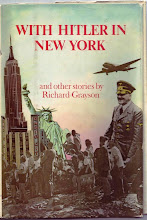
ROLLING STONE called Grayson’s first short story collection, WITH HITLER IN NEW YORK, published in 1979, “where avant-garde fiction goes when it becomes stand-up comedy,” and NEWSDAY said, “The reader is dazzled by the swift, witty goings-on.”
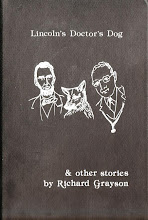
Grayson’s other short story collections have also received acclaim. LIBRARY JOURNAL called LINCOLN’S DOCTOR’S DOG (1982) “excellent” and said of I BRAKE FOR DELMORE SCHWARTZ (1983) that “Grayson is a born storyteller and standup talker.” THE NEW YORK TIMES BOOK REVIEW said Grayson’s I SURVIVED CARACAS TRAFFIC (1996) was “entertaining and bizarre” and “consistently, even ingeniously funny.”
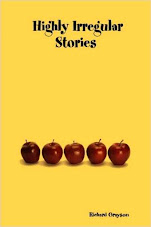
PUBLISHERS WEEKLY called Grayson’s THE SILICON VALLEY DIET (2000) “compulsively talky and engagingly disjunctive”; KIRKUS DISCOVERIES termed Grayson “an audacious and wickedly smart comedic writer” in its review of HIGHLY IRREGULAR STORIES (2005); and THE PHILADELPHIA INQUIRER, reviewing AND TO THINK THAT HE KISSED HIM ON LORIMER STREET (2006), said, “Grayson has a fresh, funny voice.”
Grayson’s seventeenth compilation of diary entries, AUTUMN IN GAINESVILLE, alternates among the three fall seasons during the years he worked as a staff attorney in social policy at University of Florida law school think tank.
Taking place from 1994 to 1996, Grayson's diary chronicles his adventures as a legal researcher, college instructor, gay rights activist, candidate for Congress, local media presence on radio, TV and newspapers, and also a contributor to and columnist for New Jersey Online.
Working for a education project called Schoolyear 2000 and one of the first experiments in web-based journalism projects, fighting an anti-gay referendum in Alachua County, shaping the concept of a center for genome sciences, still questioning himself and the culture at every turn, Grayson moves into his mid-40s and by the book's end, he finds himself surprised with a book contract for a new collection of short stories and prepares to move on to the next, unknown, phase of his life.
Grayson has published the first six volumes of the diaries of his late teens and twenties as THE BROOKLYN DIARIES, featuring SUMMER IN BROOKLYN: 1969-1975; WINTER IN BROOKLYN: 1972-73; SPRING IN BROOKLYN, 1975; AUTUMN IN BROOKLYN, 1978; MORE SUMMERS IN BROOKLYN: 1976-1979; and A YEAR IN ROCKAWAY, 1980.
The second six volumes of his diaries have been published as THE EIGHTIES DIARIES, which include SOUTH FLORIDA WINTERS, 1981-1984; LATE SPRING IN SUNRISE, 1982; WEST SIDE SUMMERS, 1984-1987; INDIAN SUMMER: PARK SLOPE, 1985; SPRINGTIME IN LAUDERHILL, 1986; and EIGHTIES’ END: AUTUMN, 1987-1989.
AUTUMN IN GAINESVILLE:1994-1996 is the fifth volume of THE NINETIES DIARIES, following SUMMER IN NEW YORK: 1990, LAST SUMMER IN ROCKAWAY: 1991, FIRST FALL IN GAINESVILLE: 1991, and SPRING IN GAINESVILLE: 1992-1994.


Arthur Evans, who helped form and lead the movement that coalesced after gay people and their supporters protested a 1969 police raid on the Stonewall Inn, a Greenwich Village gay bar, died on Sunday at his home in San Francisco. He was 68.
Arthur Evans and others created the Gay Activists Alliance in an effort to present a more assertive front than other groups.
The cause was a heart attack, his friend Hal Offen said. Mr. Evans was found to have an aortic aneurysm last year.
Mr. Evans was not at the Stonewall disturbances, but they fueled in him a militant fervor and inspired him to join the Gay Liberation Front, an organization started during the wave of gay assertiveness that followed.
For Mr. Evans and other militants [including Jim Owles], however, the group was not assertive enough. They worried that it was diluting its effectiveness by taking stands on issues beyond gay rights — opposing the Vietnam War and racial discrimination, for example. So in December 1969 they split off to found the Gay Activists Alliance, choosing a name to suggest more aggressive tactics.
Based in New York, the alliance became a model for gay rights organizations nationwide, pushing in New York for legislation to ban discrimination against gay men and lesbians in employment, housing and other areas. Mr. Evans wrote its statement of purpose and much of its constitution, which began, “We as liberated homosexual activists demand the freedom for expression of our dignity and value as human beings.”
To attract attention the alliance staged what its members called “zaps,” confrontations with people or institutions that they believed discriminated against gay people. Among other incidents, they confronted Mayor John V. Lindsay of New York, went to television studios to protest shows perceived as anti-gay, demanded gay marriage rights at the city’s marriage license bureau, and demonstrated at the taxi commission against a regulation, since abolished, requiring gay people to get a psychiatrist’s approval before they could be allowed to drive a taxi.
In the fall of 1970, Mr. Evans and others showed up at the offices of Harper’s Magazine in Manhattan to protest an article it had published sharply criticizing gay people and their lifestyle. It was Mr. Evans’s idea to bring a coffee pot, doughnuts, a folding table and chairs for a civilized “tea party.” When the editor, Midge Decter, refused to print a rebuttal as the group demanded, Mr. Evans erupted.
“You knew that this article would contribute to the oppression of homosexuals!” he yelled, according to the 1999 book “Out for Good: The Struggle to Build a Gay Rights Movement in America” by Dudley Clendinen, a former reporter for The New York Times, and Adam Nagourney, a current Times reporter. “You are a bigot, and you are to be held responsible for that moral and political act.”
Arthur Evans was born on Oct. 12, 1942, in York, Pa. His father was a factory worker who had dropped out of elementary school, and his mother ran a beauty shop in the front room of the family house. Mr. Evans attended Brown University on a scholarship and there joined a group of self-styled “militant atheists.”
He left Brown after three years and headed for Greenwich Village, having read in Life magazine that it welcomed gay people. In New York, he transferred to City College and switched his major from political science to philosophy. Graduating in 1967, he entered the doctoral program in philosophy at Columbia, where he studied ancient Greek philosophy and participated in antiwar protests.
But, becoming disenchanted with academia, he withdrew from Columbia in 1972 and moved to rural Washington State, where he and a companion, calling themselves the Weird Sisters Partnership, homesteaded a small patch of forest land and lived in a tent.
When the Washington experiment failed, Mr. Evans and his companion moved to San Francisco. There, he and Mr. Offen opened a Volkswagen repair business they named the Buggery.
While living in Washington, Mr. Evans had spent his winters in Seattle researching the historical origins of the counterculture. After settling in San Francisco, he wrote “Witchcraft and the Gay Counterculture,” a 1978 book tracing homophobic attitudes to the Middle Ages, when people accused of witchcraft, the book contended, were being persecuted in part for their sexuality, often their homosexuality.
He went on to write “Critique of Patriarchal Reason” (1997), arguing that misogyny and homophobia have influenced supposedly objective fields like logic and physics.
Mr. Evans is survived by his brother, Joe.
Growing up, Mr. Evans had hid his sexual orientation, though he himself was aware of it at 10, he said. By November 1970, when he was scheduled to appear on “The Dick Cavett Show” with other gay leaders, he had still not told his parents that he was gay. But, by his account, he did tell them he was going to be on national television. Thrilled, they told friends and neighbors to tune in.
Mr. Evans later said he regretted his handling of the matter.


MOON OVER MOLDOVA presents three stories by acclaimed writer Richard Grayson. In "Moon Over Moldova," while a Southern college town is rocked by a gay rights referendum, a grad student finds even a "backward" former Soviet republic a refuge from personal and political turmoil. In "Boys Club," a queercore band's bassist has a crush on the group's insufferably punker-than-thou lead singer. And "Anything But Sympathy" artfully conflates stories about elderly nursing home residents; the real-life power broker and "uncrowned king of Florida," banker Ed Hall; young actors and others dying too young of AIDS; and a thirtysomething teacher's affair with a teenage boy who seems to know a lot more than he does. Publishers Weekly called Richard Grayson's uniquely quirky narratives "lighter and funnier than most gay fiction" and The Sun-Sentinel noted: "Although memorial services for young men seem commonplace in Grayson's fiction, the stories are not tragedies. They are funny, intelligently written and original."