Pages

Showing posts with label Scribd. Show all posts

Thursday, August 2, 2012

Richard Grayson's "AUTUMN IN GAINESVILLE" Now Available as Trade Paperback or eBook at Amazon Kindle Store

This week Superstition Mountain Press published Richard Grayson's Autumn in Gainesville. It is available in a 242-page trade paperback edition for $13.99, as well as an e-book published by Art Pants Company available at the Amazon Kindle store for 99 cents.
The promo stuff says in part:
Richard Grayson has been keeping a daily diary compulsively since the summer of 1969, when he was an 18-year-old agoraphobic about to venture out into the world -- or at least the world around him in Brooklyn. His diary, approximately 600 words a day without missing a day since August 1, 1969, now totals over 9 million words, rivaling the longest diaries ever written.
But Grayson is not merely an eccentric with graphomania. His nonfiction has appeared in PEOPLE, THE NEW YORK TIMES, THE ORLANDO SENTINEL, THE SAN JOSE MERCURY NEWS, THE ARIZONA REPUBLIC, THE NEW YORK POST and numerous other periodicals.
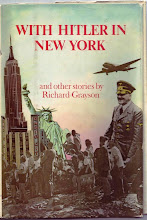
ROLLING STONE called Grayson’s first short story collection, WITH HITLER IN NEW YORK, published in 1979, “where avant-garde fiction goes when it becomes stand-up comedy,” and NEWSDAY said, “The reader is dazzled by the swift, witty goings-on.”
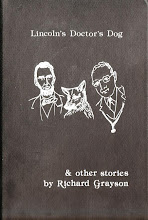
Grayson’s other short story collections have also received acclaim. LIBRARY JOURNAL called LINCOLN’S DOCTOR’S DOG (1982) “excellent” and said of I BRAKE FOR DELMORE SCHWARTZ (1983) that “Grayson is a born storyteller and standup talker.”   THE NEW YORK TIMES BOOK REVIEW said Grayson’s I SURVIVED CARACAS TRAFFIC (1996) was “entertaining and bizarre” and “consistently, even ingeniously funny.”
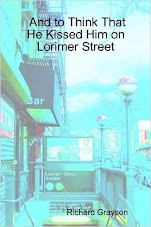
PUBLISHERS WEEKLY called Grayson’s THE SILICON VALLEY DIET (2000) “compulsively talky and engagingly disjunctive”; KIRKUS DISCOVERIES termed Grayson “an audacious and wickedly smart comedic writer” in its review of HIGHLY IRREGULAR STORIES (2005); and THE PHILADELPHIA INQUIRER, reviewing AND TO THINK THAT HE KISSED HIM ON LORIMER STREET (2006), said, “Grayson has a fresh, funny voice.”
Grayson’s seventeenth compilation of diary entries, AUTUMN IN GAINESVILLE, alternates among the three fall seasons during the years he worked as a staff attorney in social policy at University of Florida law school think tank.
Taking place from 1994 to 1996, Grayson's diary chronicles his adventures as a legal researcher, college instructor, gay rights activist, candidate for Congress, local media presence on radio, TV and newspapers, and also a contributor to and columnist for New Jersey Online.
Working for a education project called Schoolyear 2000 and one of the first experiments in web-based journalism projects, fighting an anti-gay referendum in Alachua County, shaping the concept of a center for genome sciences, still questioning himself and the culture at every turn, Grayson moves into his mid-40s and by the book's end, he finds himself surprised with a book contract for a new collection of short stories and prepares to move on to the next, unknown, phase of his life.
Grayson has published the first six volumes of the diaries of his late teens and twenties as THE BROOKLYN DIARIES, featuring SUMMER IN BROOKLYN: 1969-1975; WINTER IN BROOKLYN: 1972-73; SPRING IN BROOKLYN, 1975; AUTUMN IN BROOKLYN, 1978; MORE SUMMERS IN BROOKLYN: 1976-1979; and A YEAR IN ROCKAWAY, 1980.
The second six volumes of his diaries have been published as THE EIGHTIES DIARIES, which include SOUTH FLORIDA WINTERS, 1981-1984; LATE SPRING IN SUNRISE, 1982; WEST SIDE SUMMERS, 1984-1987; INDIAN SUMMER: PARK SLOPE, 1985; SPRINGTIME IN LAUDERHILL, 1986; and EIGHTIES’ END: AUTUMN, 1987-1989.
AUTUMN IN GAINESVILLE:1994-1996 is the fifth volume of THE NINETIES DIARIES, following SUMMER IN NEW YORK: 1990, LAST SUMMER IN ROCKAWAY: 1991, FIRST FALL IN GAINESVILLE: 1991, and SPRING IN GAINESVILLE: 1992-1994.
The book is also available on Lulu and Scribd for free online reading.

Saturday, May 26, 2012

Richard Grayson's "SPRING IN GAINESVILLE" Now Available as Trade Paperback or eBook at Amazon Kindle Store


This week Superstition Mountain Press published Richard Grayson's Spring in Gainesville. It is available in a 210-page trade paperback edition for $11.99, as well as an e-book published by Art Pants Company available at the Amazon Kindle store for 99 cents.


The promo stuff says in part,
Richard Grayson has been keeping a daily diary compulsively since the summer of 1969, when he was an 18-year-old agoraphobic about to venture out into the world -- or at least the world around him in Brooklyn. His diary, approximately 600 words a day without missing a day since August 1, 1969, now totals over 9 million words, rivaling the longest diaries ever written.
But Grayson is not merely an eccentric with graphomania. His nonfiction has appeared in PEOPLE, THE NEW YORK TIMES, THE ORLANDO SENTINEL, THE SAN JOSE MERCURY NEWS, THE ARIZONA REPUBLIC, THE NEW YORK POST and numerous other periodicals. ROLLING STONE called Grayson’s first short story collection, WITH HITLER IN NEW YORK, published in 1979, “where avant-garde fiction goes when it becomes stand-up comedy,” and NEWSDAY said, “The reader is dazzled by the swift, witty goings-on.”
Grayson’s other short story collections have also received acclaim. LIBRARY JOURNAL called LINCOLN’S DOCTOR’S DOG (1982) “excellent” and said of I BRAKE FOR DELMORE SCHWARTZ (1983) that “Grayson is a born storyteller and standup talker.” THE NEW YORK TIMES BOOK REVIEW said Grayson’s I SURVIVED CARACAS TRAFFIC (1996) was “entertaining and bizarre” and “consistently, even ingeniously funny."
PUBLISHERS WEEKLY called Grayson’s THE SILICON VALLEY DIET (2000) “compulsively talky and engagingly disjunctive”; KIRKUS DISCOVERIES termed Grayson “an audacious and wickedly smart comedic writer” in its review of HIGHLY IRREGULAR STORIES (2005); and THE PHILADELPHIA INQUIRER, reviewing AND TO THINK THAT HE KISSED HIM ON LORIMER STREET (2006), said, “Grayson has a fresh, funny voice.”
Grayson’s sixteenth compilation of diary entries, SPRING IN GAINESVILLE, alternates among his three spring semesters as an over-40 law student at the University of Florida. Taking place from 1992 to 1994, and coming after FIRST FALL IN GAINESVILLE, Grayson's diary from his first semester of law school, SPRING IN GAINESVILLE gives the reader a unique, thoughtful and idiosyncratic perspective on the day-to-day process by which American attorneys are made.
Grayson has published the first six volumes of the diaries of his late teens and twenties as THE BROOKLYN DIARIES, featuring SUMMER IN BROOKLYN: 1969-1975; WINTER IN BROOKLYN: 1972-73; SPRING IN BROOKLYN, 1975; AUTUMN IN BROOKLYN, 1978; MORE SUMMERS IN BROOKLYN: 1976-1979; and A YEAR IN ROCKAWAY, 1980.
The second six volumes of his diaries have been published as THE EIGHTIES DIARIES, which include SOUTH FLORIDA WINTERS, 1981-1984; LATE SPRING IN SUNRISE, 1982; WEST SIDE SUMMERS, 1984-1987; INDIAN SUMMER: PARK SLOPE, 1985; SPRINGTIME IN LAUDERHILL, 1986; and EIGHTIES’ END: AUTUMN, 1987-1989.
SPRING IN GAINESVILLE: 1991-1994 is the fourth volume of THE NINETIES DIARIES, following SUMMER IN NEW YORK: 1990, LAST SUMMER IN ROCKAWAY: 1991, and FIRST FALL IN GAINESVILLE: 1991.
The book is also available on Scribd and Lulu for free online reading.

Wednesday, May 16, 2012

Richard Grayson's "LAST SUMMER IN ROCKAWAY" Now Available as Trade Paperback or eBook at Amazon Kindle Store

This week Superstition Mountain Press published Richard Grayson's Last Summer in Rockaway. It is available in a 204-page trade paperback edition for $12199, as well as an e-book published by Art Pants Company available at the Amazon Kindle store for 99 cents.
The promo stuff says in part,
Acclaimed short story writer Richard Grayson has been keeping a diary since the summer of 1969 when he turned 18, a time recounted in his first published book of diary entries, SUMMER IN BROOKLYN.  In LAST SUMMER IN ROCKAWAY, it's 1991 and he's turning 40.
The diary entries begin in Los Angeles, where Grayson goes for the first time to lead workshops at a writers' conference overseen by his oldest friend, a writer and editor he met in a second grade class in Brooklyn's P.S. 203.In California, Grayson learns that his bankruptcy has been finalized and that he has been accepted to law school at the University of Florida.
After a brief stay in South Florida to complete his teaching career at a community college, Grayson flies to New York for three months, living in the now-vacant beachfront apartment in Rockaway that had been his grandparents' longtime home.
Between visits to his grandmother in a nearby Long Island nursing home and excursions to Brooklyn and Manhattan for long lunches, dinners and walks around his native New York, trying to take everything in, knowing he will probably never return except as an infrequent visitor.
Grayson also reflects upon everything from the death of novelist Isaac Bashevis Singer and conditions in Rockaway's ghetto neighborhoods to whether one day the computer, TV and telephone will merge into one device.
Richard Grayson's previous diary books include SUMMER IN BROOKLYN: 1969-75; MORE SUMMER IN BROOKLYN: 1976-79; WINTER IN BROOKLYN, 1971-72; SPRING IN BROOKLYN, 1975; AUTUMN IN BROOKLYN, 1978; A YEAR IN ROCKAWAY, 1980; SOUTH FLORIDA WINTERS, 1981-84; WEST SIDE SUMMERS, 1984-87; LATE SPRING IN SUNRISE, 1982; INDIAN SUMMER: PARK SLOPE, 1985; SPRINGTIME IN LAUDERHILL, 1986; EIGHTIES' END: 1987-89; SUMMER IN NEW YORK, 1990; and FIRST FALL IN GAINESVILLE, 1991.

The book is also available on Scribd and Lulu for free online reading.

Wednesday, May 2, 2012

Richard Grayson's "SUMMER IN NEW YORK" Now Available as Trade Paperback or eBook at Amazon Kindle Store

This week Superstition Mountain Press published Richard Grayson's Summer in New York. It is available in a 234-page trade paperback edition for $12.99, as well as an e-book published by Art Pants Company available at the Amazon Kindle store for 99 cents.

The promo stuff says in part,
It's the summer of 1990, and writer Richard Grayson -- about to turn 39 and having recently lost forty pounds -- has come up from Florida to spend the summer in his native New York City, shuttling between a friend's Upper West Side apartment where he's lived for the previous six summers and his grandmother's apartment on the beach in Rockaway, where she is suffering from depression and other problems of old age and is ultimately hospitalized for weeks.

For most of the 1980s, Grayson has gotten by as a writer through combining literary grants and income from part-time college teaching and computer education workshops -- and a scheme relying on constantly moving cash advances from the over 40 credit cards that Grayson accumulated during the Greed Decade.

Now, as the national economy falls into an ominous recession -- and war in the Persian Gulf seems imminent -- Grayson's credit card chassis is spinning out of control, with him $150,000 in debt and meager unemployment benefits his only steady income.

Moreover, he recognizes that his career as a fiction writer, never quite viable despite numerous publications, good book reviews, and critical encouragement, is coming to an end. What to do?

He takes up the cause of the beleaguered Miami hip-hop group, 2 Live Crew, whose As Nasty As They Wanna Be CD has been declared obscene by a Florida judge. Grayson's efforts win him national publicity -- and some hate mail from those offended by raunchy rap music. And his satirical campaign to rescue billionaire Donald Trump from bankruptcy are highlighted on CNN and in The New York Post.

As he moves through the city, taking random graduate courses in computer education and creativity at Teachers College, running from bank ATM to bank lobby to deposit the money in his credit chassis, fretting about the future as he wanders around Brooklyn, desperately trying to stir up interest in his poorly-selling books of fiction, and going out to endless lunches and dinners with his many friends -- mostly other writers, theater people, artists, performers, politically-connected lawyers and religious activists -- Grayson recounts his days in the diary he's been keeping obsessively since he was an agoraphobic 18-year-old boy about to start Brooklyn College in the summer of 1969.

Grayson has published the first six volumes of the diaries of his late teens and twenties as THE BROOKLYN DIARIES, featuring SUMMER IN BROOKLYN: 1969-1975; WINTER IN BROOKLYN: 1972-73; SPRING IN BROOKLYN, 1975; AUTUMN IN BROOKLYN, 1978; MORE SUMMERS IN BROOKLYN: 1976-1979; and A YEAR IN ROCKAWAY, 1980.

The second six volumes of his diaries have been published as THE EIGHTIES DIARIES, which include SOUTH FLORIDA WINTERS, 1981-84; LATE SPRING IN SUNRISE, 1982; WEST SIDE SUMMERS, 1984-87; INDIAN SUMMER: PARK SLOPE, 1985; SPRINGTIME IN LAUDERHILL, 1986; and EIGHTIES’ END: AUTUMN, 1987-89.

SUMMER IN NEW YORK: 1990 is the first volume of THE NINETIES DIARIES, immediately preceding LAST SUMMER IN ROCKAWAY:1991 and FIRST FALL IN GAINESVILLE: 1991.

The book is also available on Scribd and Lulu for free online reading.

Thursday, March 22, 2012

Richard Grayson's "FIRST FALL IN GAINESVILLE" Now Available as Trade Paperback or eBook at Amazon Kindle Store


This week Superstition Mountain Press published Richard Grayson's First Fall in Gainesville. It is available in a 420-page trade paperback edition for $19.99, as well as an e-book published by Art Pants Company available at the Amazon Kindle store for 99 cents.

The promo stuff says in part,
Richard Grayson has been keeping a daily diary compulsively since the summer of 1969, when he was an 18-year-old agoraphobic about to venture out into the world -- or at least the world around him in Brooklyn.

In the fall of 1991, Grayson is 40 years old. He's published some well-reviewed books of short stories and has worked as a college English teacher for 16 years, but he also has recently gone bankrupt and feels that his career as a fiction writer is over.

So he enters law school at the University of Florida, moving alone to Gainesville, a town he'd never been in before and where he knows no one.

FIRST FALL IN GAINESVILLE is Grayson's diary from his first semester of law school. Like Scott Turow's memoir ONE L or John J. Osborne Jr.'s novel THE PAPER CHASE, it gives the reader a sense of the process fledgling law students go through as they learn to "think like like a lawyer" -- except that it's from the day-by-day perspective of a 40-year-old who knows that he will never practice law and who is cynical about the process from the start.

Grayson has published the first six volumes of the diaries of his late teens and twenties as THE BROOKLYN DIARIES, featuring SUMMER IN BROOKLYN: 1969-1975; WINTER IN BROOKLYN: 1972-73; SPRING IN BROOKLYN, 1975; AUTUMN IN BROOKLYN, 1978; MORE SUMMERS IN BROOKLYN: 1976-1979; and A YEAR IN ROCKAWAY, 1980.

The second six volumes of his diaries have been published as THE EIGHTIES DIARIES, which include SOUTH FLORIDA WINTERS, 1981-84; LATE SPRING IN SUNRISE, 1982; WEST SIDE SUMMERS, 1984-87; INDIAN SUMMER: PARK SLOPE, 1985; SPRINGTIME IN LAUDERHILL, 1986; and EIGHTIES’ END: AUTUMN, 1987-89.

FIRST FALL IN GAINESVILLE is the second volume of THE NINETIES DIARIES, following LAST SUMMER IN ROCKAWAY.


Some excerpts:

Thursday, October 10, 1991

7 PM. By Thursday night I usually feel giddy with relief and weariness.

I can see the strain the first year of law school is putting on my classmates. Greg said he just couldn’t face looking at textbooks last evening. Karin isn’t eating right and she nearly made herself sick by waiting till 3 PM to eat something yesterday.

Doug G fell asleep at least seven times in Criminal Law today, and since we sit right in front of Prof. Nunn, I was afraid he’d notice, so I kept tapping my foot against Doug’s and he’d open his eyes, but soon his head would be falling forward again.

In Crim, nobody volunteered to give the facts of a case because people were either tired or hadn’t read it. Embarrassed by the silence, I raised my hand even though I talk a lot in class.

In Civ Pro, Mashburn called on a student who said she “passed,” which she should have known would not be “acceptable” in that class.

From Legal Research and Writing at 9:10 AM to the end of Jurisprudence at 4 PM, everyone seemed to be in a mid-semester slump. Our study group didn’t even want to go over our Crim notes, though we did try some hypos.

And I forgot when I returned to school from lunch that I’d parked on the street. After the last class, I scoured the parking lot for fifteen minutes, wondering where my car was.

Graffiti in a men’s room stall:
“FUCK YOU”
“Fuck me? I’m a first-semester law student and don’t have time.”

I left a message with Cheryl saying I was too tired to accept her invitation to see L.A. Law at her house tonight. I didn’t lie when I said it’s past my bedtime. (Besides, I’ve never watched L.A. Law.) Greg, Kenny, Karin and Larry probably aren’t going, either. Well, at least I can sleep later than 6 AM tomorrow, even if I haven’t briefed my cases.

I did a terribly half-assed job on the outline last night and early this morning, but at least I handed in something – this assignment was optional – so I can discuss it with Pat Thomson next week. And I don’t have to think about it now.

Things are getting tough, and I guess this is a real test for all of us.

*

Friday, November 8, 1991

Noon. I think I just made myself unpopular with my fellow law students by my comment at the end of Criminal Law. We were discussing Tennessee v. Garner, the Supreme Court decision that declared unconstitutional a law that allowed a Memphis cop to shoot and kill and unarmed 15-year-old boy feeling a robbery.

Doug G, sitting next to me, expressed his astonishment that police were being limited so much, and others chimed in, agreeing that cops should be able to shoot criminals escaping from robberies.

I was astounded and wondered why these people are in the class: what do we need with a criminal justice system when we can have a police state? That’s not what I said, however.

I started getting hisses when I said, “Let’s look at reality. This law is used against poor minority kids…” and I went on to say it wouldn’t be used against stockbrokers being arrested for the felony of insider trading and trying to leave down their back stairway.

Doug and I argued good-naturedly, but as class broke up, I could feel people were looking at me funny. My desire to be well-liked sometimes conflicts with the rising gorge of injustice I feel.

I wish I didn’t get so excited. Maybe I was wrong to bring race into it – did people think I was trying to score some points with Nunn? – but I remember Clifford Glover, Eleanor Bumpers, Michael Stewart, Arthur McDuffie, Rodney King, and then I know I’m right.

Before class, I was in the library reading the text when the guy across the table from me, reading the Alligator, hissed out, “Fuckin’ bastard.” I pretended not to hear, but then I noticed he was reading an article about David Duke. The head of UF Students for Duke (can you believe it’s someone with a Vietnamese name?) was quoted in the article. So at least somebody at the law school besides me has the propensity to get outraged.

Well, relax, Richie – after Civ Pro and Jurisprudence this afternoon, the long weekend is starting.

Yesterday’s Civ Pro and Jurisprudence classes were fine, though now that I think about it, I probably again blabbed too much when I criticized Judge Bork’s decision in the Cyanamid case and said that allowing the policy of hiring only women who’d been sterilized (to avoid high lead levels from damaging a fetus) was sexual discrimination. People laughed when I said that lead probably affects men’s sperm production, too. Oh well.

*

Friday, November 22, 1991

3 PM. The last full week of law school just ended. I was amused yesterday when after the Civ Pro practice exam, I went into a stall in the men’s room and heard two voices talking:

“Did you grant summary judgment on that question?”

“Obviously. Sure. That was the only way to go.”

“Uh, I didn’t grant it.”

It made me feel better even though I knew I screwed up the answer – because these guys thought there was a “right” answer. Actually, I think my answer would get a C+, and I’m pleased with that.

Once classes end, I’ll study and prepare, but I’ll also be away from my fellow students, some of whom appear wild-eyed at this point. To me, Nunn’s and Mashburn’s common-sense advice about taking exams makes perfect sense, and a lot of people seem to be looking for the one “answer” on how to take exams, too.

The point is, you’ve got your own way of looking at the law and your own style, and first-semester exams are a way of testing you and letting you learn how to make the most of what you’ve got.

Maybe Steve H has “gotta get an A in Civ Pro,” but I’ve got a life. I’ll just be happy if my sore gums/tooth doesn’t turn out to be anything major.

I guess when you’re 22, you don’t have much else going for you but grades as the passport to that future you want, and the same competitive jerks will be the ones who see their salaries as their report cards and their BMWs and Rolexes as their GPA’s.

Last night I did study a little, but I also watched Beverly Hills 90210 and spoke to Mom, who actually thinks I sit her and worry all day because my apartment is messy. She’s fucked-up enough so that it bothers her to think that this place is dirty – which it is – and I refuse to placate her by lying.

I slept okay, except for my teeth (was I grinding them or this a more serious problem like an abscess?), and this morning I read the Wall Street Journal and then did aerobics before going to school.

Today started off at 67° but got cooler, so I changed into long pants and added a jacket when I returned home for lunch.

Gena said she’s going to talk to Dean Savage about getting her course load reduced for next semester. Her three-year-old son has had a miserable time with Mommy working all the time, and she’s got to spend more time with him.

One of the most anxious students, in spite of Marty Peters’ workshop, is Lorraine. She asked Nunn a question about grades and he started to say how he’d rather not give grades, just pass-fail with a written evaluation when she curtly interrupted him and said, “That’s all well and good for you, but I need to know…”

What a jerk. I think she told me that she HAD to make law review. Karin says that all the C-10 workshops don’t seem to be helping Lorraine, but I’m sure she knows the material a lot better than I do. She’s just so tense about it.

I’m sure that even my second-rate efforts will improve if I can see the exams’ fact patterns as intriguing intellectual puzzles – which they are.

Tomorrow morning I have jury duty, which I’m not looking forward to. But I’ll have the rest of the weekend to work, and I’m not going to torture myself.

The book will also be available on Scribd and Lulu for free online reading.

Thursday, June 16, 2011

Richard Grayson's "SOUTH FLORIDA WINTERS: 1981-1984" Now Available as Paperback or eBook on Amazon Kindle


This week Superstition Mountain Press published Richard Grayson's South Florida Winters: 1981-1984. It is available in a 228-page trade paperback edition for $12.99, as well as an Amazon Kindle edition published by Art Pants Company for 99 cents.

The promo stuff says in part,

Richard Grayson, author of such acclaimed short story collections as WITH HITLER IN NEW YORK, I SURVIVED CARACAS TRAFFIC, THE SILICON VALLEY DIET, HIGHLY IRREGULAR STORIES and AND TO THINK THAT HE KISSED HIM ON LORIMER STREET, has kept a daily diary for 42 years, since the summer of 1969, when he was an agoraphobic Brooklyn teenager.

In the six volumes of THE BROOKLYN DIARIES (Summer in Brooklyn: 1969-1975, Autumn in Brooklyn: 1975, Winter in Brooklyn: 1971-72, Spring in Brooklyn: 1975, and More Summer in Brooklyn: 1976-1979, A Year in Rockaway: 1980), Grayson published selected entries from 1969 to 1980.

Now, in South Florida Winters, the first volume of THE EIGHTIES DIARIES, Grayson describes his move, at age 29, from his native New York City to South Florida's sunny and warm winters.

In the years 1981-1984, Grayson publishes several books of short stories (LINCOLN'S DOCTOR'S DOG, EATING AT ARBY'S, I BRAKE FOR DELMORE SCHWARTZ), runs for the Davie Town Council, becomes a community college professor and a celebrity getting his photo in People, USA Today, and national and local newspapers and magazines, and appearing on dozens of radio and TV shows. SOUTH FLORIDA WINTERS contains his entries from the days of the Mariel boatlift, the condo commando and the cocaine cowboy in Miami/Fort Lauderdale during the age of Reagan.

It will also be available on Scribd and Lulu for free online reading.

Saturday, January 2, 2010

Superstition Mountain Press publishes Richard Grayson's WINTER IN BROOKLYN


Supersitition Mountain Press announces the publication of Richard Grayson's Winter in Brooklyn (ISBN #978-0-557-25741-6), featuring entries from the author's diary for the winter of 1971-72, when he was a 20-year-old junior at Brooklyn College.

The 184-page paperback has a retail price of $12.00 and is also available for $2.99 for the Kindle at Amazon and as a free download at Scribd.

Saturday, August 29, 2009

Canarsie House Books Now Available on Amazon


Amazon now features three inexpensive literary trade paperbacks published by Brooklyn indie publisher Canarsie House:
I HATE ALL OF YOU ON THIS L TRAIN
ISBN 978-0557080779, $7.00

LORIMER STREET: Selected Stories
ISBN 978-0557082933, $8.00

THE TAO SHOPLIFTING CRISIS
ISBN 978-0557083473, $6.00
All Canarsie House books are available for free reading online at Scribd.