Pages

Showing posts with label The Eighties Diaries. Show all posts

Tuesday, January 1, 2013

Richard Grayson's THE EIGHTIES DIARIES published as Amazon Kindle E-book

Dumbo Books today published Richard Grayson's The Eighties Diaries as an e-book available at the Amazon Kindle store for $1.99.
The promo stuff says in part:
Richard Grayson has been keeping a daily diary compulsively since the summer of 1969, when he was an 18-year-old agoraphobic about to venture out into the world -- or at least the world around him in Brooklyn. His diary, approximately 600 words a day without missing a day since August 1, 1969, now totals over 9 million words, rivaling the longest diaries ever written.
Despite the crackpot nature of his lifelong project, the diarist actually did become a writer of sorts. Starting in the mid-1970s, he began publishing his stories in literary magazines and anthologies, and later in webzines. His articles have appeared in PEOPLE, THE NEW YORK TIMES, THE MIAMI HERALD, THE SAN JOSE MERCURY NEWS, THE ARIZONA REPUBLIC, NEWSDAY, THE NEW YORK POST, THE ORLANDO SENTINEL, and many other newspapers and magazines. He won four state arts council grants for his fiction writing, and in addition to being a lawyer and political activist, has taught writing in colleges in six states since 1975.
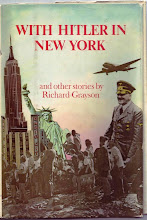
ROLLING STONE called Grayson’s first short story collection, WITH HITLER IN NEW YORK (1979) “where avant-garde fiction goes when it becomes stand-up comedy,” and NEWSDAY said, “The reader is dazzled by the swift, witty goings-on.”
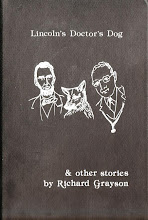
LIBRARY JOURNAL called LINCOLN’S DOCTOR’S DOG (1982) “excellent” and said of I BRAKE FOR DELMORE SCHWARTZ (1983) that “Grayson is a born storyteller and standup talker.”
THE NEW YORK TIMES BOOK REVIEW said Grayson’s I SURVIVED CARACAS TRAFFIC (1996) was “entertaining and bizarre” and “consistently, even ingeniously funny.”
PUBLISHERS WEEKLY called Grayson’s THE SILICON VALLEY DIET (2000) “compulsively talky and engagingly disjunctive,” and THE PHILADELPHIA INQUIRER, reviewing AND TO THINK THAT HE KISSED HIM ON LORIMER STREET (2006), said, “Grayson has a fresh, funny voice.”
THE EIGHTIES DIARIES runs nearly 300,000 words, chronicling his life and the lives around him from 1981 to 1989, in Manhattan and Miami and a few places in between.
It includes all of six volumes previously published separately: SOUTH FLORIDA WINTERS, 1981-1984; LATE SPRING IN SUNRISE, 1982; WEST SIDE SUMMERS, 1984-1987; INDIAN SUMMER: PARK SLOPE, 1985; SPRINGTIME IN LAUDERHILL, 1986; and EIGHTIES’ END: AUTUMN, 1987-1989.
Grayson has already published his first book of diary entries, BOY MEETS BROOKLYN: 1969-70, and the next six volumes of the diaries of his late teens and twenties as THE BROOKLYN DIARIES, featuring SUMMER IN BROOKLYN: 1969-1975; WINTER IN BROOKLYN: 1972-73; SPRING IN BROOKLYN, 1975; AUTUMN IN BROOKLYN, 1978; MORE SUMMERS IN BROOKLYN: 1976-1979; and A YEAR IN ROCKAWAY, 1980.
Five volumes of THE NINETIES DIARIES published include SUMMER IN NEW YORK: 1990, LAST SUMMER IN ROCKAWAY: 1991, FIRST FALL IN GAINESVILLE: 1991, SPRING IN GAINESVILLE: 1992-1994, and AUTUMN IN GAINESVILLE: 1994-1996.

Friday, October 19, 2012

Twenty-Five Years Ago in Fort Lauderdale: Watching the 1987 Black Monday Stock Market Crash

Twenty-five years ago today, on Monday, October 19, 1987, we were in Fort Lauderdale, having arrived two weeks before after spending the previous two months at The MacDowell Colony in New Hampshire and our friend's apartment on the Upper West Side two weeks before, for the day of the 1987 stock market crash. That day we started teaching a computer education workshop for public schools in the Miami-Dade school district for Florida International University and we took over an evening first-year composition class from an instructor at Broward Community College who had been diagnosed with dementia and taken back to Ohio by her daughter. Here is our diary entry for that day, found in our book Eighties End: Autumn:

Monday, October 19, 1987
9 PM. The stock market crashed today. I’ve been expecting this for months, but I still thought it wouldn’t happen for another couple of years. The Dow Jones average fell over 500 pints, landing finally at around 1700. It lost 23% of its value, compared to the 12% one-day loss on October 28, 1929.
Nobody’s using the word "crash," but it has to be considered one. Having last week read two books that dealt with the 1929 crash, I can compare and contrast (the rhetorical mode I taught at Broward Community College this evening) today to that crash. Both days were unpredictably frantic, with panic selling and no buying. But the average person speculated in 1929, and that didn’t happen today.
I had expected that stocks would rally today, but as in the weekend in ’29, a couple of days’ rest caused a total change in market psychology. Obviously program trading – a subject I discussed in my computer literacy workshop this afternoon – had a lot to do with exaggerating the Dow’s plunge, but no two events can have exact parallels.
The big question is whether the market drop represents the start of another Great Depression. At the very least, it portends a recession. The mass psychology part of it is important; I suspect the number of article and books laying out our economic problems have finally reached enough people to form a critical mass.
Is this the start of the big change I’ve been hoping for? Time will tell, but even I – a friend of the law of gravity, probably one of the few Americans who rooted for the Dow to fall – and am shocked by the swiftness of the crash.
The other big news today was a U.S. naval attack on an Iranian oil platform in the Persian Gulf. Everyone knew we were going to retaliate for the Iranian attack on Friday, but now no one’s sure if this is the end of it or if the Iranians will try to get back at us. Reagan’s reflagging of the Persian Gulf oil tankers always seemed as if it would get us into armed conflict.
It’s very weird. I get the feeling we’re turning the corner on history, and things are going to change drastically. It might be very premature to say it, but perhaps the 1980s ended today. If they have, I feel little sadder than I thought I’d be. After all, I wanted a stock market crash, I want to see a depression, I want the mood of the country to change. Still, it’s sad to see people robbed of their illusions, even if they were living in a fool’s paradise.
About my own little life, I feel good tonight. I taught two new classes today, and I feel productive and capable. I enjoy teaching, and I’m good at communicating ideas to people.
Last night Josh called. Not much was going on at his end, but during our conversation, I realized once again how faint-hearted and security-conscious Josh is. He was shocked that I rented such an “expensive” apartment (Josh’s horror exceeded even Grandma Ethel’s), shocked that Lisa would consider joining the Peace Corps and going to Africa – especially after her illness.  
And Josh said Joyce could probably get me a secure job at the DOT; Josh plans to go there December 9; he’s been waiting to see if Blue Cross will lay him off. I don’t know why Josh has become so timid about taking risks, especially after he blew all that money on Carter-Wallace stock; he lost half his investment thinking that it would rise because AIDS would lead to more condom sales. I just know I’m glad I’ve taken risks and I wish had taken more in past years.
Up early, I read the Herald, Times and Wall Street Journal and followed the markets on CNN all day. Marc was over with China – that dog is as affectionate with me as she is with everyone else – and Dad was home all day.
I left at 1 PM, grabbing my mail (mostly junk and two bills) and went to Little Havana, to the Coral Way Elementary School, where I taught my computer literacy workshop. They’ve broken it up into four two-hour classes, so I didn’t do much today except try to explain the parts of a computer and to demonstrate its use. Most of the teachers are, of course, Cubans, and I’m still not used to hearing Spanish everywhere, including the office of a public school. But I must have done something right because I got applause at the end of the workshop.
The English 1101 class at BCC seems like a good group. Naturally, they were upset that Ms. Evans is gone, but by the end of class I felt I had won them over. I feel totally confident in front of a class. Remember how nervous I used to get? Even last year I’d be nervous before a computer workshop. Not now.
Actually, working is enjoyable because I haven’t done it in so long. If only I didn’t have to grade papers, I’d be very happy to be an English teacher again. Of course, I’m sure I’ll have bad days and evenings in the next two months, but that’s part of the game.
Well, I want to watch the news tonight and see what the world is making of today’s events on Wall Street and in the Persian Gulf. The London, Hong Kong and Tokyo stock markets also fell sharply today. I’d like to know what average people think of today’s crash.

Wednesday, May 2, 2012

Richard Grayson's "SUMMER IN NEW YORK" Now Available as Trade Paperback or eBook at Amazon Kindle Store

This week Superstition Mountain Press published Richard Grayson's Summer in New York. It is available in a 234-page trade paperback edition for $12.99, as well as an e-book published by Art Pants Company available at the Amazon Kindle store for 99 cents.

The promo stuff says in part,
It's the summer of 1990, and writer Richard Grayson -- about to turn 39 and having recently lost forty pounds -- has come up from Florida to spend the summer in his native New York City, shuttling between a friend's Upper West Side apartment where he's lived for the previous six summers and his grandmother's apartment on the beach in Rockaway, where she is suffering from depression and other problems of old age and is ultimately hospitalized for weeks.

For most of the 1980s, Grayson has gotten by as a writer through combining literary grants and income from part-time college teaching and computer education workshops -- and a scheme relying on constantly moving cash advances from the over 40 credit cards that Grayson accumulated during the Greed Decade.

Now, as the national economy falls into an ominous recession -- and war in the Persian Gulf seems imminent -- Grayson's credit card chassis is spinning out of control, with him $150,000 in debt and meager unemployment benefits his only steady income.

Moreover, he recognizes that his career as a fiction writer, never quite viable despite numerous publications, good book reviews, and critical encouragement, is coming to an end. What to do?

He takes up the cause of the beleaguered Miami hip-hop group, 2 Live Crew, whose As Nasty As They Wanna Be CD has been declared obscene by a Florida judge. Grayson's efforts win him national publicity -- and some hate mail from those offended by raunchy rap music. And his satirical campaign to rescue billionaire Donald Trump from bankruptcy are highlighted on CNN and in The New York Post.

As he moves through the city, taking random graduate courses in computer education and creativity at Teachers College, running from bank ATM to bank lobby to deposit the money in his credit chassis, fretting about the future as he wanders around Brooklyn, desperately trying to stir up interest in his poorly-selling books of fiction, and going out to endless lunches and dinners with his many friends -- mostly other writers, theater people, artists, performers, politically-connected lawyers and religious activists -- Grayson recounts his days in the diary he's been keeping obsessively since he was an agoraphobic 18-year-old boy about to start Brooklyn College in the summer of 1969.

Grayson has published the first six volumes of the diaries of his late teens and twenties as THE BROOKLYN DIARIES, featuring SUMMER IN BROOKLYN: 1969-1975; WINTER IN BROOKLYN: 1972-73; SPRING IN BROOKLYN, 1975; AUTUMN IN BROOKLYN, 1978; MORE SUMMERS IN BROOKLYN: 1976-1979; and A YEAR IN ROCKAWAY, 1980.

The second six volumes of his diaries have been published as THE EIGHTIES DIARIES, which include SOUTH FLORIDA WINTERS, 1981-84; LATE SPRING IN SUNRISE, 1982; WEST SIDE SUMMERS, 1984-87; INDIAN SUMMER: PARK SLOPE, 1985; SPRINGTIME IN LAUDERHILL, 1986; and EIGHTIES’ END: AUTUMN, 1987-89.

SUMMER IN NEW YORK: 1990 is the first volume of THE NINETIES DIARIES, immediately preceding LAST SUMMER IN ROCKAWAY:1991 and FIRST FALL IN GAINESVILLE: 1991.

The book is also available on Scribd and Lulu for free online reading.

Thursday, February 9, 2012

Richard Grayson's "LATE SPRING IN SUNRISE" Now Available as Trade Paperback or eBook at Amazon Kindle Store


This week Superstition Mountain Press published Richard Grayson's Late Spring in Sunrise. It is available in a 167-page trade paperback edition for $12.99, as well as an e-book published by Art Pants Company available at the Amazon Kindle store for 99 cents.

The promo stuff says in part,
Broward County, Florida, 1982.

A 30-year-old writer and a 17-year-old boy about to graduate from high school.

An unexpected love affair.

Richard Grayson has been keeping a daily diary since the summer of 1969, when he was an 18-year-old agoraphobic about to venture out into the world -- or at least the world around him in Brooklyn.

In LATE SPRING IN SUNRISE, an older Grayson is still exploring. His second book of short stories just published, a contract signed for his third, Grayson is finishing his first year as a full-time community college instructor in Florida when he finds himself involved in a relationship with the teenage Sean.

Earlier, Grayson published the first six volumes of the diaries of his late teens and twenties as THE BROOKLYN DIARIES, featuring SUMMER IN BROOKLYN: 1969-1975; WINTER IN BROOKLYN: 1972-73; SPRING IN BROOKLYN, 1975; AUTUMN IN BROOKLYN, 1978; MORE SUMMERS IN BROOKLYN: 1976-1979; and A YEAR IN ROCKAWAY, 1980.

LATE SPRING IN SUNRISE takes place in seven weeks of 1982 and is one of six volumes of THE EIGHTIES DIARIES, whose other books include SOUTH FLORIDA WINTERS, 1981-1984; WEST SIDE SUMMERS, 1984-1987; INDIAN SUMMER: PARK SLOPE, 1985; SPRINGTIME IN LAUDERHILL, 1986; and EIGHTIES' END: AUTUMN, 1987-1989.

The book will also be available on Scribd and Lulu for free online reading.

Thursday, February 2, 2012

Richard Grayson's "EIGHTIES' END: AUTUMN" Now Available as Trade Paperback or eBook at Amazon Kindle Store


This week Superstition Mountain Press published Richard Grayson's Eighties' End: Autumn. It is available in a 298-page trade paperback edition for $15.99, as well as an e-book published by Art Pants Company available at the Amazon Kindle store for 99 cents.

The promo stuff says in part,
Richard Grayson has been keeping a daily diary compulsively since the summer of 1969, when he was an 18-year-old agoraphobic about to venture out into the world -- or at least the world around him in Brooklyn.

Earlier, Grayson published the first six volumes of the diaries of his late teens and twenties as THE BROOKLYN DIARIES, featuring SUMMER IN BROOKLYN: 1969-1975; WINTER IN BROOKLYN: 1972-73; SPRING IN BROOKLYN, 1975; AUTUMN IN BROOKLYN, 1978; MORE SUMMERS IN BROOKLYN: 1976-1979; and A YEAR IN ROCKAWAY, 1980.

In EIGHTIES' END: AUTUMN, Grayson alternates his fall diary entries from 1987, 1988 and 1989, when he is variously spending time with other writers, artists and musicians at the MacDowell Colony in New Hampshire; living on the Upper West Side and serving as a writer-in-residence at the suburban Rockland Center of the Arts under one of the state arts grants he has at the time; with his emotionally troubled grandmother at the beach in Rockaway; and in Florida, training Miami schoolteachers on the use of computers and teaching writing classes at Broward Community College.

Grayson is juggling a massive credit card chassis, putting out two new books of short stories, and embarking on a strict diet to lose forty pounds. He's also getting himself into the newspapers as a social activist, demonstrating on Wall Street against leveraged buyouts and at Florida shopping centers against a Halloween mask denigrating to Arabs.

EIGHTIES' END: AUTUMN is the final volume of THE EIGHTIES DIARIES, whose other books include SOUTH FLORIDA WINTERS, LATE SPRING IN SUNRISE, WEST SIDE SUMMERS, INDIAN SUMMER: PARK SLOPE, and SPRINGTIME IN LAUDERHILL.

(The author, 1988)

The book will also be available on Scribd and Lulu for free online reading.

Friday, August 26, 2011

Twenty-Six Years Ago in Brooklyn: The Last Hurricane/Earthquake Combo in New York, 1985


As we await Hurricane Irene from outside an evacuation zone (Zone B is across one street here in Williamsburg, Zone C across another) and reflect on the shaking bed incident (we knew it was an earthquake immediately: see below) on Tuesday afternoon, we thought about 1985, the last time we were living in Brooklyn and experienced both an earthquake and hurricane within a short time.

Here are the hurricane and earthquake excerpts from our book, Indian Summer: Park Slope, the third volume of The Eighties Diaries:

Friday, September 27, 1985

8 PM. Today was Hurricane Friday, but as I suggested last night, Gloria didn’t live up to her advance billing. Last night the Mayor announced that public schools would be closed today, and private schools, CUNY and other colleges, banks, the stock exchange and most businesses followed suit.

Things sounded awful this morning; the TV stations had hurricane alerts which tried to get people to take the storm seriously. Because they’ve evacuated Fire Island and other shore communities, I was worried about Grandma Ethel, especially after they told Rockaway residents to leave.

I called Grandma several times but she wasn’t moving. “It will pass,” she said. She did have a neighbor tape up her windows and glass terrace door, though.

I went out to Key Food at 8 AM and everyone was busy buying food and candles and batteries. People were more polite than usual and waited patiently on the long lines. The storm certainly seemed fierce; I got soaked to the skin, and my umbrella was useless against the winds.

Back on TV, forecasters said a “worst-case scenario” was approaching, with Gloria due to make landfall in mid-Long Island with 120 mph winds. But although the storm caused lots of felled trees and power lines and a good bit of property damage, it was no killer.

Coming at low tide and moving through the area very quickly, Gloria didn’t cause heavy flooding at the beach. “The beach is still here,” said Grandma Ethel, recalling that back in 1971 the ocean was under the boardwalk.

It turned out that Grandma’s relaxed attitude was more appropriate than my media-fed anxiety. Here in Brooklyn, we had heavy rains and wind – there are a lot of trees and branches down – but by 1 PM, the sun was out and it seemed calm.

I knew that was the eye of the hurricane, though, and expected worse; however, all we got after that were whipped-up winds from the other direction and a little rain. The skies cleared, and out on Seventh Avenue, people were walking around with smiles, cheerfully enjoying an unexpected holiday.

Saturday, October 19, 1985

8 PM. I didn’t get to sleep till about 11 PM last night; my sleepiness faded, and I watched "Dallas" and "Miami Vice." The latter show made me homesick when I saw Biscayne Bay, the Freedom Tower – Miami’s only stately skyscraper – and other streets that looked familiar.

I was awakened at about 6 AM by a loud rumble, and for a second or two, the room seemed to shake. The lighting fixture was swinging back and forth.

“An earthquake,” I thought – and then, “Don’t be silly. It must be an explosion or something.” And I forgot about it until our break at Columbia, when Dipti, a fellow student said, “Did you feel that earthquake this morning?”

By then, I’d figured I’d dreamed or imagined the whole thing. Kenny, in the next room, told me he didn’t feel anything, nor did Grandma Ethel in Rockaway.

But it was a quake centered in Westchester, measuring 4.3 on the Richter scale: very mild, but enough of a jolt to wake me up.

Wednesday, August 10, 2011

Richard Grayson's "SPRINGTIME IN LAUDERHILL" Now Available as Trade Paperback or eBook at Amazon Kindle Store


This week Superstition Mountain Press published Richard Grayson's Springtime in Lauderhill. It is available in a 196-page trade paperback edition for $11.99, as well as an e-book published by Art Pants Company available at the Amazon Kindle store for 99 cents.

The promo stuff says in part,
Richard Grayson started writing a daily diary in the summer of 1969, when he turned 18, and has compiled daily entries since then. In the six volumes of THE BROOKLYN DIARIES (SUMMER IN BROOKLYN, AUTUMN IN BROOKLYN, WINTER IN BROOKLYN, SPRING IN BROOKLYN, MORE SUMMER IN BROOKLYN, and A YEAR IN ROCKAWAY), Grayson published selected entries from 1969 to 1980.

Now, in THE EIGHTIES DIARIES, Grayson describes his itinerant life in his thirties during the Reagan era. Following the three previous volumes, SOUTH FLORIDA WINTERS, WEST SIDE SUMMERS and INDIAN SUMMER: PARK SLOPE is this book, SPRINGTIME IN LAUDERHILL, recounting two months Grayson spent living in a mostly African-American apartment complex in a fading Fort Lauderdale suburb.

It’s 1986, and Grayson is struggling with his lack of success as a fiction writer after publishing three books, disenchanted with his past jobs teaching college composition and remedial writing, and starting a new career as a teacher trainer in the nascent field of computer education with the first Apple machines ever used in schools.

Meanwhile, he’s taking an assortment of courses at a couple of universities, causing controversy with a legal challenge for age discrimination to a savings and loan company’s discounts for senior citizens, amassing a huge number of credit cards and credit lines, obsessing about the AIDS epidemic and wondering if he is infected, publishing his humorous nonfiction in places like People Magazine, and being interviewed on The CBS Evening News with Dan Rather and other media outlets.

Grayson’s diaries are a window into an individual sensibility and a particular moment in time: the spring of 1986.
An excerpt:

Monday, March 31, 1986
9 PM. Today was one of the more satisfying days of my life, probably because I could see myself doing well in a variety of roles. If I’m not quite a Renaissance man, I’m something more than a dilettante.

Up early, I read the paper, walked to the credit union to deposit $700 I’d gotten in cash advances from ATMs, and paid the rent.

Stopping off at the Publix Teller on Broward Boulevard, I went into the supermarket and discovered the news dealer had arrived with a fresh shipment of magazines, including People, which I took from the his piled-high shopping cart before he put it on the racks.

I couldn’t find my story in the table of contents, but I thumbed through and discovered it: “Unless We Bag a Few New Stars, the U.S. Will Face a Tragic Celebrity Shortage” by Richard Grayson and Fred Bernstein.

Illustrate with a full-page photo of paparazzi shooting a bejeweled, glamorously dressed woman with a paper bag over her head, with the Hollywood sign in the distance, the whole article took up four pages, with another photo page devoted to a model pretending to be Barbara Walters interviewing a tree (“If you were a star, what kind of star would you be?”)

I’m very pleased with the piece. In Davie, first Jonathan and then Mom and then Dad read the article, and they all thought it was good; of course, they’re my family.

While in Davie, I got a call from Joyce Brown of the Human Relations Division, reminding me about tomorrow’s hearing.

Also, the People publicity department called to find out if they could give my number to radio stations wanting interviews. Of course I said yes, though Fred is probably taking the good ones for himself, but I hope he’s not going on Live at Five and getting TV exposure I could use. I’m kidding!

Tons of mail, including the AWP Job List, with some creative writing vacancies I’ll apply for; loads of banking stuff, including my CBI credit file, a Virginia Beach Federal money market account checkbook, the PIN number for my Chase money market account, and applications for credit line increases on my Bank One and Chemical cards; and the leader of Americans for Generational Equality told me to “give ‘em hell” on senior discounts.

After xeroxing the article at Jaffe’s and having lunch at the Broadway Diner, I came home to read newspapers and prepare for class.

“It’s the computer man!” said the Sunshine Elementary school secretary as she opened the door for me at 3:30 PM. I showed the teachers the SRI math software today.

It was kind of disorganized because I’d never seen the material before, but I enjoyed myself and I think they learned a lot just by using it and experimenting with it.

One thing I stress is that the computer is dumb compared to a teacher because it makes the teachers feel better knowing how limited the machines are. After a quick bite, I went to my FIU Community College class, where Kitty Hunter, BCC’s Academic Vice President, was our guest.

Like most of the BCC administrators, she surprised me by her intellectual depth. She’s very future-oriented and interested in issues ranging from the role of the community college in relation to business and government to the need to educate people for a world economy and a world culture. Her remarks and the discussion which followed were stimulating.

Can you tell me why today was so satisfying? I felt competent in all my roles as writer, “computer man,” banking maven, social activist, and educator. I feel integrated and whole. Let’s hope tomorrow isn’t a big disaster.

Tuesday, April 1, 1986
11 PM. Not exactly a disaster, but I need time to digest today. Before I left this morning, I got a call from a producer at WXYT radio in Detroit; I’ll do an interview tomorrow at 5:30 PM, which means I’ll have to get out of class and go over to my parents’.

I didn’t really know what to expect when I walked into the Governmental Center in downtown Fort Lauderdale this morning. A black woman ran the hearing, with me in my corduroys, sport shirt and sneakers on one side of the long table and on the other side, five business-suited attorneys and AmeriFirst Vice Presidents. One man was apparently an outside counsel, but a woman V.P., presumably also an attorney, did most of the talking.

I suppose it was rather intimidating, and I’m sure the absurdity of the scene – like something in a movie – will stay with me for a long time.

Of course the situation triggered all these weird childhood feelings, especially when I saw how much trouble the S&L had gone to in its marketing studies and accounts of other banks’ practices.

I couldn’t help feeling I’d caused these important people a lot of trouble and would be punished for it. But since I was in touch with those feelings, I could act and react more calmly.

First, they went over my complaint and each side agreed or disagreed with each charge. Early on after that, after a huddle between the attorneys, they offered me the AmeriFirst 55 plan.

But a condition of my accepting it would be confidentiality; I could not tell anyone about the settlement or I could be sued for breach of contract.

I asked to leave the room to “consult my attorney by phone”; actually, I called Mom. She said that if I accepted the offer, I would be doing something other than what I set to do: namely, to expose and to try to stop age discrimination.

Of course Mom was right, and her remarks confirmed my own judgment. I let them wait for a good while as I went outside and took a walk around the block a couple of times.

Then I came in and rejected their offer, saying I wouldn’t be happy until their discriminatory practice – the AmeriPlus 55 plan – was ended or made available to everyone, regardless of age.

Naturally they didn’t want to do that. The hearing officer took me aside and said that the S&L had offered me total redress of my complaint, and that if I didn’t accept it, she’d probably have to end the case on the argument that since I wouldn’t accept their offer, no hurt was done originally.

Had this been a class action suit, I could have gone further, but she said the Human Relations Division had a narrow scope. After some testimony and questioning about the plan versus other AmeriFirst accounts, the hearing was adjourned.

I expect to hear that my complaint has been dismissed. But in a way I will have gotten what I wanted: the public awareness created by the publicity I got over the senior discount issue.

Having rejected their offer, I was free to go to the press, so I called the Miami Herald and gave them a rundown of what happened. Since I intend to go to New York soon, I don’t really want to come back before another hearing before the Human Rights Board this time.

I guess there’s still a slight chance the case could go on, but it’s over for me, whatever happens. Right now I’m too close to the situation to tell how I really feel.

It will also be available on Scribd and Lulu for free online reading.

Sunday, July 24, 2011

Richard Grayson's "INDIAN SUMMER: PARK SLOPE" Now Available as Trade Paperback or eBook at Amazon Kindle Store


This week Superstition Mountain Press published Richard Grayson's Indian Summer: Park Slope. It is available in a 207-page trade paperback edition for $11.99, as well as an e-book published by Art Pants Company available at the Amazon Kindle store for 99 cents.

The promo stuff says in part,
Richard Grayson started writing a daily diary in the summer of 1969, when he turned 18, and has compiled daily entries since then. In the six volumes of THE BROOKLYN DIARIES (SUMMER IN BROOKLYN, AUTUMN IN BROOKLYN, WINTER IN BROOKLYN, SPRING IN BROOKLYN, MORE SUMMER IN BROOKLYN, and A YEAR IN ROCKAWAY), Grayson published selected entries from 1969 to 1980.

Now, in THE EIGHTIES DIARIES, Grayson describes his itinerant life in his thirties during the Reagan era. Following the two previous volumes, SOUTH FLORIDA WINTERS and WEST SIDE SUMMERS is this book, INDIAN SUMMER: PARK SLOPE, covering two months Grayson spent back in his native Brooklyn after an absence of six years.

In 1985 the historic brownstone neighborhood of Park Slope is still not totally gentrified and Brooklyn is neither fashionable, cutting-edge nor entirely safe.

Grayson recounts the rhythms of his life: his lunches and dinners with fellow writers and others in the arts and media; his frequent trips to Rockaway Beach for visits his beloved grandmother; his often dispiriting remedial writing classes at the City University of New York; his own graduate courses in programming on mainframe computers and graphics on the earliest Apple desktops at Columbia University’s Teachers College; his bizarre juggling of a credit chassis that includes several dozen credit cards and numerous bank accounts; his experiences witnessing brazen subway muggings and spectacular sunrises as seen from the Manhattan Bridge; being in both an earthquake and a hurricane within two weeks; and, as always, his struggles as a writer: here, with three hardcover fiction books published, he wonders if his modest early success has been a mere fluke and considers alternate career paths an uncertain future.

An excerpt:
I slept fabulously, glad to be near Ronna. . .

At 8 AM, the alarm went off, and I started kissing and hugging her; then I cleaned up and got dressed and went off. . .

It was a foggy, dreary morning; after returning to Happy Burger for breakfast, I took the subway up to Columbia and arrived just in time for Computer Graphics.

Howard did more BASIC programming today, and I learned more about POKE-ing things into memory than I had known before. We discussed the principles of graphics and went over other stuff. . .

During our hour break, instead of having lunch, I went downstairs to the computer room to meet Chris – he’s not only such a hunk but very sweet too – and other members of the Programming class. . .

After class, I stayed on, programming till 1:30 PM, and then I went back downstairs to the DEC-20 and worked on the Pascal program for our first project. It needs a lot of refining, but I know I’ll do it before it’s due in two weeks.

Both courses seem under control. I had some lunch and then got on the IRT. At 72nd Street, an amputee on crutches came into the car to collect money. I gave him some coins, and then, as he came to the door to the next car, he burst into laughter.

I soon realized why: crossing his path was another amputee, this one in a wheelchair, also begging. I gave him some loose change, too. At 14th Street, a guy got off the car and waited for a moment, then suddenly stepped back in and grabbed at a woman’s neck; then he quickly ran away as the doors closed.

I’d seen it perfectly from my vantage point, but he was so fast, I couldn’t react. What he’d done, of course, was snatch three gold chains.

The woman, a young West Indian, hardly reacted at first. She said she’d just bought the chains and still had the receipt for them.

“I never usually sit next to the door,” she told me. As we made our way into Brooklyn and the reality of the event hit her, she kept saying “I just can’t believe it.”

Back home, the phone was working again; evidently they fixed it from the outside, for Tim said no repairman had come to the house. I went out for dinner, got my laundry, typed up some letters, did some more programming, and watched "Dallas," which I'd taped.

It will also be available on Scribd and Lulu for free online reading.

Friday, July 8, 2011

Richard Grayson's "WEST SIDE SUMMERS" Now Available as Paperback or eBook on Amazon Kindle


This week Superstition Mountain Press published Richard Grayson's West Side Summers. It is available in a 314-page trade paperback edition for $15.99, as well as an Amazon Kindle edition published by http://www.blogger.com/img/blank.gifArt Pants Company for 99 cents.

The promo stuff says in part,
Richard Grayson started writing a daily diary in the summer of 1969, when he turned 18, and has compiled daily entries since then. In the six volumes of THE BROOKLYN DIARIES (SUMMER IN BROOKLYN, AUTUMN IN BROOKLYN, WINTER IN BROOKLYN, SPRING IN BROOKLYN, MORE SUMMER IN BROOKLYN, and A YEAR IN ROCKAWAY), Grayson published selected entries from 1969 to 1980.

Now, in WEST SIDE SUMMERS, the second volume of THE EIGHTIES DIARIES (following SOUTH FLORIDA WINTERS), Grayson describes his summer days living on the Upper West Side from 1984 to 1987. Already a published author, Grayson records his days and nights prowling the streets of Manhattan and Brooklyn, alone or with fellow writers and other friends, with side trips to his grandmother's beachfront co-op in Rockaway and a stay at the artists' colony that was the estate of poet Edna St. Vincent Millay.

Celebrities like Allen Ginsberg, Norman Mailer, Isaac Bashevis Singer and a not-so-famous Harvey Pekar often cross Grayson's path, and he recreates the scene on the Yuppified Upper West Side and the grittier world of the Lower East Side.

Shakespeare in the Park, Sichuan restaurants, a decidedly seedy Times Square, hip coffee shops, Zabar's and H&H Bagels, literary readings, elderly Jews on the boardwalk, the panic and terror of the AIDS epidemic, homeless beggars, nights with ex-lovers, graduate classes in computers, gay pride parades, the Statue of Liberty centennial, cash advances at ATMs, Wall Street insider trading indictments, giving and getting interviews, soaring ambitions and crushing self-doubts: this is Grayson's world in the exciting long, hot summers of a Manhattan in the middle of the flashy 1980s.

It will also be available on Scribd and Lulu for free online reading.