Pages

Showing posts with label The Brooklyn Diaries. Show all posts

Wednesday, May 16, 2012

Richard Grayson's "LAST SUMMER IN ROCKAWAY" Now Available as Trade Paperback or eBook at Amazon Kindle Store

This week Superstition Mountain Press published Richard Grayson's Last Summer in Rockaway. It is available in a 204-page trade paperback edition for $12199, as well as an e-book published by Art Pants Company available at the Amazon Kindle store for 99 cents.
The promo stuff says in part,
Acclaimed short story writer Richard Grayson has been keeping a diary since the summer of 1969 when he turned 18, a time recounted in his first published book of diary entries, SUMMER IN BROOKLYN.  In LAST SUMMER IN ROCKAWAY, it's 1991 and he's turning 40.
The diary entries begin in Los Angeles, where Grayson goes for the first time to lead workshops at a writers' conference overseen by his oldest friend, a writer and editor he met in a second grade class in Brooklyn's P.S. 203.In California, Grayson learns that his bankruptcy has been finalized and that he has been accepted to law school at the University of Florida.
After a brief stay in South Florida to complete his teaching career at a community college, Grayson flies to New York for three months, living in the now-vacant beachfront apartment in Rockaway that had been his grandparents' longtime home.
Between visits to his grandmother in a nearby Long Island nursing home and excursions to Brooklyn and Manhattan for long lunches, dinners and walks around his native New York, trying to take everything in, knowing he will probably never return except as an infrequent visitor.
Grayson also reflects upon everything from the death of novelist Isaac Bashevis Singer and conditions in Rockaway's ghetto neighborhoods to whether one day the computer, TV and telephone will merge into one device.
Richard Grayson's previous diary books include SUMMER IN BROOKLYN: 1969-75; MORE SUMMER IN BROOKLYN: 1976-79; WINTER IN BROOKLYN, 1971-72; SPRING IN BROOKLYN, 1975; AUTUMN IN BROOKLYN, 1978; A YEAR IN ROCKAWAY, 1980; SOUTH FLORIDA WINTERS, 1981-84; WEST SIDE SUMMERS, 1984-87; LATE SPRING IN SUNRISE, 1982; INDIAN SUMMER: PARK SLOPE, 1985; SPRINGTIME IN LAUDERHILL, 1986; EIGHTIES' END: 1987-89; SUMMER IN NEW YORK, 1990; and FIRST FALL IN GAINESVILLE, 1991.

The book is also available on Scribd and Lulu for free online reading.

Wednesday, May 2, 2012

Richard Grayson's "SUMMER IN NEW YORK" Now Available as Trade Paperback or eBook at Amazon Kindle Store

This week Superstition Mountain Press published Richard Grayson's Summer in New York. It is available in a 234-page trade paperback edition for $12.99, as well as an e-book published by Art Pants Company available at the Amazon Kindle store for 99 cents.

The promo stuff says in part,
It's the summer of 1990, and writer Richard Grayson -- about to turn 39 and having recently lost forty pounds -- has come up from Florida to spend the summer in his native New York City, shuttling between a friend's Upper West Side apartment where he's lived for the previous six summers and his grandmother's apartment on the beach in Rockaway, where she is suffering from depression and other problems of old age and is ultimately hospitalized for weeks.

For most of the 1980s, Grayson has gotten by as a writer through combining literary grants and income from part-time college teaching and computer education workshops -- and a scheme relying on constantly moving cash advances from the over 40 credit cards that Grayson accumulated during the Greed Decade.

Now, as the national economy falls into an ominous recession -- and war in the Persian Gulf seems imminent -- Grayson's credit card chassis is spinning out of control, with him $150,000 in debt and meager unemployment benefits his only steady income.

Moreover, he recognizes that his career as a fiction writer, never quite viable despite numerous publications, good book reviews, and critical encouragement, is coming to an end. What to do?

He takes up the cause of the beleaguered Miami hip-hop group, 2 Live Crew, whose As Nasty As They Wanna Be CD has been declared obscene by a Florida judge. Grayson's efforts win him national publicity -- and some hate mail from those offended by raunchy rap music. And his satirical campaign to rescue billionaire Donald Trump from bankruptcy are highlighted on CNN and in The New York Post.

As he moves through the city, taking random graduate courses in computer education and creativity at Teachers College, running from bank ATM to bank lobby to deposit the money in his credit chassis, fretting about the future as he wanders around Brooklyn, desperately trying to stir up interest in his poorly-selling books of fiction, and going out to endless lunches and dinners with his many friends -- mostly other writers, theater people, artists, performers, politically-connected lawyers and religious activists -- Grayson recounts his days in the diary he's been keeping obsessively since he was an agoraphobic 18-year-old boy about to start Brooklyn College in the summer of 1969.

Grayson has published the first six volumes of the diaries of his late teens and twenties as THE BROOKLYN DIARIES, featuring SUMMER IN BROOKLYN: 1969-1975; WINTER IN BROOKLYN: 1972-73; SPRING IN BROOKLYN, 1975; AUTUMN IN BROOKLYN, 1978; MORE SUMMERS IN BROOKLYN: 1976-1979; and A YEAR IN ROCKAWAY, 1980.

The second six volumes of his diaries have been published as THE EIGHTIES DIARIES, which include SOUTH FLORIDA WINTERS, 1981-84; LATE SPRING IN SUNRISE, 1982; WEST SIDE SUMMERS, 1984-87; INDIAN SUMMER: PARK SLOPE, 1985; SPRINGTIME IN LAUDERHILL, 1986; and EIGHTIES’ END: AUTUMN, 1987-89.

SUMMER IN NEW YORK: 1990 is the first volume of THE NINETIES DIARIES, immediately preceding LAST SUMMER IN ROCKAWAY:1991 and FIRST FALL IN GAINESVILLE: 1991.

The book is also available on Scribd and Lulu for free online reading.

Thursday, February 9, 2012

Richard Grayson's "LATE SPRING IN SUNRISE" Now Available as Trade Paperback or eBook at Amazon Kindle Store


This week Superstition Mountain Press published Richard Grayson's Late Spring in Sunrise. It is available in a 167-page trade paperback edition for $12.99, as well as an e-book published by Art Pants Company available at the Amazon Kindle store for 99 cents.

The promo stuff says in part,
Broward County, Florida, 1982.

A 30-year-old writer and a 17-year-old boy about to graduate from high school.

An unexpected love affair.

Richard Grayson has been keeping a daily diary since the summer of 1969, when he was an 18-year-old agoraphobic about to venture out into the world -- or at least the world around him in Brooklyn.

In LATE SPRING IN SUNRISE, an older Grayson is still exploring. His second book of short stories just published, a contract signed for his third, Grayson is finishing his first year as a full-time community college instructor in Florida when he finds himself involved in a relationship with the teenage Sean.

Earlier, Grayson published the first six volumes of the diaries of his late teens and twenties as THE BROOKLYN DIARIES, featuring SUMMER IN BROOKLYN: 1969-1975; WINTER IN BROOKLYN: 1972-73; SPRING IN BROOKLYN, 1975; AUTUMN IN BROOKLYN, 1978; MORE SUMMERS IN BROOKLYN: 1976-1979; and A YEAR IN ROCKAWAY, 1980.

LATE SPRING IN SUNRISE takes place in seven weeks of 1982 and is one of six volumes of THE EIGHTIES DIARIES, whose other books include SOUTH FLORIDA WINTERS, 1981-1984; WEST SIDE SUMMERS, 1984-1987; INDIAN SUMMER: PARK SLOPE, 1985; SPRINGTIME IN LAUDERHILL, 1986; and EIGHTIES' END: AUTUMN, 1987-1989.

The book will also be available on Scribd and Lulu for free online reading.

Wednesday, August 10, 2011

Richard Grayson's "SPRINGTIME IN LAUDERHILL" Now Available as Trade Paperback or eBook at Amazon Kindle Store


This week Superstition Mountain Press published Richard Grayson's Springtime in Lauderhill. It is available in a 196-page trade paperback edition for $11.99, as well as an e-book published by Art Pants Company available at the Amazon Kindle store for 99 cents.

The promo stuff says in part,
Richard Grayson started writing a daily diary in the summer of 1969, when he turned 18, and has compiled daily entries since then. In the six volumes of THE BROOKLYN DIARIES (SUMMER IN BROOKLYN, AUTUMN IN BROOKLYN, WINTER IN BROOKLYN, SPRING IN BROOKLYN, MORE SUMMER IN BROOKLYN, and A YEAR IN ROCKAWAY), Grayson published selected entries from 1969 to 1980.

Now, in THE EIGHTIES DIARIES, Grayson describes his itinerant life in his thirties during the Reagan era. Following the three previous volumes, SOUTH FLORIDA WINTERS, WEST SIDE SUMMERS and INDIAN SUMMER: PARK SLOPE is this book, SPRINGTIME IN LAUDERHILL, recounting two months Grayson spent living in a mostly African-American apartment complex in a fading Fort Lauderdale suburb.

It’s 1986, and Grayson is struggling with his lack of success as a fiction writer after publishing three books, disenchanted with his past jobs teaching college composition and remedial writing, and starting a new career as a teacher trainer in the nascent field of computer education with the first Apple machines ever used in schools.

Meanwhile, he’s taking an assortment of courses at a couple of universities, causing controversy with a legal challenge for age discrimination to a savings and loan company’s discounts for senior citizens, amassing a huge number of credit cards and credit lines, obsessing about the AIDS epidemic and wondering if he is infected, publishing his humorous nonfiction in places like People Magazine, and being interviewed on The CBS Evening News with Dan Rather and other media outlets.

Grayson’s diaries are a window into an individual sensibility and a particular moment in time: the spring of 1986.
An excerpt:

Monday, March 31, 1986
9 PM. Today was one of the more satisfying days of my life, probably because I could see myself doing well in a variety of roles. If I’m not quite a Renaissance man, I’m something more than a dilettante.

Up early, I read the paper, walked to the credit union to deposit $700 I’d gotten in cash advances from ATMs, and paid the rent.

Stopping off at the Publix Teller on Broward Boulevard, I went into the supermarket and discovered the news dealer had arrived with a fresh shipment of magazines, including People, which I took from the his piled-high shopping cart before he put it on the racks.

I couldn’t find my story in the table of contents, but I thumbed through and discovered it: “Unless We Bag a Few New Stars, the U.S. Will Face a Tragic Celebrity Shortage” by Richard Grayson and Fred Bernstein.

Illustrate with a full-page photo of paparazzi shooting a bejeweled, glamorously dressed woman with a paper bag over her head, with the Hollywood sign in the distance, the whole article took up four pages, with another photo page devoted to a model pretending to be Barbara Walters interviewing a tree (“If you were a star, what kind of star would you be?”)

I’m very pleased with the piece. In Davie, first Jonathan and then Mom and then Dad read the article, and they all thought it was good; of course, they’re my family.

While in Davie, I got a call from Joyce Brown of the Human Relations Division, reminding me about tomorrow’s hearing.

Also, the People publicity department called to find out if they could give my number to radio stations wanting interviews. Of course I said yes, though Fred is probably taking the good ones for himself, but I hope he’s not going on Live at Five and getting TV exposure I could use. I’m kidding!

Tons of mail, including the AWP Job List, with some creative writing vacancies I’ll apply for; loads of banking stuff, including my CBI credit file, a Virginia Beach Federal money market account checkbook, the PIN number for my Chase money market account, and applications for credit line increases on my Bank One and Chemical cards; and the leader of Americans for Generational Equality told me to “give ‘em hell” on senior discounts.

After xeroxing the article at Jaffe’s and having lunch at the Broadway Diner, I came home to read newspapers and prepare for class.

“It’s the computer man!” said the Sunshine Elementary school secretary as she opened the door for me at 3:30 PM. I showed the teachers the SRI math software today.

It was kind of disorganized because I’d never seen the material before, but I enjoyed myself and I think they learned a lot just by using it and experimenting with it.

One thing I stress is that the computer is dumb compared to a teacher because it makes the teachers feel better knowing how limited the machines are. After a quick bite, I went to my FIU Community College class, where Kitty Hunter, BCC’s Academic Vice President, was our guest.

Like most of the BCC administrators, she surprised me by her intellectual depth. She’s very future-oriented and interested in issues ranging from the role of the community college in relation to business and government to the need to educate people for a world economy and a world culture. Her remarks and the discussion which followed were stimulating.

Can you tell me why today was so satisfying? I felt competent in all my roles as writer, “computer man,” banking maven, social activist, and educator. I feel integrated and whole. Let’s hope tomorrow isn’t a big disaster.

Tuesday, April 1, 1986
11 PM. Not exactly a disaster, but I need time to digest today. Before I left this morning, I got a call from a producer at WXYT radio in Detroit; I’ll do an interview tomorrow at 5:30 PM, which means I’ll have to get out of class and go over to my parents’.

I didn’t really know what to expect when I walked into the Governmental Center in downtown Fort Lauderdale this morning. A black woman ran the hearing, with me in my corduroys, sport shirt and sneakers on one side of the long table and on the other side, five business-suited attorneys and AmeriFirst Vice Presidents. One man was apparently an outside counsel, but a woman V.P., presumably also an attorney, did most of the talking.

I suppose it was rather intimidating, and I’m sure the absurdity of the scene – like something in a movie – will stay with me for a long time.

Of course the situation triggered all these weird childhood feelings, especially when I saw how much trouble the S&L had gone to in its marketing studies and accounts of other banks’ practices.

I couldn’t help feeling I’d caused these important people a lot of trouble and would be punished for it. But since I was in touch with those feelings, I could act and react more calmly.

First, they went over my complaint and each side agreed or disagreed with each charge. Early on after that, after a huddle between the attorneys, they offered me the AmeriFirst 55 plan.

But a condition of my accepting it would be confidentiality; I could not tell anyone about the settlement or I could be sued for breach of contract.

I asked to leave the room to “consult my attorney by phone”; actually, I called Mom. She said that if I accepted the offer, I would be doing something other than what I set to do: namely, to expose and to try to stop age discrimination.

Of course Mom was right, and her remarks confirmed my own judgment. I let them wait for a good while as I went outside and took a walk around the block a couple of times.

Then I came in and rejected their offer, saying I wouldn’t be happy until their discriminatory practice – the AmeriPlus 55 plan – was ended or made available to everyone, regardless of age.

Naturally they didn’t want to do that. The hearing officer took me aside and said that the S&L had offered me total redress of my complaint, and that if I didn’t accept it, she’d probably have to end the case on the argument that since I wouldn’t accept their offer, no hurt was done originally.

Had this been a class action suit, I could have gone further, but she said the Human Relations Division had a narrow scope. After some testimony and questioning about the plan versus other AmeriFirst accounts, the hearing was adjourned.

I expect to hear that my complaint has been dismissed. But in a way I will have gotten what I wanted: the public awareness created by the publicity I got over the senior discount issue.

Having rejected their offer, I was free to go to the press, so I called the Miami Herald and gave them a rundown of what happened. Since I intend to go to New York soon, I don’t really want to come back before another hearing before the Human Rights Board this time.

I guess there’s still a slight chance the case could go on, but it’s over for me, whatever happens. Right now I’m too close to the situation to tell how I really feel.

It will also be available on Scribd and Lulu for free online reading.

Sunday, July 24, 2011

Richard Grayson's "INDIAN SUMMER: PARK SLOPE" Now Available as Trade Paperback or eBook at Amazon Kindle Store


This week Superstition Mountain Press published Richard Grayson's Indian Summer: Park Slope. It is available in a 207-page trade paperback edition for $11.99, as well as an e-book published by Art Pants Company available at the Amazon Kindle store for 99 cents.

The promo stuff says in part,
Richard Grayson started writing a daily diary in the summer of 1969, when he turned 18, and has compiled daily entries since then. In the six volumes of THE BROOKLYN DIARIES (SUMMER IN BROOKLYN, AUTUMN IN BROOKLYN, WINTER IN BROOKLYN, SPRING IN BROOKLYN, MORE SUMMER IN BROOKLYN, and A YEAR IN ROCKAWAY), Grayson published selected entries from 1969 to 1980.

Now, in THE EIGHTIES DIARIES, Grayson describes his itinerant life in his thirties during the Reagan era. Following the two previous volumes, SOUTH FLORIDA WINTERS and WEST SIDE SUMMERS is this book, INDIAN SUMMER: PARK SLOPE, covering two months Grayson spent back in his native Brooklyn after an absence of six years.

In 1985 the historic brownstone neighborhood of Park Slope is still not totally gentrified and Brooklyn is neither fashionable, cutting-edge nor entirely safe.

Grayson recounts the rhythms of his life: his lunches and dinners with fellow writers and others in the arts and media; his frequent trips to Rockaway Beach for visits his beloved grandmother; his often dispiriting remedial writing classes at the City University of New York; his own graduate courses in programming on mainframe computers and graphics on the earliest Apple desktops at Columbia University’s Teachers College; his bizarre juggling of a credit chassis that includes several dozen credit cards and numerous bank accounts; his experiences witnessing brazen subway muggings and spectacular sunrises as seen from the Manhattan Bridge; being in both an earthquake and a hurricane within two weeks; and, as always, his struggles as a writer: here, with three hardcover fiction books published, he wonders if his modest early success has been a mere fluke and considers alternate career paths an uncertain future.

An excerpt:
I slept fabulously, glad to be near Ronna. . .

At 8 AM, the alarm went off, and I started kissing and hugging her; then I cleaned up and got dressed and went off. . .

It was a foggy, dreary morning; after returning to Happy Burger for breakfast, I took the subway up to Columbia and arrived just in time for Computer Graphics.

Howard did more BASIC programming today, and I learned more about POKE-ing things into memory than I had known before. We discussed the principles of graphics and went over other stuff. . .

During our hour break, instead of having lunch, I went downstairs to the computer room to meet Chris – he’s not only such a hunk but very sweet too – and other members of the Programming class. . .

After class, I stayed on, programming till 1:30 PM, and then I went back downstairs to the DEC-20 and worked on the Pascal program for our first project. It needs a lot of refining, but I know I’ll do it before it’s due in two weeks.

Both courses seem under control. I had some lunch and then got on the IRT. At 72nd Street, an amputee on crutches came into the car to collect money. I gave him some coins, and then, as he came to the door to the next car, he burst into laughter.

I soon realized why: crossing his path was another amputee, this one in a wheelchair, also begging. I gave him some loose change, too. At 14th Street, a guy got off the car and waited for a moment, then suddenly stepped back in and grabbed at a woman’s neck; then he quickly ran away as the doors closed.

I’d seen it perfectly from my vantage point, but he was so fast, I couldn’t react. What he’d done, of course, was snatch three gold chains.

The woman, a young West Indian, hardly reacted at first. She said she’d just bought the chains and still had the receipt for them.

“I never usually sit next to the door,” she told me. As we made our way into Brooklyn and the reality of the event hit her, she kept saying “I just can’t believe it.”

Back home, the phone was working again; evidently they fixed it from the outside, for Tim said no repairman had come to the house. I went out for dinner, got my laundry, typed up some letters, did some more programming, and watched "Dallas," which I'd taped.

It will also be available on Scribd and Lulu for free online reading.

Friday, July 8, 2011

Richard Grayson's "WEST SIDE SUMMERS" Now Available as Paperback or eBook on Amazon Kindle


This week Superstition Mountain Press published Richard Grayson's West Side Summers. It is available in a 314-page trade paperback edition for $15.99, as well as an Amazon Kindle edition published by http://www.blogger.com/img/blank.gifArt Pants Company for 99 cents.

The promo stuff says in part,
Richard Grayson started writing a daily diary in the summer of 1969, when he turned 18, and has compiled daily entries since then. In the six volumes of THE BROOKLYN DIARIES (SUMMER IN BROOKLYN, AUTUMN IN BROOKLYN, WINTER IN BROOKLYN, SPRING IN BROOKLYN, MORE SUMMER IN BROOKLYN, and A YEAR IN ROCKAWAY), Grayson published selected entries from 1969 to 1980.

Now, in WEST SIDE SUMMERS, the second volume of THE EIGHTIES DIARIES (following SOUTH FLORIDA WINTERS), Grayson describes his summer days living on the Upper West Side from 1984 to 1987. Already a published author, Grayson records his days and nights prowling the streets of Manhattan and Brooklyn, alone or with fellow writers and other friends, with side trips to his grandmother's beachfront co-op in Rockaway and a stay at the artists' colony that was the estate of poet Edna St. Vincent Millay.

Celebrities like Allen Ginsberg, Norman Mailer, Isaac Bashevis Singer and a not-so-famous Harvey Pekar often cross Grayson's path, and he recreates the scene on the Yuppified Upper West Side and the grittier world of the Lower East Side.

Shakespeare in the Park, Sichuan restaurants, a decidedly seedy Times Square, hip coffee shops, Zabar's and H&H Bagels, literary readings, elderly Jews on the boardwalk, the panic and terror of the AIDS epidemic, homeless beggars, nights with ex-lovers, graduate classes in computers, gay pride parades, the Statue of Liberty centennial, cash advances at ATMs, Wall Street insider trading indictments, giving and getting interviews, soaring ambitions and crushing self-doubts: this is Grayson's world in the exciting long, hot summers of a Manhattan in the middle of the flashy 1980s.

It will also be available on Scribd and Lulu for free online reading.

Wednesday, June 29, 2011

Twenty-Five Years Ago in New York: The 17th Annual Gay Pride Parade on Sunday, June 29, 1986


We are at work on West Side Summers: 1984-1987, the eighth in our interminable series of books featuring excerpts from the diaries we've kept every day for the past 42 years. The first six books were collected in The Brooklyn Diaries, and West Side Summers: 1984-1987 is intended as the companion volume for the recently published South Florida Winters: 1981-1984.

Twenty-five years ago today, on Sunday, June 29, 1986, our diary reported on the Gay Pride Parade:

Sunday, June 29, 1986
7 PM. I watched the Gay Pride from the same spot I did last year, at the start of the march by Columbus Circle. Despite the AIDS crisis, this year’s parade a celebratory mood because of the City Council’s passage of the gay rights bill.

It was a hot sunny, day and everyone seemed in good spirits. I’m encouraged that even in the “conservative” ‘80s, so many gay people can literally come out. Surely the world has irrevocably changed.

Just to see so many people who are so diverse – of every conceivable racial and religious group, profession, political affiliation, from different states and schools, people from teenagers to senior citizens – is heartening.

It reminded me of the old peace and civil rights demonstrations and those concerns were also in the crowd today: lots of signs against racism and apartheid, T-shirts of a mock Daily News front page with the headline ¡GAYS SÍ, CONTRAS NO! and stickers that said NICARAGUA IS NOT OUR ENEMY.

The police officer who constantly and good-naturedly told us to move back a little was a young Hispanic guy perhaps ten years younger than I, and gay cops marched along with myriad other groups.

The biggest applause, as usual, was for the Stonewall veterans at the head of the march, for the Gay Men’s Health Crisis group (who held up giant safety pins to remind people about safe sex practices), for the People With Aids Coalition (another group, memorializing the dead, held up signs with their names – I got a twinge when I immediately spotted the sign for Evan), and for the Gay Men’s Chorus, the parents’ groups, the elderly (SAGE), the kids from Harvey Milk High School, and numerous lesbians’ organizations.

There were some floats and some outrageous transvestites who made the crowd laugh with them, not at them. What cheers me is the number of different support groups of every kind, from Sober Lesbians (One Day at a Time) to Gay Veterans to alumni and religious groups.

The spirit of the 1960s isn’t dead, really; behind the materialistic ethos of today there are a lot of people who no longer live by the old rules: believe what the government tells you, go along to get along, don’t call attention to yourself, etc.

Really, since I was a teenager there’s been nothing less than a revolution in the way people in society think and act, not only in regard to homosexuality, but in regard to many other things.

The thousands of people I saw marching did look proud. The last person in the whole march had a sign on his back that said FREE AT LAST. So maybe there’s hope.


The next day, the United States Supreme Court issued its ruling in Bowers v. Hardwick, 478 U.S. 186 (1986), upholding the constitutionality of a Georgia sodomy law criminalizing oral and anal sex in private between consenting adults when applied to homosexuals.

The Court framed the legal question in the case as whether the constitution confers "a fundamental right upon homosexuals to engage in sodomy." A 5-4 majority said it did not; in the words of Justice White's majority opinion, "to claim that a right to engage in such conduct is 'deeply rooted in this Nation's history and tradition' or 'implicit in the concept of ordered liberty' is, at best, facetious."

The short concurring opinion by Chief Justice Burger emphasized historical negative attitudes toward homosexual sex, quoting Sir William Blackstone's characterization of sodomy as "a crime not fit to be named." Burger concluded, "To hold that the act of homosexual sodomy is somehow protected as a fundamental right would be to cast aside millennia of moral teaching."

Our diary entry for Saturday, July 5, 1986, also to be in West Side Summers, contains this:
Obviously a lot of people were as angry as I was with Monday’s Supreme Court decision. There was a big demonstration in the Village yesterday, and people are planning strategy to roll back the sodomy laws in the 24 states that have them (including Florida). And in New York City, Councilman Noach Dear, an Orthodox Jew, abandoned his effort to get on the ballot a referendum to repeal the gay rights law. He said it was no longer necessary, because the courts would rule the law unconstitutional.

Although Americans may not approve of gay people, I would like to think that most people hold privacy very dear. Still, it’s upsetting that gay people are essentially second-class citizens under the court ruling: heterosexuals are constitutionally given privacy rights that don’t apply to gay people.

This was seventeen years after Stonewall. It took another seventeen years for the Supreme Court to directly overrule the Bowers opinion in Lawrence v. Texas, 539 U.S. 558 (2003), whose 6-3 majority majority held that intimate consensual sexual conduct was part of the liberty protected by substantive due process under the Fourteenth Amendment. The 2003 ruling invalidated all laws throughout the United States that purported to criminalize sodomy between consenting same-sex adults acting in private and also invalidated the application of sodomy laws to heterosexual sex.

Thursday, June 16, 2011

Richard Grayson's "SOUTH FLORIDA WINTERS: 1981-1984" Now Available as Paperback or eBook on Amazon Kindle


This week Superstition Mountain Press published Richard Grayson's South Florida Winters: 1981-1984. It is available in a 228-page trade paperback edition for $12.99, as well as an Amazon Kindle edition published by Art Pants Company for 99 cents.

The promo stuff says in part,

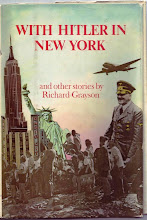
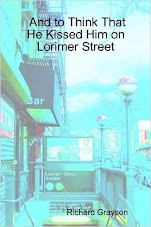
Richard Grayson, author of such acclaimed short story collections as WITH HITLER IN NEW YORK, I SURVIVED CARACAS TRAFFIC, THE SILICON VALLEY DIET, HIGHLY IRREGULAR STORIES and AND TO THINK THAT HE KISSED HIM ON LORIMER STREET, has kept a daily diary for 42 years, since the summer of 1969, when he was an agoraphobic Brooklyn teenager.

In the six volumes of THE BROOKLYN DIARIES (Summer in Brooklyn: 1969-1975, Autumn in Brooklyn: 1975, Winter in Brooklyn: 1971-72, Spring in Brooklyn: 1975, and More Summer in Brooklyn: 1976-1979, A Year in Rockaway: 1980), Grayson published selected entries from 1969 to 1980.

Now, in South Florida Winters, the first volume of THE EIGHTIES DIARIES, Grayson describes his move, at age 29, from his native New York City to South Florida's sunny and warm winters.

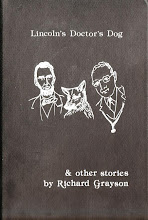
In the years 1981-1984, Grayson publishes several books of short stories (LINCOLN'S DOCTOR'S DOG, EATING AT ARBY'S, I BRAKE FOR DELMORE SCHWARTZ), runs for the Davie Town Council, becomes a community college professor and a celebrity getting his photo in People, USA Today, and national and local newspapers and magazines, and appearing on dozens of radio and TV shows. SOUTH FLORIDA WINTERS contains his entries from the days of the Mariel boatlift, the condo commando and the cocaine cowboy in Miami/Fort Lauderdale during the age of Reagan.

It will also be available on Scribd and Lulu for free online reading.

Tuesday, February 22, 2011

Amazon reviewer calls Richard Grayson's THE BROOKLYN DIARIES "Possibly the worst book about Brooklyn ever published," says "A bore is starred"


An Amazon reviewer has given Richard Grayson's The Brooklyn Diaries a one star review:

A bore is starred

I would give this interminable book five stars as a soporific; try to get through of a few pages of any of the six volumes of this semi-literate diary of a 1970s Brooklyn nobody who somehow managed to get a few books published (it must have been easier back in the day) and you will fall asleep faster than you can say either "Ambien" or "Lunesta."

On the other hand, if you find the adolescent mumblings of a pretentious, neurotic twentysomething who's under the delusion he's a writer utterly fascinating, you will absolutely adore this boring boring boring endless book and its mundane crap about the author's odd and dopey friends and family and his so-what views on such events as the July 4, 1976 Bicentennial as seen from Brooklyn Heights, the trivia of the 1972 Democratic convention in Miami Beach, and a time when large dogs apparently walked onto New York City subway trains by themselves with few straphangers (besides the author) taking notice.

The book's most interesting discovery proved to be learning that in 1979 you could get a book of short stories published without having a discernible ounce of talent, style, or indeed, brains.

Possibly the worst book about Brooklyn ever published, this book would more aptly be titled "The Brooklyn Diarrhea." Unfortunately, the author in his dotage still lives in the borough, so we're likely to be punished with yet another thirty years of his diurnal dreck.

Friday, November 26, 2010

Friday Morning in Elmhurst: Black Friday Shopping at the Queens Center Mall


Around 8 a.m., four hours after the stores opened for Black Friday shopping early-bird specials, we arrived via the G, E and M trains at Woodhaven Boulevard and Queens Boulevard to brave the crowds at the Queens Center mall.

From the outside, everything looked peaceful

from the middle island as we carefully crossed the Boulevard of Death,

but this was the most crowded, hectic Black Friday we remember. The economy must be getting better, or else people finally can't put off buying stuff they need anymore.

Almost everywhere we went in the Queens Center, there were crowds. Many with shopping bags. Some with lots of shopping bags.


Teens seemed to dominate the crowds. Teens with money.

By far, the most crowded stores we saw were the teen-oriented American Eagle and Aeropostale, which had a humongous line just to be allowed to enter the store.

The Guess store was doing a big business. Since our dad was guest's Florida and Puerto Rico menswear sales rep through most of the 90s, often making a six-figure income on his commissions, we feel somewhat loyal to them, and the Bugle Boy and Sasson labels he represented in the 80s.


Pink was very pink and very crowded,

and H & M, which had some incredibly good bargains, had such a long for the cashiers that we passed up some wonderful cheap clothes we liked. We always heard our garmento family members describe stores that we saw today as "mobbed." "Mobbed" meant money.

This Black Friday looked as if a lot more people were spending money than they did in 2008 at the Triangle Junction and Atlantic Terminal malls or in 2009 at Kings Plaza.

A line of about thirty Newtown High School students stood on Queens Boulevard as we left the mall. Like students at Brooklyn's John Dewey and Sheepshead Bay High Schools and others, they were protesting the threatened (scheduled?) of Newtown.

They told us there'd be an 11 a.m. rally at the nearby Newtown High School Field. So many Brooklyn and Queens high schools that our friends and relatives went to have closed since we returned to the city four years ago. We have a good friend who went to Newtown in the late 60s, so we wish them luck.

Speaking of back in the day, this is the way we remember the Queens Center mall from the 1970s.

It opened in September 1973,

three years after Kings Plaza (just a few blocks from our house), and we spent a surprising amount of time here for a Brooklyn boy.

But by then we had our own car, a brand-new dark gold Mercury Comet, and even with the Arab oil embargo, we loved to drive. Queens was a nice easy escape, so we came here often. Although we'd worked at Alexander's in Kings Plaza in the fall of '74 (another recession year), our favorite department store, A&S, was here,

and one of our favorite restaurants, Cooky's.

And Ohrbach's had been a good customer for the men's slacks manufactured by our grandfather and father at the family business, Art Pants Company, which would go under in that '74-'75 recession after being in business for over fifty years.

In Spring in Brooklyn, the fourth of the sixth volumes of The Brooklyn Diaries: 1969-1980, we record one day, for example, when we got out of a funk partly by coming to the Queens Center and hanging out and shopping. We were 23 then, in our first year of the MFA program in creative writing at Brooklyn College, had finished our coursework and just turned in our thesis for our MA in English at Richmond College, and were teaching our first college class ever at Long Island University's downtown Brooklyn campus:

Wednesday, April 30, 1975

Agony, however painful, always ends. It was that way with my depression of yesterday.

It was that way with the long, tortuous war in Vietnam, which ended yesterday.

Big Minh, the third president of South Vietnam in a week, surrendered unconditionally to the Communists, and U.S. Marines got the last of our countrymen out of Saigon. Today the Viet Cong is in complete control and Saigon has been renamed Ho Chi Minh City.

Getting back to my depression, it ended without warning. I forced myself to take a drive over to the Queens Center because I could not bring myself to go to the Fiction Workshop.

In Ohrbach’s and in A&S, I looked at men’s clothes, just feeling the fabrics and looking at the beautiful shirts and pants. Most of them were beyond my means, but I did find a lovely black knit shirt reduced for clearance to $2.99 and I bought it.

Suddenly I realized that the tight mass somewhere in my gut had disappeared. I had supper at home and went to LIU, where I filled my class in on what we’d be doing for the next three weeks.

I was a bit dull last night, but just the fact of getting up in front of fifteen people, most of whom are older than me, and being a teacher was good enough for me to feel somewhat triumphant.

Libby called me when I got home. She’s going on a canoeing trip this weekend and asked if I could type up a paper for her. She offered to pay me, but that isn’t necessary – anything to feel useful.

Steve called, too. He’s been busy working on an Architecture paper and “partying” at Le Jardin and Hollywood and other places like that.

I slept poorly, anxious about teaching again tomorrow (but I only have five more classes left) and filled with sexual tension with nowhere to go. I really need to make love twice a night. All this garbage about being asexual and sublimating is just that: garbage.

I need to release myself physically more. That cropped up in a long letter I received from Professor Ebel this morning. He wrote it on Sunday, after finishing my stories.

He says he plans to give me Honors for the thesis, providing Prof. Leibowitz agrees. Henry writes that he likes my writing, “which ranges from brilliantly inventive to no lower than a high plod.”

Today we were grateful to hang out at the Queens Center more than 35 years after that day. And we were grateful to plod back to Williamsburg and write about it.

Thursday, August 26, 2010

Forty Years Ago Today in City Hall Park: The Fiftieth Anniversary Celebration of Women's Suffrage


Here are a couple of pictures we took at City Hall Park exactly forty years ago today, on the morning of Wednesday, August 26, 1970, the fiftieth anniversary celebration of the passage of the Nineteenth Amendment guaranteeing women's suffrage. It was a historic day and it opens Gail Collins' recent magisterial history of the American women's movement.

Here's fiery Manhattan Congresswoman Bella Abzug, well known for her floppy hats and her fighting liberalism.

Abzug would never win her primaries for mayor or senator but remained in Congress for a number of years. Next to Speaker Tip O'Neill, she was probably the most well-known member of the House.

In the pic above, she's talking to New York City Consumer Affairs Commissioner Elinor Guggenheimer (who the previous year had finished fifth in the primary for city council president, managing to beat only Norman Mailer's ticket-mate, the incomparable writer Jimmy Breslin).


Above is Guggenheimer talking to the press (Ralph Penza of WCBS-TV and others) in City Hall Park at the start of the rally. New York Mayor John Lindsay (for whom we'd worked the previous year, in his unsuccessful June Republican primary and for his winning general election campaign as candidate of the Liberal Party) refused to grant a permit for a march up Fifth Avenue at first, and there was a standoff that later got resolved. The march went on, as in the photo on top of this post, but we didn't stay for it. Hey, we were only a stupid teenage boy.

To Guggenheimer's right in the last photo of the rally you may recognize Betty Friedan, whose book The Feminine Mystique, in which she discussed "the problem with no name" that American women faced, really launched second-wave feminism in this country.


The lady below seemed to be fighting for her own rights, though we're not sure of the relevance to women's liberation:

Here's a protester more in the spirit of the day::

We can remember that placard really well: Male Chauvinist, You Better Start Shakin', Today's Pig is Tomorrow's Bacon!


We've got our diary entry for that day in our book, Summer in Brooklyn: 1969-1975, as well as the collected Brooklyn Diaries. Lots has changed, in Brooklyn and the world, since those days, but we feel privileged to have been even just a witness at 1970's Women's Liberation Day.