Showing posts with label South Florida. Show all posts
Showing posts with label South Florida. Show all posts
Tuesday, January 24, 2017


Thursday, October 20, 2016

Monday, October 17, 2016

Monday, February 18, 2013
Richard Grayson's "WANDERYEAR" Now Available as Trade Paperback or eBook at Amazon Kindle Store


Richard Grayson has been keeping a daily diary compulsively since the summer of 1969, when he was an 18-year-old agoraphobic about to venture out into the world -- or at least the world around him in Brooklyn. His diary, approximately 600 words a day without missing a day since August 1, 1969, now totals over 9 million words, rivaling the longest diaries ever written.
But Grayson is not merely an eccentric with graphomania. His nonfiction has appeared in PEOPLE, THE NEW YORK TIMES, THE ORLANDO SENTINEL, THE SAN JOSE MERCURY NEWS, THE ARIZONA REPUBLIC, THE NEW YORK POST and numerous other periodicals.
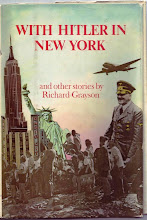
ROLLING STONE called Grayson’s first short story collection, WITH HITLER IN NEW YORK, published in 1979, “where avant-garde fiction goes when it becomes stand-up comedy,” and NEWSDAY said, “The reader is dazzled by the swift, witty goings-on.”
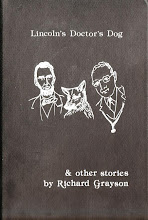
Grayson’s other short story collections have also received acclaim. LIBRARY JOURNAL called LINCOLN’S DOCTOR’S DOG (1982) “excellent” and said of I BRAKE FOR DELMORE SCHWARTZ (1983) that “Grayson is a born storyteller and standup talker.” THE NEW YORK TIMES BOOK REVIEW said Grayson’s I SURVIVED CARACAS TRAFFIC (1996) was “entertaining and bizarre” and “consistently, even ingeniously funny.”
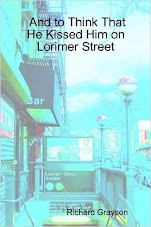
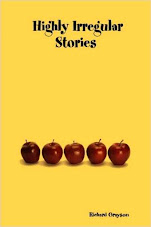
PUBLISHERS WEEKLY called Grayson’s THE SILICON VALLEY DIET (2000) “compulsively talky and engagingly disjunctive”; KIRKUS DISCOVERIES termed Grayson “an audacious and wickedly smart comedic writer” in its review of HIGHLY IRREGULAR STORIES (2005); and THE PHILADELPHIA INQUIRER, reviewing AND TO THINK THAT HE KISSED HIM ON LORIMER STREET (2006), said, “Grayson has a fresh, funny voice.”
Grayson’s nineteenth compilation of diary entries, Wanderyear, takes place between mid-1997 and mid-1998, when he quits his job as a staff attorney in social policy at a University of Florida law school think tank to move from place to place – South Florida, Brooklyn, Silicon Valley, Wyoming, Long Island, New Orleans, and suburban Phoenix, Los Angeles, Chicago and Philadelphia.
Grayson has published the first seven volumes of the diaries of his late teens and twenties as THE BROOKLYN DIARIES, featuring BOY IN BROOKLYN, 1969-1970; SUMMER IN BROOKLYN: 1969-1975; WINTER IN BROOKLYN: 1972-73; SPRING IN BROOKLYN, 1975; AUTUMN IN BROOKLYN, 1978; MORE SUMMERS IN BROOKLYN: 1976-1979; and A YEAR IN ROCKAWAY, 1980.
The second six volumes of his diaries have been published as THE EIGHTIES DIARIES, which include SOUTH FLORIDA WINTERS, 1981-1984; LATE SPRING IN SUNRISE, 1982; WEST SIDE SUMMERS, 1984-1987; INDIAN SUMMER: PARK SLOPE, 1985; SPRINGTIME IN LAUDERHILL, 1986; and EIGHTIES’ END: AUTUMN, 1987-1989.
WANDERYEAR: 1997-1998 is the sixth volume of THE NINETIES DIARIES, following SUMMER IN NEW YORK: 1990; LAST SUMMER IN ROCKAWAY: 1991; FIRST FALL IN GAINESVILLE: 1991; SPRING IN GAINESVILLE: 1992-1994; and AUTUMN IN GAINESVILLE:1994-1996.The book is also available on Lulu and on Scribd for free online reading.
Tuesday, January 1, 2013
Richard Grayson's THE EIGHTIES DIARIES published as Amazon Kindle E-book


Richard Grayson has been keeping a daily diary compulsively since the summer of 1969, when he was an 18-year-old agoraphobic about to venture out into the world -- or at least the world around him in Brooklyn. His diary, approximately 600 words a day without missing a day since August 1, 1969, now totals over 9 million words, rivaling the longest diaries ever written.

Despite the crackpot nature of his lifelong project, the diarist actually did become a writer of sorts. Starting in the mid-1970s, he began publishing his stories in literary magazines and anthologies, and later in webzines. His articles have appeared in PEOPLE, THE NEW YORK TIMES, THE MIAMI HERALD, THE SAN JOSE MERCURY NEWS, THE ARIZONA REPUBLIC, NEWSDAY, THE NEW YORK POST, THE ORLANDO SENTINEL, and many other newspapers and magazines. He won four state arts council grants for his fiction writing, and in addition to being a lawyer and political activist, has taught writing in colleges in six states since 1975.
ROLLING STONE called Grayson’s first short story collection, WITH HITLER IN NEW YORK (1979) “where avant-garde fiction goes when it becomes stand-up comedy,” and NEWSDAY said, “The reader is dazzled by the swift, witty goings-on.”
LIBRARY JOURNAL called LINCOLN’S DOCTOR’S DOG (1982) “excellent” and said of I BRAKE FOR DELMORE SCHWARTZ (1983) that “Grayson is a born storyteller and standup talker.”
THE NEW YORK TIMES BOOK REVIEW said Grayson’s I SURVIVED CARACAS TRAFFIC (1996) was “entertaining and bizarre” and “consistently, even ingeniously funny.”
PUBLISHERS WEEKLY called Grayson’s THE SILICON VALLEY DIET (2000) “compulsively talky and engagingly disjunctive,” and THE PHILADELPHIA INQUIRER, reviewing AND TO THINK THAT HE KISSED HIM ON LORIMER STREET (2006), said, “Grayson has a fresh, funny voice.”

THE EIGHTIES DIARIES runs nearly 300,000 words, chronicling his life and the lives around him from 1981 to 1989, in Manhattan and Miami and a few places in between.
It includes all of six volumes previously published separately: SOUTH FLORIDA WINTERS, 1981-1984; LATE SPRING IN SUNRISE, 1982; WEST SIDE SUMMERS, 1984-1987; INDIAN SUMMER: PARK SLOPE, 1985; SPRINGTIME IN LAUDERHILL, 1986; and EIGHTIES’ END: AUTUMN, 1987-1989.
Grayson has already published his first book of diary entries, BOY MEETS BROOKLYN: 1969-70, and the next six volumes of the diaries of his late teens and twenties as THE BROOKLYN DIARIES, featuring SUMMER IN BROOKLYN: 1969-1975; WINTER IN BROOKLYN: 1972-73; SPRING IN BROOKLYN, 1975; AUTUMN IN BROOKLYN, 1978; MORE SUMMERS IN BROOKLYN: 1976-1979; and A YEAR IN ROCKAWAY, 1980.
Five volumes of THE NINETIES DIARIES published include SUMMER IN NEW YORK: 1990, LAST SUMMER IN ROCKAWAY: 1991, FIRST FALL IN GAINESVILLE: 1991, SPRING IN GAINESVILLE: 1992-1994, and AUTUMN IN GAINESVILLE: 1994-1996.
Thursday, February 9, 2012
Richard Grayson's "LATE SPRING IN SUNRISE" Now Available as Trade Paperback or eBook at Amazon Kindle Store

This week Superstition Mountain Press published Richard Grayson's Late Spring in Sunrise. It is available in a 167-page trade paperback edition for $12.99, as well as an e-book published by Art Pants Company available at the Amazon Kindle store for 99 cents.

The promo stuff says in part,
Broward County, Florida, 1982.
A 30-year-old writer and a 17-year-old boy about to graduate from high school.
An unexpected love affair.
Richard Grayson has been keeping a daily diary since the summer of 1969, when he was an 18-year-old agoraphobic about to venture out into the world -- or at least the world around him in Brooklyn.
In LATE SPRING IN SUNRISE, an older Grayson is still exploring. His second book of short stories just published, a contract signed for his third, Grayson is finishing his first year as a full-time community college instructor in Florida when he finds himself involved in a relationship with the teenage Sean.
Earlier, Grayson published the first six volumes of the diaries of his late teens and twenties as THE BROOKLYN DIARIES, featuring SUMMER IN BROOKLYN: 1969-1975; WINTER IN BROOKLYN: 1972-73; SPRING IN BROOKLYN, 1975; AUTUMN IN BROOKLYN, 1978; MORE SUMMERS IN BROOKLYN: 1976-1979; and A YEAR IN ROCKAWAY, 1980.
LATE SPRING IN SUNRISE takes place in seven weeks of 1982 and is one of six volumes of THE EIGHTIES DIARIES, whose other books include SOUTH FLORIDA WINTERS, 1981-1984; WEST SIDE SUMMERS, 1984-1987; INDIAN SUMMER: PARK SLOPE, 1985; SPRINGTIME IN LAUDERHILL, 1986; and EIGHTIES' END: AUTUMN, 1987-1989.
The book will also be available on Scribd and Lulu for free online reading.
Friday, October 1, 2010
Twenty Years Ago in Fort Lauderdale: RAP ON TRIAL - The Broward County 2 Live Crew "As Nasty As They Wanna Be" Obscenity Cases

In 1990 the South Florida rap group 2 Live Crew brought out a highly successful album called As Nasty As They Wanna Be. As Wikipedia notes,
A large part of its success was due to the single "Me So Horny," which was popular despite little radio rotation. The American Family Association (AFA) did not think the presence of a "Parental Advisory" sticker was enough to adequately warn listeners of what was inside the case. Jack Thompson, a lawyer affiliated with the AFA, met with Florida Governor Bob Martinez and convinced him to look into the album to see if it met the legal classification of obscenity. In 1990 action was taken at the local level and Nick Navarro, Broward County sheriff, received a ruling from County Circuit Court judge Mel Grossman that probable cause for obscenity violations existed. In response, Luther Campbell [2 Live Crew's manager and lead vocalist] maintained that people should focus on issues relating to hunger and poverty rather than on the lyrical content of their music.
Navarro warned record store owners that selling the album may be prosecutable. The 2 Live Crew then filed a suit against Navarro. That June, U.S. district court Judge Jose Gonzalez ruled the album obscene and illegal to sell. Charles Freeman, a local retailer, was arrested two days later, after selling a copy to an undercover police officer. This was followed by the arrest of three members of The 2 Live Crew after they performed some material from the album at a nightclub.


The day in June when the album was declared obscene in the Southern District of Florida, we were on the Upper West Side and founded Radio Free Broward to send the (legal-in-New York) CD's we got at Tower Records on Broadway to anyone in South Florida who wanted them. Our activities were covered by CNN and other TV stations and in The Miami Herald, and in August we wrote a column, "A Rap Smuggler Sings the Blues," for New York Newsday.

We were back in South Florida in early autumn and attended the obscenity trials of Charles Freeman and 2 Live Crew. Here are our diary entry excerpts from that experience:
Monday, October 1, 1990
Today I was a spectator at the trial of Charles Freeman, supposedly the first American ever to be charged criminally with the selling of a record -- on the very Friday, June 8, that I launched my Radio Free Broward idea. I got to the courthouse at 9:30 a.m., and I was able to get a seat in the last row.
The court was filled with prospective jury members and the media: the usual young, bright types who work for the papers and TV stations. Yet I seemed to be the sole spectator not from the media, Freeman's family, the courthouse lawyers' community or defense counsel Bruce Rogow's Nova Law students.
The judge, Paul Beckman, seemed intelligent and funny, and by the end of the day I figured that even if the jury found Freeman guilty, the judge would give him only a small fine. Still, even without a jail sentence, the trial was a chilling exercise.
The prosecutors, a Hispanic black man and a woman with a British accent, are both young, and while they seemed competent and at ease, clearly they're not brilliant. For the defense, Rogow let ACLU counsel Hirsch do most of the talking, and he was okay but didn't object at times when I think he should have.
The judge's opening remarks were folksy but standard, and of course nearly every potential juror had heard of the 2 Live Crew controversy. I heard the lawyers' voir dire of the first panel of twelve and left the courtroom while the attorneys were talking to individual members.
After eating lunch at Wendy's and in the car -- and getting Jakob von Gunten at the Fort Lauderdale library (the old East Regional branch, where I used to go often) I tried to report to the Unemployment office on Federal Highway but the line at the information desk had 45 people ahead of me.
That was more than I'd ever seen, so the economy must be pretty bad (though Bush and Congressional leaders announced a budget deal in the nick of time last night, the deficit reduction plan, liked by the stock market, may not pass). On the car radio, I heard that the jury had been chosen and that the trial would start at 1:30 p.m., so I went back to the courthouse.
Last week the judge had already ruled that the prosecution couldn't bring up Judge Gonzalez's obscenity ruling nor hand out copies of lyrics to the jury (the work had to be taken "as a whole" to be judged obscene), and looking at the jury of five women and one Hispanic man (no blacks), I'm betting on a verdict of not guilty. One Jewish woman in her twenties caught my eye a couple of times, and she seemed unlikely to vote for a conviction.
After the opening arguments -- the prosecutor kept objecting to Hirsch's broadly attempting to make this an issue of free speech and there were several times when counsel approached the bench for conferences -- the first witness was the undercover cop, a black man, who bought the record.
There was a big discussion during his testimony with the jury away, about some new evidence the prosecution had just learned about yesterday -- that Freeman had played a portion of the tape for the detective when he'd come in the first time he'd come in the store in late May (the arrest took place on the third visit -- and the arguments were too technical for me to fully understand. It was something about a "Richardson hearing" and other legal terms.
At 3:15 p.m. they began playing a tape of As Nasty As They Wanna Be, and the courtroom scene suddenly turned into a theater of the absurd as the refrain "Me so horny" was repeated endlessly in a room filled with staid, well-dressed people looking very serious.
Spectators began leaving as the playing of the first side of the album dragged on. I lost count of the fucks and sucks and other juvenile words.
People were going out because, like most pornographic films I've seen, the music played was deadeningly boring. I thought the lyrics were plain stupid and gross, the kind of thing an annoying 14-year-old boy would say.
I studied the faces of the jury and thought I detected boredom, too; certainly, unlike some of the spectators, they didn't crack even a slight smile. During the playing of the album, the judge seemed to be reading; the lawyers and defendant put on solemn faces -- though earlier they'd cracked lots of jokes, as when they said the court reporter didn't need to take down all the words "but she should bop a little." The bailiff fell asleep.
After the first side ended, I couldn't take it anymore. I came home, where I got my LSAT ticket in the mail. The law is pretty fascinating, and I think I'd like to learn more and go to law school.
Tuesday, October 2, 1990
9 p.m. I know I wrote badly about the trial yesterday, and if I tried to do it the same way tonight, I'd again write just as badly. I was in the courtroom today from 9:30 a.m. to 11 a.m. and from 1:30 p.m. to 5 p.m., utterly fascinated by the trial.
It's one of the most interesting intellectual experiences I've had, the equivalent of the courses I've taken in the summer at Teachers College. Like those intensive all-day workshops, I can't write about the trial effectively because of space and time constraints.
I need to process what I've experienced. I'll just say that today's news briefs would be that the judge ruled the defense couldn't admit into evidence comparable material that can be legally bought in Broward County, and the defense called three expert witnesses: a psychologist and two music critics from Miami's New Times and from Newsday in New York. What will stay with me are images, phrases, jokes, exchanges in cross-examination, expressions in front of TV cameras.
I've talked to a lot of people there, including attorneys, the defense attorneys' wives, witnesses and reporters (including columnists like Gary Stein and the Herald's Bill Braucher), and I've gained a lot of insight into the personalities and backgrounds of the principals (judge, lawyers for the prosecution and defense, the defendant and his wife, the media people -- most of whom also covered the June trial in Judge Gonzalez's federal courtroom -- and even the bailiffs).
I now understand, thanks to John Leland, Newsday's music critic, that hiphop music is an important, distinct, and even revolutionary genre that began in a West Bronx basement two decades ago, evolved into house music and breakdancing, and is now the most significant current in pop music -- one with similarities with the fiction and visual art I enjoy. It uses appropriation, collage, repetition, parody.
The reason I think Nasty is boring is the same reason my college students think Joyce and Kafka are boring; they have no way of evaluating it, no frames of reference, and rather than face the difficulty of learning how to read a different kind of literature, they dismiss it as not worth their time.
God, this trial would make a great opera by John Adams ("Nixon in China" and the forthcoming "The Death of Klinghoffer"), maybe even a rap opera ("Hip-Hop on Trial" -- which the prosecutors say is what precisely is not what is happening). Or a movie by John Waters, the way he portrayed the music controversies in "Hairspray" and "Crybaby." Only it would have to be done 25 years from now.
I'm convinced this trial is important, maybe not the Scopes trial (that was a media circus, too) -- God, but I just thought of "Inherit the Wind," making me wonder if I could write a play out of this. It has great characters and reverberations:
Freeman, a free man, an African-American, on trial for going against "community standards." (Charlie told me, "My 'community' isn't the same as the jury's.")
All these parentheses and dashes, even yesterday, show I can't write this in a linear way. Maybe I need to rap it:
New York critic takes the stand
He's so nervous he gets three cups of water on demand
The prosecutor messes up her case
Tangling with the shrink
Won't call her "doctor"
To her face
Her partner knows only M.C. Hammer
And thinks to a music critic you gotta draw a diagram-a
Grammar grammar
They can't pronounce "prurient"
They want to think luxuriant
Sex exists only outside the county line
But I'm betting 2 Live Crew is fine
Okay, you get the point. I've got to get a transcript of this trial or at least sit down for hours and freewrite like crazy -- though I'm glad I didn't take notes and let the whole thing wash over me (see, the rhymed beat is so strong I wanted the last line to end with a word that rhymed with crazy
This evening I went to the BCC-South library for Talkin' With Lawton, a "town meeting" covered by radio in which [candidates for governor and lieutenant governor] Chiles and MacKay answered questions from citizens. They actually seemed as if they were trying to learn something in case they get elected. This is revolutionary in American politics.
I saw Betty there, and after kissing her hello when the hour ended and the candidates went on a tour of the library (I saw them learning about the newly-installed on-line catalog, the same system Queens libraries have), she and I both expressed the hope that Chiles can overcome Gov. Martinez's huge campaign war chest (the Democrats are still limiting donations to $100) and negative ads, but we doubt they will.
Betty promised two Saturday classes to other people but said if the third one registers, I can have it. Today I also stood in line at noon at Unemployment and got my address change straightened out.
Wednesday, October 3, 1990
7 p.m. The guilty verdict for Charles Freeman led the CBS Evening News just now, so I was proven right about the trial's importance. However, I was shocked at at the outcome, and right now I only want to make up for the sleep I've lost this week.
The trial was on my mind all last night, and I woke up at 6 a.m. so I could get to the courtroom for the start of arguments. More and more, I saw this trial as a three-act opera, with arias by attorneys, witnesses, bailiffs, reporters and jurors.
This morning was stunning. I sat in the second row with the Sun-Sentinel reporters (Gary Stein quoted me in his column today on the trial being "an unreal waste" and he mentioned Radio Free Broward).
Perhaps I should have also taken notes during Leslie Robson's closing for the state and Bruce Rogow's eloquent defense of the First Amendment in his closing arguments, but I wanted to experience the trial, just let it wash over me -- sort of the way an opera does.
The judge's instructions to the jury were a great solo, too. He seemed bemused and detached from the process during the entire proceedings, as if he were merely an onlooker.
When Sheryl Solomon, the weight-loss consultant, was told she was the alternate juror and released, she decided to stay. I spoke with her, as did the reporters. "Unfortunately, I would have voted not guilty," she said, saying that while she found the album disgusting, there was a reasonable doubt in her mind that it would be obscene to everyone, your average person/responsible person (there seems to be a distinction in two of the prongs of the Miller test). Sheryl said some people might think it had artistic value because of the music.
I should have realized what the verdict would be when the jury immediately asked to see the album, but like John Leland of Newsday and most of the other observers, I was convinced the jury would be won over by the defense's arguments.
At 11:30 a.m., figuring I had a couple of hours, I went out to lunch and then to the Job Center on Broward Boulevard for too long. When I returned and reporters outside the courthouse told me that Charlie had been found guilty, I completely lost it.
I took out the CD of the album from my bag and in front of the TV cameras I started ranting about the unfairness of the verdict and how I was disgusted with the censorship. I even offered to sell the album to people, daring sheriff's deputies to arrest me.
Luckily the local NBC station ran only a portion of the tape tonight, with me identified only as "Concerned Citizen" and saying that no matter how vile the language or subjects, the album has a right to be sold in America.
Driving home, I must have had sky-high blood pressure, and I could only think this was the last straw, that I have to leave backward Broward County forever. I've calmed down since, but I really have to think about the implications of what I witnessed the last three days.
I thought earlier I might try to get a nonfiction book out of this, but today proved I couldn't be a disinterested observer.
Thursday, October 4, 1990
Noon. Dad had an appointment, and Mom and Jonathan are working at the flea market, so I've had the luxury of privacy this morning. I woke up at 4 a.m. and couldn't get back to sleep because I kept ruminating about the trial and the jury's decision.
Am I neurotic to get so involved? I think I'll avoid the trial of 2 Live Crew next week. I don't have as much rapport (no pun intended) with them as I do with Charles Freeman because, after all, they're celebrities, and a guilty verdict will just increase their fame.
After yesterday, I'm sure they'll be convicted, and so will the Cincinnati museum director in his trial for obscenity over the Mapplethorpe exhibit. I wish I didn't take public issues so much to heart. After all, nothing I write is in danger of being censored. Literary writers are so irrelevant, nobody would bother.
But I feel Charles Freeman is a hero, and I identify with him because, like Rosa Parks, he stood up and decided he wouldn't take shit anymore. There's a cultural war in this county and throughout this nation, and part of me wants to wade into the fray, appropriating tactics of ACT-UP and other activist groups, while another part of me thinks this is the most propitious time to go to Europe for a while.
Well, I don't know what to say. I'm going to avoid the media (looking at it, I mean) for the next day, at least as far as this issue is concerned. (I'll watch the German unification celebrations.)
I still feel spent and I have yet to process and assimilate all that I saw and heard at the trial. But at least I know now I'm probably in no danger of crashing into the kind of self-pitying depression I feared back in New York, if only because of my tendency to get involved with the world outside myself.
Tuesday, October 16, 1990
9 p.m. I attended the 2 Live Crew trial from its start at 9 a.m. till it recessed after 5 p.m., and once again, it was an amazing experience to be in the courtroom. I now feel like I know the attorneys Rogow, Robson and Dijols (there are two other defense attorneys, presumably one each for the three defendants).
Today I took copious notes, unlike last time, and in the afternoon I sat with the reporters. This trial has got national media here: Sara Rimer from the New York Times (I told her how much I liked her series on the Bronx public school; I've admired her work since she was the Herald's NYC correspondent); a guy from the L.A. Times, a woman from the Washington Post, people from USA Today and the Voice and other publications.
I can't tell if anyone is covering this with a book in mind, so maybe I should try to pitch a nonfiction book (Rap on Trial?) to an agent and see what happens. I'm still not sure if I'm up to writing a book, but somebody should, because this whole controversy has great characters and deals with important issues in American life (free speech, race, class, money, sex and the cultural wars now raging).
Maybe I should have been a journalist myself, because I like talking to bright media people, and I'm such a big reader that I can hold my own in conversation with them. But I don't think I'd enjoy writing on deadlines, although it might be terrific practice for me to try to come up with a story I'd have to file quickly.
Well, here's a sample: Opening arguments began today after six days of jury selection, which produced a more representative group than the Freeman trial did. The six jury members include a black woman and two guys in their early twenties, as well as a 76-year-old retiree (though not a typical one, since she'd been a professor at Wellesley).
The state's first witness, Detective McCloud (the same guy who bought the album at E.C. Records and arrested Charlie Freeman), ran into trouble on cross-examination when Rogow took him through what he'd done with the microcassette tape of the concert at Club Futura that he recorded on June 10.
Because of foul-ups, the digital tape the prosecutors want to introduce into evidence (and played for an hour this morning -- it was extremely garbled and difficult to understand) may be tainted evidence. The judge June LaRan Johnson, a heavyset blonde woman (a former student -- but not a great one, by her own admission -- of Rogow's), will rule on that when the trial convenes tomorrow.
I hope to be there. Yes, some of the procedures are tedious, but watching Bruce Rogow discover, step by step, just what happened with the tapes, was utterly fascinating, and it made me see the deep intellectual challenges that the law can provide.
Robson still strikes me as too prickly, but maybe she has to act that way as a prosecutor. The youngest defense lawyer, Randy Straus, gave an opening statement (mercifully short) that was so inarticulate, I felt embarrassed for the kid.
In fact, now that I'm nearly 40, it strikes me that all these people -- attorneys, defendants, judges, journalists -- are kids. It's as if I've discovered the secret of all the world's important business: nobody's more of an adult than I am, really. Well, now I sound inarticulate.
I went out for lunch and for frozen yogurt during two breaks today.
Wednesday, October 17, 1990
I slept fantastically, and in one dream I felt powerful as I ran numerous blocks along Avenue N in Brooklyn without getting breathless or sweaty. I didn't do too bad when I did aerobics at 6:30 a.m. today, either. Because I wanted to get to court early, I didn't feel like putting off my exercise until evening as I did yesterday.
At 9 a.m. I was outside the courtroom, where Judge Johnson had her usual docket of misdemeanor cases, and I sat on a bench with Chris Wong Won and Mark Ross [the other two defendants] and Luke Campbell's bodyguard.
The talk of the day, as the attorneys and media people began entering, was Sara Rimer's front page story in the Times, with Rogow and Luke on the cover in a photo (and Rogow and Robson portrayed on the jump page inside).
Because I had my notebook, the bailiff told me to sit with the media. Sara didn't show today -- her article was basically an overview and another probably won't appear until the verdict -- but the others were there.
There's this cute long-haired blond guy, Tom, who works for the Palm Beach Post who's obviously gay; I've liked him since the Freeman trial, but he's studiously avoided even glancing at me.
Al Goldstein, in his crummy biker duds and great girth, left early in the morning's proceedings, and in the afternoon I sat behind the owner of Club Futura, who himself goes on trial next Friday in a separate obscenity trial.
The 2 Live Crew case is going to go on for a long time. Today they kept playing snippets of the barely audible tape, interrupted by Det. McCloud saying who was singing or talking what was said.
I left at 5 p.m., so I don't know if they ever got around to cross-examination, but Rogow withdrew his objection to the tape being introduced and said he'd bring up the irregularities about it then.
McCloud twice led to mistrial motions when he inadvertantly brought up the verboten transcript of the show and the juvenile concert. Basically today's testimony was exceedingly tedious.
Without a videotape or clear audiotape, it's hard to prove obscenity because hearing it in such a disjointed fashion makes the whole performance difficult to follow or visualize "taken as a whole" (the Miller guideline on obscenity).
Still, I got lots of good notes from talking to people, especially bailiffs, deputies and court reporters, and some of Rogow's Nova students explained the fine points of law I'd missed. But I couldn't bear the repetitive testimony and left early.
When I got home, there was a message to call Betty. She's decided to give me the 1102 course, which delights me because it's better than 1101 (more interesting to teach, it involves literature and has students who've passed 1101 and so presumably are better writers).
The class begins Saturday, of course, and I need to make up a syllabus and plan the eight weeks, so I won't be able to see all of the trial -- which will probably go on past this week; I feel sorry for the bored, sequestered jury.
But I'm happy to be back working at BCC; I need the job, if only to anchor me in some structured activity besides attending trials.
Thursday, October 18, 1990
8 p.m. From days that I had to work hard to fill, I've gone to days filled with more stuff to do than I have time to do it in, but I'm not complaining.
When I read Dexter Filkins' report on the trial in the Herald early this morning, I discovered that McCloud had been on the witness stand interpreting that lousy tape until 7 p.m. During a break, the jury sent the judge a note asking for permission to laugh ("Some of us are in physical pain from restraining ourselves"), which was granted.
I'll be shocked if 2 Live Crew isn't acquitted within an hour of the start of deliberations -- but then I was pretty shocked by the Freeman verdict. Nevertheless, I think I know this jury better, and Rogow won the case when the jury got picked after he took six days to get the people he wanted.
This morning it was both delicious and painful to watch is masterful cross-examination of McCloud. The detective never lost his composure, but Rogow basically humiliated him, at one point making him get up and show how the go-go dancers were moving. It was hard to watch an overweight middle-aged black man make those moves, and it made him look ridiculous.
The defense established that there was much more going on at Club Futura than the words on the tape and the bawdy or lewd gestures the detective had described. When the "work" has to be "taken as a whole," it's important to make sure the jury knew that the DJ was at the turntable, the colored strobe lights were flashing, the gaudy costumes and the audience participation were all part of the performance.
Mrs. Campbell, Luther's mom, was in the courtroom, as was the judge's elegant mother; at different points, both were sitting next to me. I saw fewer press people today, or at least different ones.
They set up a weekend schedule, but during a break, I heard defense attorney Jacoby tell Dexter that the trial would probably end on Saturday. I hope it goes on till that afternoon, so I can be there for the verdict.
After McCloud left the stand at about 12:30 p.m., they called Detective Debbie Worder, who apparently was going to go through the same tedious process of listening to and paraphrasing the tape of the concert. There was no point in staying for that, and I had to go to BCC.
On the way, I passed the scene of the alleged crime, Club Futura, on Hollywood Boulevard and Dixie Highway. Betty gave me the room number for the 1102 class and we talked about how to get all that extra work in. Eight 4-hour classes aren't sixteen 3-hour classes, and I suspect that even with extra assignments, the workload will be less than the equivalent of a normal term.
I'd wanted to put together a syllabus for this Saturday, but I now find I'll wait until next week. I'm comfortable when I'm feeling out a class and improvising, at least on the first day. I'll have them write, we'll talk about writing and literature, I'll read a story aloud. . .
I'm surprised at how pleased I am to be teaching again and how good it felt to be at BCC-South among friends. . . I feel like I'm starting to have a full, busy life again. It's still 88° or more every day, and going out at night is problematical because of the mosquitoes spreading St. Louis encephalitis. But winter -- the golden season here -- will come eventually.
Friday, October 19, 1990
I was at the courthouse before 9 a.m. With the trial not starting for an hour, I sat on a bench outside the courtroom and read the papers. Tom Woodie of the Palm Beach Post, sitting nearby, wouldn't acknowledge my presence, so it's obviously useless to consider him a potential friend.
A lot of talk has started about the cost of the trial, around $100,000. I think by now even Nick Navarro realizes that he opened up a terrible can of worms with the high-publicity arrests.
Charlie Freeman was talking to reporters, and he spoke with Kenny Geringer, the Club Futura owner, in private. They are both victims -- non-artists, non-performers -- like the Cincinnati art museum director Dennis Barrie, of this witchhunt or cultural war or censorship campaign.
I was impressed when Newsday's John Leland said, "Hello, Richard," to me as he entered courtroom. He and Henry Louis Gates were testifying this morning, going out of turn because they've been here at the Riverside Hotel since Wednesday and had to fly out this afternoon.
I sat in the back of the courtroom with two high-school guys who told me they'd come to "support the band" and to report back to their classes. They asked me questions and I explained some stuff to them.
Dr. Gates was an incredible witness. As I said to these kids, he's like the superstar of English professors, and he was brilliant, expounding on signifying and the dozens and rap's place in African-American culture; giving examples from Zora Neale Hurston and Shakespeare; explaining metaphor, parody and other literary devices to the jury as if they were his senior seminar at Duke.
It's hard to believe such an erudite man is only my own age. Pedro Dijols tried to shake faith him, but he just couldn't score. During the break, I shook Dr. Gates' hand and told him I was "an English teacher at the local community college" who admired his works, and he was very kind.
John Leland's testimony on hiphop I'd heard before, but his history was more pointed and effective this time and I was able to write it down. Pedro's sarcasm on cross-examination probably worked against the prosecution.
After a lunch break, their second witness, Detective Debbie Worder, continued to be terrible -- but it was hard to succeed at the task she and McCloud had to accomplish, playing a few minutes of that inaudible tape and then "translating" it.
I was sitting next to a young black woman who'd been there that night, and she said the detective was getting not only some of the words wrong, but that she couldn't convey the atmosphere of the club, the fun people were having.
This woman could understand what Gates and Leland told the jury, saying the words in 2 Live Crew's songs, like all art and literature, aren't meant to be taken literally.
The jury burst out laughing when Det. Worder described how the dancers were "humping," and Leslie Robson, coming on like Miss Grundy (the British accent doesn't help), asked for a recess. (Mark Ross calls the frequent sidebars "salad bars.")
I left at 5:30 p.m. and when I got home, they said Rogow was cross-examining Worder. Tomorrow morning the state will rest, and the defense is calling KC (of the 70s disco KC and the Sunshine Band).
Hopefully I'll get to court before a verdict is reached tomorrow afternoon, but unfortunately the verdict may come quickly; I can't imagine this panel -- unlike the Freeman guilty -- doing anything but voting not guilty.
Saturday, October 20, 1990
9 p.m. Because of my BCC class, I didn't get to the trial till 12:30 p.m., and they wouldn't let me in during the defense's closing arguments. But after a break, I got to hear Pedro's final talk to the jury and judge's charge, which I told Rogow in the men's room should be called "Miller time" (after Miller v. California).
I figured I had time to get a salad at Wendy's on SE 17th Street, and when I got back, I sat down in the courtroom next to one of the released alternate jurors, who told all the reporters that he never even considered a guilty verdict.
And I'd have been shocked at one myself, especially after I found myself in an elevator with Pedro with only the two of us in it, and he said bitterly, "This case was the worst piece of crap I've ever had."
Because of the content of the trials and their fierceness, I realized I'd viewed Pedro and Leslie as the enemy, but they were only underpaid civil servants doing their job.
As we waited, I talked a lot to Jeanne DeQuine, who'd been writing for USA Today, and Susan Grey from WINZ and Charlie Freeman and others. When the buzzer sounded at 4:10 p.m., everyone rushed around as word came in that jury had reached a verdict.
The courtroom filled up with media people and spectators, and the TV camera was moved to the witness stand so it could get the defense table's reaction to the verdict.
When the court clerk said the first verdict, finding Luke not guilty, he jumped for joy and the courtroom erupted into cheers. I've seen the scene on videotape now -- it led the NBC Nightly News as well as the local shows, and I can be seen clearly just behind Luke Campbell and in front of Charlie Freeman.
Chills ran down my arms and my eyes started welling up with tears. I didn't shout like some others, but I felt good, and in some way this verdict made up for what happened in the Freeman case -- but not quite.
It was an exciting scene as flashbulbs popped and lights glared and we moved to a press conference in an adjoining room. Bruce Rogow spoke first, about the freedom of speech, even offensive speech, and the other lawyers said their bit, but of course Luke Campbell was the star, and he handled himself well.
"We had a fair jury," he told the crowd, and he made some nice remarks about "the supportive people of Broward County." I know it's a victory for the First Amendment, but there's still the federal appeal of Judge Gonzalez's obscenity ruling, and Charles Freeman's appeal, and next week's trial as well.
How many other cases are being brought against other artists and performers? Today, in my own English 1102 class, I had an experience which tells me that censorship forces are more alive than ever.
Actually, the class seems like a delightful group: all adults, some professional people, some who say they like writing and literature. But when we came back from the break, I did what I've done before in 1102: read aloud Flannery O'Connor's "A Good Man Is Hard to Find."
Unfortunately, we never got around to discussing the story because one woman immediately raised her hand after I finished, demanding to know "why a book like this was allowed to be published," much less used in a school.
The word nigger, used twice in dialogue of the grandmother, so blinded her that she couldn't -- despite all my reasonable talk and the arguments of other students -- see that it wasn't the author of the story insulting herpersonally.
It really made me feel lousy, actually, even though the woman said she wasn't accusing me personally of racism. Not being able to explain the difference between a person's racial insult and an author's attributing a racist remark to an unsympathetic character in a story over forty years old -- well, that just about made me want to give up teaching altogether.
If we can't represent life as it is or what it was, then can artists doanything? Probably I could manage to get an Op-Ed piece out of this -- Is there any difference between this woman wanting to ban our textbook and Broward County wanting to censor 2 Live Crew? What advice would Prof. Gates give me if I wrote him? -- but I'd rather have avoided the experience.
I haven't read today's or yesterday's Times and I'm too tired to do anything now but close my eyes.
-- Still Saturday. It's 10 p.m. and I can't stop my mind from racing. That student in class today still brothers me tremendously.
Do I need to be accused, even indirectly, of racism because I teach -- and enjoy -- a story that twice contains the word nigger? Is what happened to Salman Rushdie going to happen to every writer who offends a particular group?
Are fewer people intelligent enough, as I am, to appreciate writers and artists who nevertheless are racist, sexist, anti-Semitic, homophobic? I like Henry Adams and Celine and numerous other authors who were notorious Jew-haters.
When I was in grade school, we talked about tolerance -- that condescending word. Is the new tolerance lack of tolerance? Okay, we're dealing with community college students here. These are the same students who thought the story in Crad Kilodney's bad short story anthology were good.
Maybe this just another one of a thousand signals blaring, telling me to stop teaching: I'm sick of other people, and I feel real anger towards this woman who took all the joy out of today for me, not to mention the joy out of one of my favorite stories.
When I feel I should be ecstatic over the 2 Live Crew verdict, I can't relax because I see threats to free expression popping up everywhere now. Instead of feeling relieved and hopeful, I just want to get away from other human beings.
Sunday, October 21, 1990
I needed to unwind today after five days at the trial. I've seen myself on TV every time the 2 Live Crew story comes on the news. On the TV news shows and in the papers, the jurors said they found the lyrics funny and felt the charges were politically motivated, but Sheriff Navarro says he'll arrest the band again if they perform the same show in Broward County. Jesus.
Sunday, September 10, 2006
Judd Lear Silverman Reviews Richard Grayson's AND TO THINK THAT HE KISSED HIM ON LORIMER STREET
On his eponymous blog, Judd Lear Silverman reviewed Richard Grayson's And to Think That He Kissed Him on Lorimer Street on September 9, 2006:

If you're not familiar with the writer, Richard Grayson, you should be, especially those who love the short story form. Besides spending time on bogus runs for political office and publicity stunts that have graced People and Page Six in the Post, Grayson's been writing prolifically for years, and his first anthology, With Hitler in New York, was recently reissued. Other humorous writings have included the collections I Break for Delmore Schwartz, Eating at Arby's: The South Florida Stories, and Narcissism and Me, as well as a novella, The Silicon Valley Diet. [Some of these stories have also been reprinted in Highly Irregular Stories (Dumbo Books).] But his recent collection, entitled And to Think That He Kissed Him on Lorimer Street, is perhaps the best collection to start with, reflecting not only his gifts as a satirist but his ability to keep the mind so busy it doesn't know that the heart has been touched. Like a reality TV junkie, Grayson mixes seeming fact with fiction, borrowing names, places and people from his own life and shaping them into odd and effecting commentaries on the passage of time, family relationships, sexuality, race relations, and America's pathological preoccupation with celebrity. Some stories are quick brushstroke sketches of people and a particular time. Others are journeys told in vignettes stretching spans of 20-30 years. Friendships are explored in sideways glances, showing how the most unlikely of alliances can turn into lifelong relationships. Numerous stories (perhaps one too many for the same collection) are subdivided by real estate locations: old movie palaces, libraries, and shopping centers, where seemingly innocuous events are recalled that by the end of the story add up to a whole lifetime of experience. Grayson shape shifts from gay to straight, white to black, male to female, kid to aging wit. Grandparents and childhood buddies play recurrent and important roles, but discerning fact from fiction in Grayson's work is tricky until one considers these stories in the aggregate. In the biography of the great Italian filmmaker, Federico Fellini, the maestro is quoted as saying that the truth of his life is not in the facts reported by birth certificates, death notices and journalistic reportage, but in his art, his dreams, his films--it is in the revelation of the imagination that the real artist is known. Likewise, the truth of Grayson is in these tales, invented and reinvented versions of his life and experience. The facts may not be verifiable, but the affection and care he displays in his description of life's travels and the people in his life are real, resulting in stories that are affecting and sharply observed. Recommended.

If you're not familiar with the writer, Richard Grayson, you should be, especially those who love the short story form. Besides spending time on bogus runs for political office and publicity stunts that have graced People and Page Six in the Post, Grayson's been writing prolifically for years, and his first anthology, With Hitler in New York, was recently reissued. Other humorous writings have included the collections I Break for Delmore Schwartz, Eating at Arby's: The South Florida Stories, and Narcissism and Me, as well as a novella, The Silicon Valley Diet. [Some of these stories have also been reprinted in Highly Irregular Stories (Dumbo Books).] But his recent collection, entitled And to Think That He Kissed Him on Lorimer Street, is perhaps the best collection to start with, reflecting not only his gifts as a satirist but his ability to keep the mind so busy it doesn't know that the heart has been touched. Like a reality TV junkie, Grayson mixes seeming fact with fiction, borrowing names, places and people from his own life and shaping them into odd and effecting commentaries on the passage of time, family relationships, sexuality, race relations, and America's pathological preoccupation with celebrity. Some stories are quick brushstroke sketches of people and a particular time. Others are journeys told in vignettes stretching spans of 20-30 years. Friendships are explored in sideways glances, showing how the most unlikely of alliances can turn into lifelong relationships. Numerous stories (perhaps one too many for the same collection) are subdivided by real estate locations: old movie palaces, libraries, and shopping centers, where seemingly innocuous events are recalled that by the end of the story add up to a whole lifetime of experience. Grayson shape shifts from gay to straight, white to black, male to female, kid to aging wit. Grandparents and childhood buddies play recurrent and important roles, but discerning fact from fiction in Grayson's work is tricky until one considers these stories in the aggregate. In the biography of the great Italian filmmaker, Federico Fellini, the maestro is quoted as saying that the truth of his life is not in the facts reported by birth certificates, death notices and journalistic reportage, but in his art, his dreams, his films--it is in the revelation of the imagination that the real artist is known. Likewise, the truth of Grayson is in these tales, invented and reinvented versions of his life and experience. The facts may not be verifiable, but the affection and care he displays in his description of life's travels and the people in his life are real, resulting in stories that are affecting and sharply observed. Recommended.
Sunday, September 19, 2004
Richard Grayson letter in The New York Times on South Florida as New York's Sixth Borough

Richard Grayson has a letter in the New York Times today (September 19, 2004): "The Sixth Boroughs":

To the Editor:
Jonathan Safran Foer is one of our finest young novelists, and "The Sixth Borough" (Op-Ed, Sept. 17) is a wonderful work of fiction.
Of course, those of us who live in South Florida know that we live in the real sixth borough of New York City.
Richard Grayson
Davie, Fla., Sept. 17, 2004
Wednesday, December 23, 1998
Richard Grayson column in the Boca Raton News proposes naming cities after corporations

Richard Grayson's column in the Boca Raton News today (Wednesday, December 23, 1998) proposes naming cities, like stadiums, after corporations.
Sunday, April 22, 1990
Richard Grayson article in Broward Cultural Quarterly: "Reflections of a Public Nuisance"


Richard Grayson has an article in the spring 1990 issue of the Broward Cultural Quarterly: "Reflections of a Public Nuisance."
Saturday, January 3, 1987
Richard Grayson's Funhouse column in the Hollywood Sun-Tattler on Global Warming


Richard Grayson's Funhouse column in the Hollywood Sun-Tattler today (Saturday, January 3, 1987) discusses climate change and global warming, suggesting South Florida will be improved by being underwater.
Sunday, June 15, 1986
Richard Grayson Op-Ed Column in Fort Lauderdale News: "The 'Problem' with South Florida's Senior Citizens"


Richard Grayson has an op-ed column in the Sunday Fort Lauderdale News/Sun-Sentinel today (June 15, 1986) on "The 'Problem' with South Florida's Senior Citizens."
Saturday, December 1, 1984
American Book Review (Nov./Dec. 1984) Reviews Three Books of Short Stories by Richard Grayson

The American Book Review reviews I BRAKE FOR DELMORE SCHWARTZ, DISJOINTED FICTIONS,EATING AT ARBY'S on pages 21-22 of its November/December 1984 issue:
From Our House to Bathos
* * *
I BRAKE FOR DELMORE SCHWARTZ
Richard Grayson
Zephyr Press
13 Robinson Street
Somerville, MA 02145
1983, 95 pages
Cloth, $9.95; Paper, $4.95
EATING AT ARBY'S: The South Florida Stories
Richard Grayson
Grinning Idiot Press
P.O. Box 1577
Brooklyn, NY 11202
1982, 24 pages
Paper, $3.00
DISJOINTED FICTIONS
Richard Grayson
Cumberland Journal
P.O. Box 2648
Harrisburg, PA 17105
1981, 64 pages
Paper, $3.00
Reviewed by Jaimy Gordon
_________________________
Eating at Arby's and Disjointed Fictions clamor for laughs before one even opens the covers. True, I Brake for Delmore Schwartz is a dignified volume, except for the title and the enclosed red bumper sticker that spells it out in large letters. But the flamingo-pink cover of Eating at Arby's announces that Richard Grayson ran for Town Council lately in Davie, Florida, with a campaign promise to give horses the vote; and the back of Disjointed Fictions reports that he was once a candidate for the Democratic Vice-Presidential nomination. Both books offer columns of testimonials on Grayson's work, some from trade organs like Publishers Weekly, others from Florida community rags like the Delray Beach News Journal and the Fort Lauderdale Sun-Sentinel. These critics are, on the whole, somewhat puzzled by Grayson—a woman from the New York Post hopes that "his literary career may be blessedly brief"—but most know a joke when they see it. They invoke Steve Martin, Saturday Night Live and the muse of stand-up comedy to explain Grayson, though a certain uneasiness lingers between the blurbs: If this is Saturday Night Live, can it be literature?
And now a second clipping from the Miami Herald slips out of Eating at Arby's, hinting at yet another South Florida story. In October, 1982, an alert reporter sniffed out a small scandal behind the chapbook: Richard Grayson employed a $3000 grant from the Florida Arts Council to chronicle the banal adventures of Manny and Zelda among mall shoppers, Marielitos, and drug murderers, in flat, repetitive, Dick and Jane-style prose. The reporter finds Grayson in his English Department cubicle at Broward Community College, and he does not allow her to go away disappointed. He elaborates on his municipal campaign platform: besides enfranchising horses, he was in favor of giving tactical nuclear weapons to the Davie police force. He threatens to sell the book on the street and says of the Florida Arts Council: "I'm sure they'll be delighted to see such a great piece of literature came from their money." But he adds a typical disclaimer: he is grading well over a hundred "illiterate papers" a week. "As you can see from the book," he tells her, "it doesn't do much for your writing style."
The willingness to be a public clown—or, more accurately, to present the appearance of a wistful nobody scribbling away in private who occasionally bursts out as a farcical publicist, exposing himself before the world—continues unabated inside Grayson's prolific but never prolix fictions. The several strains of his humor occur in more or less varied combinations according to the story, and I much prefer those loosely segmented chains of association in the first person (happily, two thirds of the stories in both Disjointed Fictions and I Brake for Delmore Schwartz fall into this category), where all his mannerisms exist side by side, to his more symmetrical and abstract pieces; for, in the absence of the first person, Grayson's prose loses much of its charm and is shown to be a rather blunt and inelastic tool. Grayson is not a graceful stylist, and as soon as the expression of a personality (or the illusion of this) disappears, his inventions and satires move on leaden feet. This is particularly true of Eating at Arby's, whose conceptual plan may sound comic, but which, as a literary experience—that is, as something to read—is all but insufferable. Manny and Zelda speak the same stiff, uncontracted idiom with which Dick and Jane stupefied us in second grade; the tiny vocabulary of their dialogues expands primer-style from a base of I like/nice/fun/friends/important/good/glad/ happy/man, to include "gay," "I-95" and "accidents"; "Century Village" and "Arby's"; "trip to Colombia"; "sore back" and "chiropractor"; "hurricane," "cocaine," "gun," and "murder." Besides offering a draught of gall to the Arts Council, the little book has two virtues, of a sort; it does not take a subtle intellect to feel the point of its satire, so that Grayson's contempt, which almost any dolt can share, is ultimately reassuring; and it is all over in twenty-four pages.
The variegated texture of the first-person narratives that most engage his admirers and baffle his critics is challenging to describe, since it is through juxtaposition that these deliberately unshapely tales achieve their effects. There is a strain of soap-opera exhibitionism in Grayson; sown through I Brake for Delmore Schwartz are revelations of an embarrassingly personal nature, often maudlin, often clearly untrue: "At this time I was suffering from schizophrenia," he says in passing, in "Is This Useful? Is This Boring?." "No matter how hard I tried, I never could take the whole bottle of sleeping pills," he says in "Oh Khrushchev, My Khrushchev." "But maybe for Khrushchev I could do it." A commonplace East Coast Jewish extended family, divided between New York and Miami and subject to cancer and bar mitzvahs, is put to use in many of Grayson's stories, variously as the basis of anecdotes that would not go over badly on the borscht circuit ("little antidotes," the grandfather in "Nice Weather, Aren't We?" calls them) or for highly suspect pathos. In one story in I Brake for Delmore Schwartz, the narrator's sister has drowned; in another, leukemia has snatched her away; in Disjointed Fictions ("Escape from the Planet of the Humanoids"), a sister is still tirelessly dying; the reader is instructed to "Feel this:"
The pain of frustration that a man feels when he is trying to write a sentence about how a character feels at his sister's funeral and can only come up with this fragment: Better her than me.
But in another tale the sister's phone number ("FOR A GOOD LAY CALL 969-9970") appears on a subway map in the IRT; and in yet another, she's alive and prospering as Roslyn, "now a Long Island dermatologist and mother of twins," who says, "Yes, I remember Saulie's bar mitzvah. . ."
The thread of the pathetic family saga intertwines with another characteristic one that I will call the lament of the schlemiel in the creative writing workshop. He is no longer in it, of course, but it has left its mark. The narrator worries about the quality of his fictions, checking them against mumble-mouthed platitudes of the craft; and these are travestied evenhandedly whether they arise from the post-modernist school or the Famous Writers' School. Grayson has an MFA from Brooklyn College, so he knows the rhetoric. In "Is This Useful? Is It Boring?," the narrator boasts, "For two years I studied Fiction Writing in one of the best universities in the country. . . .We were supposed to write new kinds of fiction. One writer called himself a 'post-contemporary' writer. That says it all." But from this self-congratulatory beginning, the voice disintegrates into a muddle of pomposity and self-pity: as a writer who misrepresents people as characters and otherwise can "get away with murder," the narrator is "a pretty powerful person"; well, no, he says, actually he writes out of a neurotic need for attention; in fact, he writes to get revenge on some Italian kids who once called him "Irving"; then the narrator changes his mind — "I can't even find the right words" — maybe he didn't learn anything in college after all. So much for the tenets of the experimentalists.
But then there are the traditionalists to contend with. Halfway through "Nice Weather, Aren't We?," the narrator's girlfriend Rosalie sneaks in "while I was out getting a Fresca" and writes "NO FOCUS" on the middle of the page. "Criticism like that I don't feel useful," he says huffily. But he admits it's all a strain. In "The Four Faces of Freud":
Listen, there is no point in finishing this story... I can't understand why some editor would print this, except as a cry for help. I am mentally ill.
This is the Grayson manner in endless variations: alternate strains of impudent posturing that breaks down in self-parody, equally disingenuous confessions of the writer's ineptitude; and, withal, punchlines and puns that he will labor for many paragraphs to set up, like, "I never promised you a prose artist," and, "Fiction's no stranger than Ruth." All these parts are suffused with the appealing professional anxiety of a small-time writer scrabbling against odds and without much concern for his dignity to get a little renown for himself. Grayson once said in an interview (Gargoyle 17/18) that he keeps his fiction short because "fragmented, self-conscious novels might very well be boring. Some people say that fragmented, self-conscious stories are also boring, but at least they're short."
It seems worth noting that Grayson perceives his readership, so far, more clearly than his readership perceives him. There is a sound precedent for that loose-jointedness of his fictions that so confounds his critics, a venerable one that reaches back far beyond the mimetic and novelistic bias that is in fact a middle-class parvenu in the world of letters. It is the satiric tradition of Erasmus and Rabelais, of Diderot, of Swift and Sterne and Peacock, and one may find this tradition, as in Grayson, the shape of a miscellany founded on a loose association of ideas, frequently with humble apologies from the author; idiosyncratic asides, digressions, and non sequiturs; catalogues and inventories; structures of information borrowed from extra-literary domains of the language; dialogues, patterns of query and response, and other instances of the unexpected, the undignified, the fitful, the intellectually pretentious breaking down into parody. But the brevity of Grayson's fictions is his own design, based on a just though severe estimate of the attention span of a literary peer group he understands all too well. In the same interview, Grayson told his questioner, "Actually, if you look at my work, it's probably more influenced by TV than by literature." Grayson writes for (because he is one of) a literati that watches TV, that is hounded by the neologisms "writers' workshop," "Citibank," and "co-op apartment." The narrator of "I Brake for Delmore Schwartz" walks the streets of New York, Citicard in hand—the same streets trod by Isaac Bashevis Singer and by the shade of the departed Schwartz—asking himself if it wouldn't be smarter to take a course in computers for a guaranteed fourteen grand a year, than to persist in this thankless manner of living.
Perhaps the most confusion about whether to place Grayson in the contemporary literary scheme is owing to the imperfect self-knowledge of that public of which Richard Grayson is the jester. We — and I mean you and I — live in a strange literary economy where most writers between the ages of twenty-five and forty accept the lot of the sort-of-published, the semi-solvent, the great unread, against the backdrop of an age of media super-celebrities; so that we are unable to escape the evidence of our under-appreciation though fully aware of the ludicrousness of the contrary. Richard Grayson constructs a literary persona out of just this predicament. He is a satirist and parodist so timely that his brothers and sisters may not yet discern themselves in his mirror. Certainly our hapless group that writes and studies writing and cogitates about writing but cannot know its audience deserves its own comedian, if it can learn — as Richard Grayson has — to laugh at itself.
_________________________________________________
Jaimy Gordon is the author of Shamp of the City-Solo (Treacle Press) and Circumspections from an Equestrian Statue (Burning Deck), among other works. She presently teaches at Western Michigan University.
Tuesday, July 31, 1984
MIAMI SOUTH FLORIDA MAGAZINE Reviews Books by Richard Grayson
MIAMI SOUTH FLORIDA MAGAZINE is featuring an article on Richard Grayson on page 32 of its current (August 1984) issue:

CUTTING EDGE
Richard Grayson is a young writer who experiments with the short story form. His stories don't necessarily have the traditional beginning, middle and end. Some are extremely brief but intense sketches. Some jump radically in time or place. Others are stories in the form of notes, questionnaires and interviews. They are all stories which uncover a person who must deal with the shallowness, anonymity and pain Grayson finds in today's life. Grayson deals with that subject with poignancy and humor.

A four-year resident of South Florida, Grayson lives in North Miami Beach, teaches English at Broward Community College in Davie, and has had more than 125 stories published, most in exceedingly outre magazines. Some of these stories have been compiled in three hardcover books. Others are gathered in two chapbooks, which are thin, softcover collections. His latest publication, I Brake for Delmore Schwartz (Somerville, Mass., Zephyr Press, 1983) contains, paradoxically, much of his earliest work. In many of these stories, he deals with his personal vision of his Jewishness. His characters face loneliness and alienation with little loving absurd gestures. "Reluctance," the opening story, is about the love he felt for, and the pain he caused, his great-grandmother. "She told me," he writes, "she would make cookies when my own son was born, and when I said that would never happen, she just grabbed me up to her mammoth breasts and shook me until I laughed and said okay, I will have a son."
"By now," claims Grayson, "I've forgotten which work is autobiographical. Some of it is."

He also plays with perception, challenging the way we take the appearance of things for reality. "One of my feelings is that we live in a time when the perception or the so-called appearance of things is more important than what is real. Good writers always challenge our society. I hope to get people stirred up and even angry and outraged," he says. "I don't like telling people what they want to hear because they get enough of that on television."
And he does outrage, especially in his "press releases," a black comic part of his fictional work. As part of his experiments iwth perception and the way the media shapes ours, Grayson sends out press releases for his make-believe organizations like Future Fetuses of America and The Devil Broadcasting Company, which has "non-programs" like Satan Place, Route 666, and I Love Lucifer. He and his mother ran as delegates to the Democratic Convention on the platform of the Committee for Immediate Nuclear War. The publicity they received via the press releases garnered the pair more than 10,000 votes.

The surrealist Latin American writers Gabriel Garcia Marquez and Jorge Luis Borges are his literary models, so it is not surprising that Grayson produces such stories as With Hitler in New York (New York: Taplinger Publishing Company, 1979). He portrays Hitler as nothing more than an ordinary, likeable person with ominous undertones to his personality, thus asking and telling the reader how Hitler was able to reach his stats in the first place.
What makes Grayson's work outstanding, though, is that he mixes conventional narrative styles and subject matter with experimental games and unconventional material.

True, some of his experiments don't work, such as the tiresome and cliched Eating at Arby's (Brooklyn, NY: Grinning Idiot Press, 1982) but when I read the opening lines to the title story of his latest book, I know I am communicating with a person who is not afraid of looking down toward reality:
"Sometimes when I wake up in my loft bed in the mornings and I see the bars on the windows, I remember I am in prison. I try to feel repentant for the awful crimes I have committed, but then I remember that this memory is a false one and that the bars on my windows are only to protect me from other people . . . . Other times I decide that I really am in prison."
---Ann Reaben Prospero
________________________________________

Richard Grayson at Waldenbooks, Books & Books, 296 Aragon Avenue, Coral Gables, and Bookworks, 6933 Red Road, South Miami.

CUTTING EDGE
Richard Grayson is a young writer who experiments with the short story form. His stories don't necessarily have the traditional beginning, middle and end. Some are extremely brief but intense sketches. Some jump radically in time or place. Others are stories in the form of notes, questionnaires and interviews. They are all stories which uncover a person who must deal with the shallowness, anonymity and pain Grayson finds in today's life. Grayson deals with that subject with poignancy and humor.

A four-year resident of South Florida, Grayson lives in North Miami Beach, teaches English at Broward Community College in Davie, and has had more than 125 stories published, most in exceedingly outre magazines. Some of these stories have been compiled in three hardcover books. Others are gathered in two chapbooks, which are thin, softcover collections. His latest publication, I Brake for Delmore Schwartz (Somerville, Mass., Zephyr Press, 1983) contains, paradoxically, much of his earliest work. In many of these stories, he deals with his personal vision of his Jewishness. His characters face loneliness and alienation with little loving absurd gestures. "Reluctance," the opening story, is about the love he felt for, and the pain he caused, his great-grandmother. "She told me," he writes, "she would make cookies when my own son was born, and when I said that would never happen, she just grabbed me up to her mammoth breasts and shook me until I laughed and said okay, I will have a son."
"By now," claims Grayson, "I've forgotten which work is autobiographical. Some of it is."

He also plays with perception, challenging the way we take the appearance of things for reality. "One of my feelings is that we live in a time when the perception or the so-called appearance of things is more important than what is real. Good writers always challenge our society. I hope to get people stirred up and even angry and outraged," he says. "I don't like telling people what they want to hear because they get enough of that on television."
And he does outrage, especially in his "press releases," a black comic part of his fictional work. As part of his experiments iwth perception and the way the media shapes ours, Grayson sends out press releases for his make-believe organizations like Future Fetuses of America and The Devil Broadcasting Company, which has "non-programs" like Satan Place, Route 666, and I Love Lucifer. He and his mother ran as delegates to the Democratic Convention on the platform of the Committee for Immediate Nuclear War. The publicity they received via the press releases garnered the pair more than 10,000 votes.

The surrealist Latin American writers Gabriel Garcia Marquez and Jorge Luis Borges are his literary models, so it is not surprising that Grayson produces such stories as With Hitler in New York (New York: Taplinger Publishing Company, 1979). He portrays Hitler as nothing more than an ordinary, likeable person with ominous undertones to his personality, thus asking and telling the reader how Hitler was able to reach his stats in the first place.
What makes Grayson's work outstanding, though, is that he mixes conventional narrative styles and subject matter with experimental games and unconventional material.

True, some of his experiments don't work, such as the tiresome and cliched Eating at Arby's (Brooklyn, NY: Grinning Idiot Press, 1982) but when I read the opening lines to the title story of his latest book, I know I am communicating with a person who is not afraid of looking down toward reality:
"Sometimes when I wake up in my loft bed in the mornings and I see the bars on the windows, I remember I am in prison. I try to feel repentant for the awful crimes I have committed, but then I remember that this memory is a false one and that the bars on my windows are only to protect me from other people . . . . Other times I decide that I really am in prison."
---Ann Reaben Prospero
________________________________________

Richard Grayson at Waldenbooks, Books & Books, 296 Aragon Avenue, Coral Gables, and Bookworks, 6933 Red Road, South Miami.
Sunday, March 11, 1984
Fort Lauderdale News/Sun-Sentinel's SUNSHINE Magazine publishes feature article on Richard Grayson: "Stop Him Before He Strikes Again!"

The March 11, 1984 issue of SUNSHINE, the Sunday magazine of The Fort Lauderdale New/Sun-Sentinel, features a story on Richard Grayson, "Stop Him Before He Strikes Again!" by Scott Eyman.


Saturday, June 4, 1983
Gargoyle Magazine reviews Richard Grayson's EATING AT ARBY'S: THE SOUTH FLORIDA STORIES

The Washington, D.C.-based literary magazine Gargoyle reviews Richard Grayson’s Eating at Arby’s in issue 22/23 (1983):
___________________________________________
Eating at Arby’s: The South Florida Stories,
by Richard Grayson, Grinning Idiot Press,
P.O. Box 1577, Brooklyn, N.Y. 11202,
1982, 24 pp., $3, saddle-stitched.
___________________________________________
In this short collection, Richard Grayson has found a style of daffy unreality to make his experience of anomie in South Florida. In one-page vignettes, he writes of such diverse subjects as Haitian refugees, Cubans, Blacks, gays, “crackers,” old people, and the proliferation of malls, guns and Colombian dope through the eyes of a Looney Tunes duo, Manny and Zelda. They and their friends talk in Dick and Jane sentences about these subjects. Always they react with zany blankness, sometimes with hilarious “logic,” as in this example:
“Guns can be fun,” said José. “Guns can be fun and help you if you own a clothing store like I do . . . Guns can be your friends.”
“It is important to have friends here in South Florida,” said Zelda. “Manny, I want to shoot that gun. That gun will become our friend, just like José is our friend.”
“Nuestro amigo,” Manny said, as José handed him the gun.

Some pieces zing, as “A Long Boat Ride,” in which Manny mistakes Haitian refugees for newly arrived tourists. Correcting him, Zelda says:
“Soon they will be happy. . . Now that they are in South Florida, they will be very happy."
“Everyone is happy here,” said Manny. “. . . Let’s make friends with those Haitian refugees. Let’s take them with us to eat brunch at the Rascal House.”
“Oh Manny!” cried Zelda. “You are so silly. Haitian refugees do not come here to eat brunch at the Rascal House. They come here for freedom. You cannot get freedom at brunch at the Rascal House.”
Other piece deliberately court banality, as in “At the Beach,” where Chip says:
“. . . It is beautiful here. . . My gay friends and I like it very much. We have fun here. People are nice. The weather is good. We can enjoy the beach and make friends.”
The repetitious style of first-grade primers is surreal; its deliberate flattening suggests vacancy, diminution. Words like “nice,” “happy,” “fun,” clone themselves with dizzy inarticulateness. The satirist’s spleen, though clearly present, is muted. The grand style as in Swift is here deliberately monochrome and reductionist. There’s a buttoned-down quality, a muffling, even evisceration of content in places. Grayson’s too hip, maybe too pessimistic, to breastbeat. For his method, he appears to have taken literally, for humorous effect, a quotation from Emerson:
“Do not craze yourself with thinking, but go about your business. . . Life is not intellectual or critical, but sturdy. Its chief good is for well-mixed people who can enjoy what they find without question.”
And of course Zelda and Manny do just that. The vacation mentality, the weather, the wardrobe choices (“I like to see people wearing pink pants and white shoes”)—all point to a dreamland emptiness gussied up—or down, in Graysonstyle—as if for the Saturday morning cartoon crowd. It’s a method of despair.
Grayson’s deliberate lightness, though, is flawed by the final “Some Sad News,” where we learn José has been murdered. Though “murder is not fun”—virtually the only thing Manny and Zelda say isn’t fun in South Florida—the heavy-handedness spoils the Disneyland feeling. I would have preferred to have the collection end with the wonderful “A Chanukah Party.” A skewed United Nations gathers at Manny and Zelda’s: Bob the bisexual (who says he’s not bilingual), José the Cuban, Chip the gay, gramps and grandma, and Lois, the black chiropractor from Liberty City who wears Sasson jeans. Lois brings Hassan, her Palestinian friend, to the Chanukah party. Zelda says:
“You will be our Palestinian pal, too.”
“Thank you, Zelda,” said Hassan. “I will be glad to be your pal. I like your Sasson jeans and the food you have brought in from Arby’s.”
Zelda smiled. “In South Florida we are all friends. We are lucky to be here. We have malls and condos and happy, friendly people.”
“I love it here in South Florida,” said Manny. “Every day is like a Chanukah party here.”
Much current writing is decidedly casual. Big deals are out. This is an age of burnout. Grayson follows this trend here with his stylish vacancy, his deadpan blankness. Moreover, the discontinuities that flourished in her earlier fiction are tethered down here. Eating at Arby’s is a seamless collection of virtually the same encounter repeated eighteen times—the two innocents making happy-face babble as if they’re playing dolls. (Maybe the repetition of the encounter itself is a discontinuity, one which suggests hopeless stall.) Reading this collection is a little like finding Clark Kent when you’d hoped for Superman. Eating at Arby’s goes down easy: it entertains, it disturbs, but not too much. It’s a little like a sitcom, where the same joke gets repeated week after week. You like it but you look around uneasily and say, is this all?
—Maryl Jo Fox
Subscribe to:
Posts (Atom)