Showing posts with label New York Post. Show all posts
Showing posts with label New York Post. Show all posts
Saturday, August 29, 2020


Friday, May 22, 2020

Monday, November 28, 2016

Thursday, September 29, 2016

Thursday, July 28, 2016

Saturday, May 14, 2016

Friday, September 23, 2011
Thirty-Two Years Ago in New York City: Richard Grayson Announced Skylab Watch to Protect Pets from Falling Satellite

The NASA satellite expected to fall to earth today reminded us of how, in June 1979, we tried to alert the public to protect their pets from the falling Skylab satellite. A letter we published in the New York Post was picked up by the UPI press syndicate and disseminated to news outlets around the world, as in the article above from the Norwalk, Connecticut newspaper The Hour. A friend in Reykjavik, Iceland, heard about it on the radio. We are happy to note that no pets were injured in the 1979 fall of Skylab and hope for a similar outcome today.
Wednesday, November 14, 2007
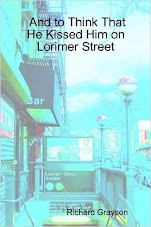
The PODler Reviews Richard Grayson's AND TO THINK THAT HE KISSED HIM ON LORIMER STREET
The PODler reviews Richard Grayson's And to Think That He Kissed Him on Lorimer Street today:

Richard Grayson is a prolific writer of over 200 stories, articles, and books. In the 80s, he staged a satiric run for the White House against Ronald Reagan. He has obtained a J.D. degree from University of Florida with honors and is, in addition, a master satirist and a keen observer of the American scene from his own and unique viewpoint. Grayson writes in a deceptively simple style that is, nevertheless, hard to imitate. Using this kind of autobiographical method, bordering on a confessional, Grayson looks through shifting viewpoints (gay and straight; white and black; American and immigrant; young and old) at the people, times, and palaces of a fictional Brooklyn.
In these fictions, Grayson meditates on various topics, mostly race, sexual identity, age, and change by using the device of popular culture, mixing in liberally the icons of pop culture with persons and places from memory to construct a solid literary edifice.
The collection is filled with resonant stories about the lives of ordinary people, and this focus is what makes them interesting and memorable. Somehow, though Grayson's master touch, the ordinary becomes fascinating and highly readable literature. Many of these stories, however, reflect a deep sadness that exists in the heart of the common man and his experience. Nothing seems to happen for the protagonists in these stories, their lives stupefying their subjects. Grayson reminds us with his fiction that our lives are, in the end, rather banal, revolving around the mundane, the ordinary, and the common. At the same time, there seems to be a kind of weird current of apathy that flows beneath the surface of the stories. In the title story, we wonder, for example, whether the narrator is incredibly open-minded about his son's sexuality and the kiss between the boys, or whether he's just too apathetic to care, and we wonder because the title seems to be a kind of subconscious expression of protest by the protagonist. Apathy, or more precisely, a kind of stupefaction, perhaps synergized by the bathos of pop culture, rears its head in "Shirtless Tea-bag Eating White Boys," in which two characters, one stupefied by Haldol, the other just tranquilized by American culture, watch internet videos, which somehow are appropriate for the mentally dysfunctional character and the young elementary school teacher; the first prefers to watch a purple hippo, and the latter prefers to view shirtless tea-bag eating white boy clips.
Some of these stories are biographical, and those are the stories that I like the best. Especially likable are "Branch Libraries of Southeastern Brooklyn," in which Grayson's character reminisces about the libraries that he had known and how they had evolved over the years-this one is probably my favorite story, as I do love libraries, and it seems that Grayson is a true lover of the library as well - and "The Lost Movie Theatres of Southeastern Brooklyn and Rockaway Beach," another story of nostalgia and memory, where we are treated to reminiscences about the various theatres that the author remembers. "1001 Ways to Defeat Green Arrow" deals with change in gay relationships and the longing and emptiness that result. "My Life in The New York Post" is a collection of strange but somehow funny clips from, apparently, the Post regarding a fictional Grayson's plots and schemes.
Other stories that I liked were "In the Sixties," a kaleidoscope-like summary of the Sixties; "Diary of a Brooklyn Cyclones Hot Dog," which deals with the life of a lesbian Uzbek immigrant who is promoted to being the Relish in a Hot Dog Race; and "Mohammad's Therapy Monkey," in which the protagonist, a college student with some issues is assigned a roommate with a pet monkey, which helps him find acceptance and a relationship of his own in a place that he detests.
Grayson chronicles the real through his funny, sometimes sad, but always genuine, if slightly offbeat, fictional world.

Richard Grayson is a prolific writer of over 200 stories, articles, and books. In the 80s, he staged a satiric run for the White House against Ronald Reagan. He has obtained a J.D. degree from University of Florida with honors and is, in addition, a master satirist and a keen observer of the American scene from his own and unique viewpoint. Grayson writes in a deceptively simple style that is, nevertheless, hard to imitate. Using this kind of autobiographical method, bordering on a confessional, Grayson looks through shifting viewpoints (gay and straight; white and black; American and immigrant; young and old) at the people, times, and palaces of a fictional Brooklyn.
In these fictions, Grayson meditates on various topics, mostly race, sexual identity, age, and change by using the device of popular culture, mixing in liberally the icons of pop culture with persons and places from memory to construct a solid literary edifice.
The collection is filled with resonant stories about the lives of ordinary people, and this focus is what makes them interesting and memorable. Somehow, though Grayson's master touch, the ordinary becomes fascinating and highly readable literature. Many of these stories, however, reflect a deep sadness that exists in the heart of the common man and his experience. Nothing seems to happen for the protagonists in these stories, their lives stupefying their subjects. Grayson reminds us with his fiction that our lives are, in the end, rather banal, revolving around the mundane, the ordinary, and the common. At the same time, there seems to be a kind of weird current of apathy that flows beneath the surface of the stories. In the title story, we wonder, for example, whether the narrator is incredibly open-minded about his son's sexuality and the kiss between the boys, or whether he's just too apathetic to care, and we wonder because the title seems to be a kind of subconscious expression of protest by the protagonist. Apathy, or more precisely, a kind of stupefaction, perhaps synergized by the bathos of pop culture, rears its head in "Shirtless Tea-bag Eating White Boys," in which two characters, one stupefied by Haldol, the other just tranquilized by American culture, watch internet videos, which somehow are appropriate for the mentally dysfunctional character and the young elementary school teacher; the first prefers to watch a purple hippo, and the latter prefers to view shirtless tea-bag eating white boy clips.
Some of these stories are biographical, and those are the stories that I like the best. Especially likable are "Branch Libraries of Southeastern Brooklyn," in which Grayson's character reminisces about the libraries that he had known and how they had evolved over the years-this one is probably my favorite story, as I do love libraries, and it seems that Grayson is a true lover of the library as well - and "The Lost Movie Theatres of Southeastern Brooklyn and Rockaway Beach," another story of nostalgia and memory, where we are treated to reminiscences about the various theatres that the author remembers. "1001 Ways to Defeat Green Arrow" deals with change in gay relationships and the longing and emptiness that result. "My Life in The New York Post" is a collection of strange but somehow funny clips from, apparently, the Post regarding a fictional Grayson's plots and schemes.
Other stories that I liked were "In the Sixties," a kaleidoscope-like summary of the Sixties; "Diary of a Brooklyn Cyclones Hot Dog," which deals with the life of a lesbian Uzbek immigrant who is promoted to being the Relish in a Hot Dog Race; and "Mohammad's Therapy Monkey," in which the protagonist, a college student with some issues is assigned a roommate with a pet monkey, which helps him find acceptance and a relationship of his own in a place that he detests.
Grayson chronicles the real through his funny, sometimes sad, but always genuine, if slightly offbeat, fictional world.
Monday, July 23, 2007
Monday Night in Soho: Alison Rogers & "Diary of a Real Estate Rookie" at McNally Robinson

This report by Richard Grayson first appeared on Jeff Bryant's blog Syntax of Things (go there for the original links) on Monday, July 23, 2007:
New York is one of the most expensive cities to live in, but its many bookstores provide free entertainment nearly every night for those residents on a budget. Most bookstore readings and appearances begin between 6:30 and 7:30 p.m., and oldsters can get home in time to be in bed before The 10 O'Clock News ("Do you know where your ability to stay up late is?") and others can get out in time for real fun, when the night is still as young as they are -- just not so drugged up.
With the mammoth Harry Potter for Grownups party of Friday night now a memory, this evening at 7 p.m. Soho's McNally Robinson store featured an appearance by Alison Rogers, author of Diary of a Real Estate Rookie: My Year of Flipping, Selling, and Rebuilding and What I Learned (The Hard Way).
The book is based on the online column for the website InmanNews about her new career as a real estate agent that Rogers, the founder of the New York Post's real estate section, began after she "stormed off in a huff" after 20 years of being treated like, well, like someone who works for the News Corporation's crazed management. (Her book's dedication is "To Rupert Murdoch, whose refusal to pay me a decent wage launched me on the adventure of a lifetime.”)
So I guess you could call Diary of a Real Estate Rookie a "blook" -- except it seems more like a memoir with sidebars (i.e., when looking at apartments to buy, bring along a heavy book like Ulysses so you can drop it on the floor at an opportune moment and see how many howling dogs and crying babies you can flush out).
No doubt many in the crowd were there just for the Q & A to find out where the cheap condos are (try Little Rock) but some of us came for the pleasures of Rogers' prose:I write weekly dispatches about my real estate adventures, which I had pitched as "trading in my Jimmy Choos for a hard hat," and this is the first time in four months life really feels that way. Hey, I'm in the belly of the flip. What's it like? Well, your intrepid heroine is playing a beam of light through a darkened house, and she sees ... crap everywhere. Abandoned mattresses, fast-food wrappings, in one case actual human waste where someone had squatted like a dog over a piece of plastic, and then wandered off again. I feel only drugs could have caused people to live like this. I had seen a crèche proudly displayed on someone's lawn the day before, and what stuck in my head was, "I wonder if conditions in the manger were this bad." At one point, my partner moves a refrigerator, and a yowl and a streak of escaping black-and-white fur revealed that he'd surprised a cat. Frankly, I was glad it wasn't some kind of gigantor rat.
Though some in the audience didn't quite get it -- and I suppose that Kaplan, Rogers' publisher, may not want them to -- after listening to several beautifully crafted entries that Rogers read tonight, I suspect the New York Observer was on the mark when it said that this is a book about real estate the way the NPR show Car Talk is about cars.
Not that you won't learn a good deal: as Publishers Weekly noted, "...the book doesn’t just rely on funny turns of phrase: it also provides plenty of working advice, including tips on handling lowball offers, staging the sale of a bohemian apartment and talking to your realtor. Those looking for some good information on the real estate industry in a book that doesn’t feel like homework will be hard-pressed for a better choice."
I learned, for example, why the $10,000-a-month end of the rental market is impervious to any downturn and why Sub-Zero and Mille appliances are de rigeur and that when one Manhattan luxury building provides cold storage for grocery deliveries, within weeks every other luxury building has a refrigerator/freezer in its lobby.
Alison Rogers is wry, thoughtful and often extremely funny: the epistolary entry that she read as her last excerpt, "Sorry I Hid Your Underwear," makes equal fun of sellers, buyers, agents and the author herself.
Oh, and there were enough struggling writers in the audience so that of course one asked where in the city struggling writers could afford to live. Alison Rogers noted that she used to enjoy hanging out with Neal Pollack and his wife, but that successful as Neal has been, they moved first to Philadelphia and then to Austin.
"So that doesn't bode well for you," she told the questioner, suggesting that struggling writers might want to band together with their equally struggling writer friends and explore neighborhoods outside New York -- and maybe outside New Jersey, and maybe even outside the whole Northeastern corridor. . .
Still, I have to admit to being disappointed that Rogers didn't show more skepticism about the New York market. Like everyone else here, she buys into the myth that New York is "different," that it's now like London or Tokyo, a place where the superrich from all over the globe want to live. Rogers says nearly all her clients are younger than she is (she's 40 and a newlywed): mostly corporate lawyers and hedge fund types.
Having lived most recently in two markets -- South Florida and Phoenix -- that became incredibly overheated and then crashed below ground, plus knowing that my friends who bought Manhattan co-ops in 1987 who had to sell them before 1992 often took a substantial loss, I'm skeptical that New York's real estate market is somehow invulnerable.
Still, given her diary's literate digressions -- whether musings on the deaths of two rather inept New Jersey cops or reflections on how her "flipping" failures affected her relationship with her new husband -- this isn't a book just for New Yorkers. Newsweek's anointment of Diary of a Real Estate Rookie as a "pick of the week" indicates that it's a book lots of people not currently facing foreclosure can enjoy.

Sunday, September 10, 2006
Judd Lear Silverman Reviews Richard Grayson's AND TO THINK THAT HE KISSED HIM ON LORIMER STREET
On his eponymous blog, Judd Lear Silverman reviewed Richard Grayson's And to Think That He Kissed Him on Lorimer Street on September 9, 2006:

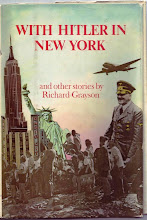
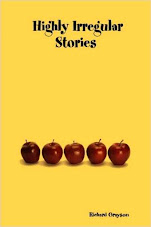
If you're not familiar with the writer, Richard Grayson, you should be, especially those who love the short story form. Besides spending time on bogus runs for political office and publicity stunts that have graced People and Page Six in the Post, Grayson's been writing prolifically for years, and his first anthology, With Hitler in New York, was recently reissued. Other humorous writings have included the collections I Break for Delmore Schwartz, Eating at Arby's: The South Florida Stories, and Narcissism and Me, as well as a novella, The Silicon Valley Diet. [Some of these stories have also been reprinted in Highly Irregular Stories (Dumbo Books).] But his recent collection, entitled And to Think That He Kissed Him on Lorimer Street, is perhaps the best collection to start with, reflecting not only his gifts as a satirist but his ability to keep the mind so busy it doesn't know that the heart has been touched. Like a reality TV junkie, Grayson mixes seeming fact with fiction, borrowing names, places and people from his own life and shaping them into odd and effecting commentaries on the passage of time, family relationships, sexuality, race relations, and America's pathological preoccupation with celebrity. Some stories are quick brushstroke sketches of people and a particular time. Others are journeys told in vignettes stretching spans of 20-30 years. Friendships are explored in sideways glances, showing how the most unlikely of alliances can turn into lifelong relationships. Numerous stories (perhaps one too many for the same collection) are subdivided by real estate locations: old movie palaces, libraries, and shopping centers, where seemingly innocuous events are recalled that by the end of the story add up to a whole lifetime of experience. Grayson shape shifts from gay to straight, white to black, male to female, kid to aging wit. Grandparents and childhood buddies play recurrent and important roles, but discerning fact from fiction in Grayson's work is tricky until one considers these stories in the aggregate. In the biography of the great Italian filmmaker, Federico Fellini, the maestro is quoted as saying that the truth of his life is not in the facts reported by birth certificates, death notices and journalistic reportage, but in his art, his dreams, his films--it is in the revelation of the imagination that the real artist is known. Likewise, the truth of Grayson is in these tales, invented and reinvented versions of his life and experience. The facts may not be verifiable, but the affection and care he displays in his description of life's travels and the people in his life are real, resulting in stories that are affecting and sharply observed. Recommended.

If you're not familiar with the writer, Richard Grayson, you should be, especially those who love the short story form. Besides spending time on bogus runs for political office and publicity stunts that have graced People and Page Six in the Post, Grayson's been writing prolifically for years, and his first anthology, With Hitler in New York, was recently reissued. Other humorous writings have included the collections I Break for Delmore Schwartz, Eating at Arby's: The South Florida Stories, and Narcissism and Me, as well as a novella, The Silicon Valley Diet. [Some of these stories have also been reprinted in Highly Irregular Stories (Dumbo Books).] But his recent collection, entitled And to Think That He Kissed Him on Lorimer Street, is perhaps the best collection to start with, reflecting not only his gifts as a satirist but his ability to keep the mind so busy it doesn't know that the heart has been touched. Like a reality TV junkie, Grayson mixes seeming fact with fiction, borrowing names, places and people from his own life and shaping them into odd and effecting commentaries on the passage of time, family relationships, sexuality, race relations, and America's pathological preoccupation with celebrity. Some stories are quick brushstroke sketches of people and a particular time. Others are journeys told in vignettes stretching spans of 20-30 years. Friendships are explored in sideways glances, showing how the most unlikely of alliances can turn into lifelong relationships. Numerous stories (perhaps one too many for the same collection) are subdivided by real estate locations: old movie palaces, libraries, and shopping centers, where seemingly innocuous events are recalled that by the end of the story add up to a whole lifetime of experience. Grayson shape shifts from gay to straight, white to black, male to female, kid to aging wit. Grandparents and childhood buddies play recurrent and important roles, but discerning fact from fiction in Grayson's work is tricky until one considers these stories in the aggregate. In the biography of the great Italian filmmaker, Federico Fellini, the maestro is quoted as saying that the truth of his life is not in the facts reported by birth certificates, death notices and journalistic reportage, but in his art, his dreams, his films--it is in the revelation of the imagination that the real artist is known. Likewise, the truth of Grayson is in these tales, invented and reinvented versions of his life and experience. The facts may not be verifiable, but the affection and care he displays in his description of life's travels and the people in his life are real, resulting in stories that are affecting and sharply observed. Recommended.
Friday, June 8, 1990
New York Post's Page Six reports on Richard Grayson's Donald Trump Rescue Fund


The New York Post's "Page Six" today (June 8, 1990) covers Richard Grayson's efforts with the Donald Trump Rescue Fund.
Monday, November 21, 1988
New York Post & Business Week cover Richard Grayson's $25.4 Billion Takeover Bid for RJR Nabisco


Richard Grayson's $25.4 billion takeover bid for RJR Nabisco has Wall Street buzzing and is covered by the New York Post (October 29, 1988) and Business Week (November 21, 1988).
Friday, June 19, 1981
New York Post Page Six Article on "Inveterate Prankster" Richard Grayson's Committee to Draft Rita Jenrette for Congress in Brooklyn


Tuesday, December 11, 1979
New York Post reports on Richard Grayson's Right to Be the Life of the Party Party & Gloria Vanderbilt's Candidacy for U.S. Senate

In the New York Post today (Tuesday, December 11, 1979), Jack Martin's Headliners column features a story about Richard Grayson's new New York state political party, The Right to Be the Life of the Party, and his plan to draft socialite Gloria Vanderbilt to run for the U.S. Senate in 1980.
Thursday, October 25, 1979
The New York Post covers Richard Grayson and WNYC's "The John Hour"

The New York Post today (October 25, 1979) covers Richard Grayson and his involvement with WNYC's "The John Hour."
Friday, August 3, 1979
New York Times & New York Post cover Richard Grayson's candidacy for Vice President


The New York Times and New York Post cover Richard Grayson's candidacy for Vice President today (Friday, August 3, 1979).
Thursday, August 2, 1979
New York Post publishes article on Richard Grayson's campaign for Vice President

Today, August 2, 1979, the New York Post features a page 4 story on Richard Grayson's candidacy for Vice President.

Prof Flips Hat into 3-Ring Circus
By Joanne Wasserman
A Brooklyn College English professor, who says he's protesting the country's "circus-like" political campaigns, has decided to take a leave from the ivory tower and run for Vice President.
Richard Grayson, 28, is even officially recognized by the Federal Election Commission.
The federal agency has been flooding him with campaign finance forms since the day he wrote them--and they've never questioned his eligibility.
"I just wanted to see if the FEC would take anybody seriously and apparently they do," he said.
Grayson's biggest concern now is raising the bus fare to New Hampshire to campaign for the nation's first primary.
He's already begun a furious campaign.
He held a $10-a-plate bagel dinner, which brought in $10. His brother was the sole guest and contributor.
A rock singer friend, Wesley Strick, will hold a benefit concert for him tonight at Eric's at 8 p.m.
And, he's drafted his entire family for a Principle [sic] Campaign Committee.
The U.S. Constitution puts the age for holding the office at 35. While Grayson is too young for the job, his political spirit has not been dampened.
Not particular about his political party, Grayson is waiting for an offer from any ticket.
"Jimmy, Jerry, Teddy, they're all the same to me."
A health-conscious candidate, Grayson has no objection to the country's second best seat - especially when he found out there are already 64 contenders for the presidency.
"The President tends to get old a lot quicker," he said. "And Mr. Mondale looks thinner lately."
The serious side of Grayson's candidates involves his belief that the country's leaders are in a "perpetual state of campaigning on non-issues."
Saturday, March 24, 1979
New York Post features Richard Grayson's prize-winning "Tales of New York" story


The New York Post today (Saturday, March 24, 1979) features a story by Richard Grayson, winner of its "Tales of New York" story contest, judged by James Brady.


Wednesday, July 19, 1978
New York Post reports on Richard Grayson's article "The Weird Sex Lives of Jewish-American Novelists"


The New York Post's Page Six today (July 19, 1978) has a report by Claudia Cohen on Richard Grayson's article, "Who Swaps? Who Swings? The Weird Sex Lives of Jewish-American Novelists," on Philip Roth, Saul Bellow, Bernard Malamud, Isaac Bashevis Singer and Cynthia Ozick.
Subscribe to:
Posts (Atom)