Pages

Showing posts with label 1980s. Show all posts

Thursday, February 9, 2012

Richard Grayson's "LATE SPRING IN SUNRISE" Now Available as Trade Paperback or eBook at Amazon Kindle Store


This week Superstition Mountain Press published Richard Grayson's Late Spring in Sunrise. It is available in a 167-page trade paperback edition for $12.99, as well as an e-book published by Art Pants Company available at the Amazon Kindle store for 99 cents.

The promo stuff says in part,
Broward County, Florida, 1982.

A 30-year-old writer and a 17-year-old boy about to graduate from high school.

An unexpected love affair.

Richard Grayson has been keeping a daily diary since the summer of 1969, when he was an 18-year-old agoraphobic about to venture out into the world -- or at least the world around him in Brooklyn.

In LATE SPRING IN SUNRISE, an older Grayson is still exploring. His second book of short stories just published, a contract signed for his third, Grayson is finishing his first year as a full-time community college instructor in Florida when he finds himself involved in a relationship with the teenage Sean.

Earlier, Grayson published the first six volumes of the diaries of his late teens and twenties as THE BROOKLYN DIARIES, featuring SUMMER IN BROOKLYN: 1969-1975; WINTER IN BROOKLYN: 1972-73; SPRING IN BROOKLYN, 1975; AUTUMN IN BROOKLYN, 1978; MORE SUMMERS IN BROOKLYN: 1976-1979; and A YEAR IN ROCKAWAY, 1980.

LATE SPRING IN SUNRISE takes place in seven weeks of 1982 and is one of six volumes of THE EIGHTIES DIARIES, whose other books include SOUTH FLORIDA WINTERS, 1981-1984; WEST SIDE SUMMERS, 1984-1987; INDIAN SUMMER: PARK SLOPE, 1985; SPRINGTIME IN LAUDERHILL, 1986; and EIGHTIES' END: AUTUMN, 1987-1989.

The book will also be available on Scribd and Lulu for free online reading.

Wednesday, August 10, 2011

Richard Grayson's "SPRINGTIME IN LAUDERHILL" Now Available as Trade Paperback or eBook at Amazon Kindle Store


This week Superstition Mountain Press published Richard Grayson's Springtime in Lauderhill. It is available in a 196-page trade paperback edition for $11.99, as well as an e-book published by Art Pants Company available at the Amazon Kindle store for 99 cents.

The promo stuff says in part,
Richard Grayson started writing a daily diary in the summer of 1969, when he turned 18, and has compiled daily entries since then. In the six volumes of THE BROOKLYN DIARIES (SUMMER IN BROOKLYN, AUTUMN IN BROOKLYN, WINTER IN BROOKLYN, SPRING IN BROOKLYN, MORE SUMMER IN BROOKLYN, and A YEAR IN ROCKAWAY), Grayson published selected entries from 1969 to 1980.

Now, in THE EIGHTIES DIARIES, Grayson describes his itinerant life in his thirties during the Reagan era. Following the three previous volumes, SOUTH FLORIDA WINTERS, WEST SIDE SUMMERS and INDIAN SUMMER: PARK SLOPE is this book, SPRINGTIME IN LAUDERHILL, recounting two months Grayson spent living in a mostly African-American apartment complex in a fading Fort Lauderdale suburb.

It’s 1986, and Grayson is struggling with his lack of success as a fiction writer after publishing three books, disenchanted with his past jobs teaching college composition and remedial writing, and starting a new career as a teacher trainer in the nascent field of computer education with the first Apple machines ever used in schools.

Meanwhile, he’s taking an assortment of courses at a couple of universities, causing controversy with a legal challenge for age discrimination to a savings and loan company’s discounts for senior citizens, amassing a huge number of credit cards and credit lines, obsessing about the AIDS epidemic and wondering if he is infected, publishing his humorous nonfiction in places like People Magazine, and being interviewed on The CBS Evening News with Dan Rather and other media outlets.

Grayson’s diaries are a window into an individual sensibility and a particular moment in time: the spring of 1986.
An excerpt:

Monday, March 31, 1986
9 PM. Today was one of the more satisfying days of my life, probably because I could see myself doing well in a variety of roles. If I’m not quite a Renaissance man, I’m something more than a dilettante.

Up early, I read the paper, walked to the credit union to deposit $700 I’d gotten in cash advances from ATMs, and paid the rent.

Stopping off at the Publix Teller on Broward Boulevard, I went into the supermarket and discovered the news dealer had arrived with a fresh shipment of magazines, including People, which I took from the his piled-high shopping cart before he put it on the racks.

I couldn’t find my story in the table of contents, but I thumbed through and discovered it: “Unless We Bag a Few New Stars, the U.S. Will Face a Tragic Celebrity Shortage” by Richard Grayson and Fred Bernstein.

Illustrate with a full-page photo of paparazzi shooting a bejeweled, glamorously dressed woman with a paper bag over her head, with the Hollywood sign in the distance, the whole article took up four pages, with another photo page devoted to a model pretending to be Barbara Walters interviewing a tree (“If you were a star, what kind of star would you be?”)

I’m very pleased with the piece. In Davie, first Jonathan and then Mom and then Dad read the article, and they all thought it was good; of course, they’re my family.

While in Davie, I got a call from Joyce Brown of the Human Relations Division, reminding me about tomorrow’s hearing.

Also, the People publicity department called to find out if they could give my number to radio stations wanting interviews. Of course I said yes, though Fred is probably taking the good ones for himself, but I hope he’s not going on Live at Five and getting TV exposure I could use. I’m kidding!

Tons of mail, including the AWP Job List, with some creative writing vacancies I’ll apply for; loads of banking stuff, including my CBI credit file, a Virginia Beach Federal money market account checkbook, the PIN number for my Chase money market account, and applications for credit line increases on my Bank One and Chemical cards; and the leader of Americans for Generational Equality told me to “give ‘em hell” on senior discounts.

After xeroxing the article at Jaffe’s and having lunch at the Broadway Diner, I came home to read newspapers and prepare for class.

“It’s the computer man!” said the Sunshine Elementary school secretary as she opened the door for me at 3:30 PM. I showed the teachers the SRI math software today.

It was kind of disorganized because I’d never seen the material before, but I enjoyed myself and I think they learned a lot just by using it and experimenting with it.

One thing I stress is that the computer is dumb compared to a teacher because it makes the teachers feel better knowing how limited the machines are. After a quick bite, I went to my FIU Community College class, where Kitty Hunter, BCC’s Academic Vice President, was our guest.

Like most of the BCC administrators, she surprised me by her intellectual depth. She’s very future-oriented and interested in issues ranging from the role of the community college in relation to business and government to the need to educate people for a world economy and a world culture. Her remarks and the discussion which followed were stimulating.

Can you tell me why today was so satisfying? I felt competent in all my roles as writer, “computer man,” banking maven, social activist, and educator. I feel integrated and whole. Let’s hope tomorrow isn’t a big disaster.

Tuesday, April 1, 1986
11 PM. Not exactly a disaster, but I need time to digest today. Before I left this morning, I got a call from a producer at WXYT radio in Detroit; I’ll do an interview tomorrow at 5:30 PM, which means I’ll have to get out of class and go over to my parents’.

I didn’t really know what to expect when I walked into the Governmental Center in downtown Fort Lauderdale this morning. A black woman ran the hearing, with me in my corduroys, sport shirt and sneakers on one side of the long table and on the other side, five business-suited attorneys and AmeriFirst Vice Presidents. One man was apparently an outside counsel, but a woman V.P., presumably also an attorney, did most of the talking.

I suppose it was rather intimidating, and I’m sure the absurdity of the scene – like something in a movie – will stay with me for a long time.

Of course the situation triggered all these weird childhood feelings, especially when I saw how much trouble the S&L had gone to in its marketing studies and accounts of other banks’ practices.

I couldn’t help feeling I’d caused these important people a lot of trouble and would be punished for it. But since I was in touch with those feelings, I could act and react more calmly.

First, they went over my complaint and each side agreed or disagreed with each charge. Early on after that, after a huddle between the attorneys, they offered me the AmeriFirst 55 plan.

But a condition of my accepting it would be confidentiality; I could not tell anyone about the settlement or I could be sued for breach of contract.

I asked to leave the room to “consult my attorney by phone”; actually, I called Mom. She said that if I accepted the offer, I would be doing something other than what I set to do: namely, to expose and to try to stop age discrimination.

Of course Mom was right, and her remarks confirmed my own judgment. I let them wait for a good while as I went outside and took a walk around the block a couple of times.

Then I came in and rejected their offer, saying I wouldn’t be happy until their discriminatory practice – the AmeriPlus 55 plan – was ended or made available to everyone, regardless of age.

Naturally they didn’t want to do that. The hearing officer took me aside and said that the S&L had offered me total redress of my complaint, and that if I didn’t accept it, she’d probably have to end the case on the argument that since I wouldn’t accept their offer, no hurt was done originally.

Had this been a class action suit, I could have gone further, but she said the Human Relations Division had a narrow scope. After some testimony and questioning about the plan versus other AmeriFirst accounts, the hearing was adjourned.

I expect to hear that my complaint has been dismissed. But in a way I will have gotten what I wanted: the public awareness created by the publicity I got over the senior discount issue.

Having rejected their offer, I was free to go to the press, so I called the Miami Herald and gave them a rundown of what happened. Since I intend to go to New York soon, I don’t really want to come back before another hearing before the Human Rights Board this time.

I guess there’s still a slight chance the case could go on, but it’s over for me, whatever happens. Right now I’m too close to the situation to tell how I really feel.

It will also be available on Scribd and Lulu for free online reading.

Sunday, July 24, 2011

Richard Grayson's "INDIAN SUMMER: PARK SLOPE" Now Available as Trade Paperback or eBook at Amazon Kindle Store


This week Superstition Mountain Press published Richard Grayson's Indian Summer: Park Slope. It is available in a 207-page trade paperback edition for $11.99, as well as an e-book published by Art Pants Company available at the Amazon Kindle store for 99 cents.

The promo stuff says in part,
Richard Grayson started writing a daily diary in the summer of 1969, when he turned 18, and has compiled daily entries since then. In the six volumes of THE BROOKLYN DIARIES (SUMMER IN BROOKLYN, AUTUMN IN BROOKLYN, WINTER IN BROOKLYN, SPRING IN BROOKLYN, MORE SUMMER IN BROOKLYN, and A YEAR IN ROCKAWAY), Grayson published selected entries from 1969 to 1980.

Now, in THE EIGHTIES DIARIES, Grayson describes his itinerant life in his thirties during the Reagan era. Following the two previous volumes, SOUTH FLORIDA WINTERS and WEST SIDE SUMMERS is this book, INDIAN SUMMER: PARK SLOPE, covering two months Grayson spent back in his native Brooklyn after an absence of six years.

In 1985 the historic brownstone neighborhood of Park Slope is still not totally gentrified and Brooklyn is neither fashionable, cutting-edge nor entirely safe.

Grayson recounts the rhythms of his life: his lunches and dinners with fellow writers and others in the arts and media; his frequent trips to Rockaway Beach for visits his beloved grandmother; his often dispiriting remedial writing classes at the City University of New York; his own graduate courses in programming on mainframe computers and graphics on the earliest Apple desktops at Columbia University’s Teachers College; his bizarre juggling of a credit chassis that includes several dozen credit cards and numerous bank accounts; his experiences witnessing brazen subway muggings and spectacular sunrises as seen from the Manhattan Bridge; being in both an earthquake and a hurricane within two weeks; and, as always, his struggles as a writer: here, with three hardcover fiction books published, he wonders if his modest early success has been a mere fluke and considers alternate career paths an uncertain future.

An excerpt:
I slept fabulously, glad to be near Ronna. . .

At 8 AM, the alarm went off, and I started kissing and hugging her; then I cleaned up and got dressed and went off. . .

It was a foggy, dreary morning; after returning to Happy Burger for breakfast, I took the subway up to Columbia and arrived just in time for Computer Graphics.

Howard did more BASIC programming today, and I learned more about POKE-ing things into memory than I had known before. We discussed the principles of graphics and went over other stuff. . .

During our hour break, instead of having lunch, I went downstairs to the computer room to meet Chris – he’s not only such a hunk but very sweet too – and other members of the Programming class. . .

After class, I stayed on, programming till 1:30 PM, and then I went back downstairs to the DEC-20 and worked on the Pascal program for our first project. It needs a lot of refining, but I know I’ll do it before it’s due in two weeks.

Both courses seem under control. I had some lunch and then got on the IRT. At 72nd Street, an amputee on crutches came into the car to collect money. I gave him some coins, and then, as he came to the door to the next car, he burst into laughter.

I soon realized why: crossing his path was another amputee, this one in a wheelchair, also begging. I gave him some loose change, too. At 14th Street, a guy got off the car and waited for a moment, then suddenly stepped back in and grabbed at a woman’s neck; then he quickly ran away as the doors closed.

I’d seen it perfectly from my vantage point, but he was so fast, I couldn’t react. What he’d done, of course, was snatch three gold chains.

The woman, a young West Indian, hardly reacted at first. She said she’d just bought the chains and still had the receipt for them.

“I never usually sit next to the door,” she told me. As we made our way into Brooklyn and the reality of the event hit her, she kept saying “I just can’t believe it.”

Back home, the phone was working again; evidently they fixed it from the outside, for Tim said no repairman had come to the house. I went out for dinner, got my laundry, typed up some letters, did some more programming, and watched "Dallas," which I'd taped.

It will also be available on Scribd and Lulu for free online reading.

Friday, July 8, 2011

Richard Grayson's "WEST SIDE SUMMERS" Now Available as Paperback or eBook on Amazon Kindle


This week Superstition Mountain Press published Richard Grayson's West Side Summers. It is available in a 314-page trade paperback edition for $15.99, as well as an Amazon Kindle edition published by http://www.blogger.com/img/blank.gifArt Pants Company for 99 cents.

The promo stuff says in part,
Richard Grayson started writing a daily diary in the summer of 1969, when he turned 18, and has compiled daily entries since then. In the six volumes of THE BROOKLYN DIARIES (SUMMER IN BROOKLYN, AUTUMN IN BROOKLYN, WINTER IN BROOKLYN, SPRING IN BROOKLYN, MORE SUMMER IN BROOKLYN, and A YEAR IN ROCKAWAY), Grayson published selected entries from 1969 to 1980.

Now, in WEST SIDE SUMMERS, the second volume of THE EIGHTIES DIARIES (following SOUTH FLORIDA WINTERS), Grayson describes his summer days living on the Upper West Side from 1984 to 1987. Already a published author, Grayson records his days and nights prowling the streets of Manhattan and Brooklyn, alone or with fellow writers and other friends, with side trips to his grandmother's beachfront co-op in Rockaway and a stay at the artists' colony that was the estate of poet Edna St. Vincent Millay.

Celebrities like Allen Ginsberg, Norman Mailer, Isaac Bashevis Singer and a not-so-famous Harvey Pekar often cross Grayson's path, and he recreates the scene on the Yuppified Upper West Side and the grittier world of the Lower East Side.

Shakespeare in the Park, Sichuan restaurants, a decidedly seedy Times Square, hip coffee shops, Zabar's and H&H Bagels, literary readings, elderly Jews on the boardwalk, the panic and terror of the AIDS epidemic, homeless beggars, nights with ex-lovers, graduate classes in computers, gay pride parades, the Statue of Liberty centennial, cash advances at ATMs, Wall Street insider trading indictments, giving and getting interviews, soaring ambitions and crushing self-doubts: this is Grayson's world in the exciting long, hot summers of a Manhattan in the middle of the flashy 1980s.

It will also be available on Scribd and Lulu for free online reading.

Wednesday, June 29, 2011

Twenty-Five Years Ago in New York: The 17th Annual Gay Pride Parade on Sunday, June 29, 1986


We are at work on West Side Summers: 1984-1987, the eighth in our interminable series of books featuring excerpts from the diaries we've kept every day for the past 42 years. The first six books were collected in The Brooklyn Diaries, and West Side Summers: 1984-1987 is intended as the companion volume for the recently published South Florida Winters: 1981-1984.

Twenty-five years ago today, on Sunday, June 29, 1986, our diary reported on the Gay Pride Parade:

Sunday, June 29, 1986
7 PM. I watched the Gay Pride from the same spot I did last year, at the start of the march by Columbus Circle. Despite the AIDS crisis, this year’s parade a celebratory mood because of the City Council’s passage of the gay rights bill.

It was a hot sunny, day and everyone seemed in good spirits. I’m encouraged that even in the “conservative” ‘80s, so many gay people can literally come out. Surely the world has irrevocably changed.

Just to see so many people who are so diverse – of every conceivable racial and religious group, profession, political affiliation, from different states and schools, people from teenagers to senior citizens – is heartening.

It reminded me of the old peace and civil rights demonstrations and those concerns were also in the crowd today: lots of signs against racism and apartheid, T-shirts of a mock Daily News front page with the headline ¡GAYS SÍ, CONTRAS NO! and stickers that said NICARAGUA IS NOT OUR ENEMY.

The police officer who constantly and good-naturedly told us to move back a little was a young Hispanic guy perhaps ten years younger than I, and gay cops marched along with myriad other groups.

The biggest applause, as usual, was for the Stonewall veterans at the head of the march, for the Gay Men’s Health Crisis group (who held up giant safety pins to remind people about safe sex practices), for the People With Aids Coalition (another group, memorializing the dead, held up signs with their names – I got a twinge when I immediately spotted the sign for Evan), and for the Gay Men’s Chorus, the parents’ groups, the elderly (SAGE), the kids from Harvey Milk High School, and numerous lesbians’ organizations.

There were some floats and some outrageous transvestites who made the crowd laugh with them, not at them. What cheers me is the number of different support groups of every kind, from Sober Lesbians (One Day at a Time) to Gay Veterans to alumni and religious groups.

The spirit of the 1960s isn’t dead, really; behind the materialistic ethos of today there are a lot of people who no longer live by the old rules: believe what the government tells you, go along to get along, don’t call attention to yourself, etc.

Really, since I was a teenager there’s been nothing less than a revolution in the way people in society think and act, not only in regard to homosexuality, but in regard to many other things.

The thousands of people I saw marching did look proud. The last person in the whole march had a sign on his back that said FREE AT LAST. So maybe there’s hope.


The next day, the United States Supreme Court issued its ruling in Bowers v. Hardwick, 478 U.S. 186 (1986), upholding the constitutionality of a Georgia sodomy law criminalizing oral and anal sex in private between consenting adults when applied to homosexuals.

The Court framed the legal question in the case as whether the constitution confers "a fundamental right upon homosexuals to engage in sodomy." A 5-4 majority said it did not; in the words of Justice White's majority opinion, "to claim that a right to engage in such conduct is 'deeply rooted in this Nation's history and tradition' or 'implicit in the concept of ordered liberty' is, at best, facetious."

The short concurring opinion by Chief Justice Burger emphasized historical negative attitudes toward homosexual sex, quoting Sir William Blackstone's characterization of sodomy as "a crime not fit to be named." Burger concluded, "To hold that the act of homosexual sodomy is somehow protected as a fundamental right would be to cast aside millennia of moral teaching."

Our diary entry for Saturday, July 5, 1986, also to be in West Side Summers, contains this:
Obviously a lot of people were as angry as I was with Monday’s Supreme Court decision. There was a big demonstration in the Village yesterday, and people are planning strategy to roll back the sodomy laws in the 24 states that have them (including Florida). And in New York City, Councilman Noach Dear, an Orthodox Jew, abandoned his effort to get on the ballot a referendum to repeal the gay rights law. He said it was no longer necessary, because the courts would rule the law unconstitutional.

Although Americans may not approve of gay people, I would like to think that most people hold privacy very dear. Still, it’s upsetting that gay people are essentially second-class citizens under the court ruling: heterosexuals are constitutionally given privacy rights that don’t apply to gay people.

This was seventeen years after Stonewall. It took another seventeen years for the Supreme Court to directly overrule the Bowers opinion in Lawrence v. Texas, 539 U.S. 558 (2003), whose 6-3 majority majority held that intimate consensual sexual conduct was part of the liberty protected by substantive due process under the Fourteenth Amendment. The 2003 ruling invalidated all laws throughout the United States that purported to criminalize sodomy between consenting same-sex adults acting in private and also invalidated the application of sodomy laws to heterosexual sex.

Thursday, June 16, 2011

Richard Grayson's "SOUTH FLORIDA WINTERS: 1981-1984" Now Available as Paperback or eBook on Amazon Kindle


This week Superstition Mountain Press published Richard Grayson's South Florida Winters: 1981-1984. It is available in a 228-page trade paperback edition for $12.99, as well as an Amazon Kindle edition published by Art Pants Company for 99 cents.

The promo stuff says in part,

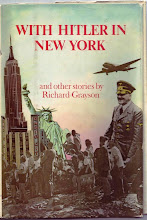
Richard Grayson, author of such acclaimed short story collections as WITH HITLER IN NEW YORK, I SURVIVED CARACAS TRAFFIC, THE SILICON VALLEY DIET, HIGHLY IRREGULAR STORIES and AND TO THINK THAT HE KISSED HIM ON LORIMER STREET, has kept a daily diary for 42 years, since the summer of 1969, when he was an agoraphobic Brooklyn teenager.

In the six volumes of THE BROOKLYN DIARIES (Summer in Brooklyn: 1969-1975, Autumn in Brooklyn: 1975, Winter in Brooklyn: 1971-72, Spring in Brooklyn: 1975, and More Summer in Brooklyn: 1976-1979, A Year in Rockaway: 1980), Grayson published selected entries from 1969 to 1980.

Now, in South Florida Winters, the first volume of THE EIGHTIES DIARIES, Grayson describes his move, at age 29, from his native New York City to South Florida's sunny and warm winters.

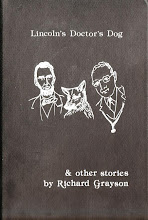
In the years 1981-1984, Grayson publishes several books of short stories (LINCOLN'S DOCTOR'S DOG, EATING AT ARBY'S, I BRAKE FOR DELMORE SCHWARTZ), runs for the Davie Town Council, becomes a community college professor and a celebrity getting his photo in People, USA Today, and national and local newspapers and magazines, and appearing on dozens of radio and TV shows. SOUTH FLORIDA WINTERS contains his entries from the days of the Mariel boatlift, the condo commando and the cocaine cowboy in Miami/Fort Lauderdale during the age of Reagan.

It will also be available on Scribd and Lulu for free online reading.

Wednesday, January 5, 2011

"MEMORIAL DAY DIARY: 1970-2010" by Richard Grayson now available at Amazon Kindle Store


Richard Grayson's MEMORIAL DAY DIARY: 1970-2010 is now available at Amazon's Kindle Store for 99¢ from its publisher, Art Pants Company.

Here is the promo material for the 127-page $7.99 paperback edition from Superstition Mountain Press:
How does a person change over forty years? Suppose someone kept a diary every day starting when he was 18 through his late fifties? Richard Grayson, author of numerous books of short fiction, compiled such a record of his life: thoughts, actions, events, mundane details and reactions to the world around him for every Memorial Day -- the last Monday in May -- from 1969 to 2010. Here are the results.

Tuesday, July 27, 2010

Richard Grayson's A YEAR IN ROCKAWAY Now Available as Paperback or eBook on Amazon Kindle


This week Supersition Mountain Press published Richard Grayson's A Year in Rockaway. It is available in a 192-page trade paperback edition for $12.99, as well as an Amazon Kindle edition published by Art Pants Company for 99 cents.

The promo stuff says in part,
Richard Grayson, author of such acclaimed short story collections as WITH HITLER IN NEW YORK, LINCOLN'S DOCTOR'S DOG, I SURVIVED CARACAS TRAFFIC, THE SILICON VALLEY DIET and I BRAKE FOR DELMORE SCHWARTZ, has kept a daily diary for over 41 years, since the summer of 1969, when he was an agoraphobic Brooklyn teenager.

A YEAR IN ROCKAWAY is the sixth and final volume of THE BROOKLYN DIARIES, which takes his own story from a recently-housebound 18-year-old tentatively about to begin Brooklyn College to achieving his dream of being a published author and discovering it's not all that he expected (or maybe it is).

Previous volumes in the series were SUMMER IN BROOKLYN (1969-1975), WINTER IN BROOKLYN (December 1971-March 1972), SPRING IN BROOKLYN (March-April 1975), AUTUMN IN BROOKLYN (September-November 1978), and MORE SUMMER IN BROOKLYN (1976-1979).

The year in Rockaway starts in 1980, when Grayson is in his first apartment, a beachfront studio whose $240 rent he struggles to pay. His first book, WITH HITLER IN NEW YORK, published the year before, received some wonderful reviews but has earned him no more money than his scores of published stories in literary magazines ever did.

Nor has book publication gotten him the full-time job as a creative writing professor that he once coveted. Facing illness, terminal diagnoses for two of his four beloved grandparents, his own immediate family distant in Florida or dangerously involved with gangland drug-dealing, underemployment and as an underpaid adjunct teaching freshman at multiple colleges, barely comforted by a month's summer respite at the MacDowell artists' colony, Grayson - along with his friends also in their late twenties in a year of rampant inflation, widespread unemployment, and a New York City beset with crime, drugs, and seemingly unstoppable decay - wonders where to go next.

Snapshots of life in New York City in 1980 from the sensibility of a narcissistic, ambitious, depressed, kind-hearted young writer.

It is also available on Scribd for free online reading.
may also be downloaded for free. It is the fifth volume of The Brooklyn Diaries, following Summer in Brooklyn: 1969-1975, Autumn in Brooklyn: 1975, Winter in Brooklyn: 1971-72, Spring in Brooklyn: 1975, and More Summer in Brooklyn: 1976-1979.

Friday, April 30, 2010

Friday Afternoon at Brooklyn College: "The Roots of Modern Brooklyn: A Look at the 1970s and 1980s" at the BC Library


This afternoon we went to the Brooklyn College Library to take out some books by Donald Barthelme and Gish Jen and we came across a small exhibit, "The Roots of Modern Brooklyn: A Look at the 1970s and 1980s."

We lived in Brooklyn throughout the 1970s, leaving only for our first apartment, in Rockaway, in October 1979. During the 1980s we were in the borough from time to time; we were mostly living in Florida, with summers and some autumns on the Upper West Side, though we did sublet briefly in Sheepshead Bay in May-June 1981 and in Park Slope in August-November 1985.

Most of our friends with whom we graduated Brooklyn College with in the early '70s couldn't wait to leave, and many of them, and their parents, did. When we'd come back from Florida in late April or early May, we were appalled with how filthy the streets of Brooklyn were. There were attempts to clean things up.

The loss of the Dodgers, probably, was the evidence of the decline that came home to a little kid. Everyone we knew but our summer bungalow friends from the Bronx were Dodgers fans. Our memories of Ebbets Field are real but vague; the exhibit showed the Times article from when the stadium was torn down in 1960 (note the Gay Talese byline!).

The Navy Yard closed, of course, but 40,000 jobs were also lost in 1961 when the Army Terminal was shuttered.

Brooklyn had been in decline all our lives, but growing up, we didn't realize it. This last issue of the Brooklyn Eagle is from January 28, 1955, when we weren't even 4 years old, so we have no memory of seeing anyone ever read the paper.

In junior high, we got the Herald Tribune at school, like a lot of kids in our class, and we got the Long Island Press delivered every afternoon by our little brother's best friend's brother. We also remember the tabloid Daily Mirror - particularly the day Marilyn Monroe died - and the afternoon Journal-American and World-Telegram & Sun. But we remember the Brooklyn Eagle only as history.

The Eagle's final issue's lead headline: "Landlady Beaten to Death." We couldn't read it, but according to a New York Times article,
The story, about a 58-year-old Borough Park woman, began: "Her skull and face bones battered and crushed by repeatedly brutal blows." Another story was titled "Tot Survives 11-Story Tumble."

There was a publisher's note informing readers of the folding of The Eagle, calling it "the last voice that is purely Brooklyn."

"All the other Brooklyn newspapers fell by the wayside years go," the note read. "The borough seems doomed to be cast in Manhattan's shadow."


This exhibit, though, was meant to be upbeat, spotlighting "some of the poltical, business and community forces and their leaders and who were pivotal in the economic, social and physical growth of the borough and the revival of the revival of numerous neighborhoods." And, yeah, some things and places started to get better in the 1970s and 1980s, like Park Slope. On the other hand, crack came in pretty late in the period. This is from 1986:

And here's a poster for the March 1985 Jazz Festival.

In some ways we miss the grittiness and despair of the old days, but obviously things are better for most people now (check with the people who live in Brownsville and get back to us if you think we should have written "everybody" instead of "most people"). Here's a newsletter announcing the 1986 Flatbush Frolic.

We were in New York during the 1983 Brooklyn Bridge centennial and it did feel that things were changing, a little. There were yuppies. In Florida, we'd wear our powder-blue Brooklyn Bridge centennial T-shirt that we'd bought at the Brooklyn Museum store till the shirt got too worn to serve as anything but a rag. We watched the fireworks that accompanied the grand celebration from one of the high floors (in the 80s) of a tower at the World Trade Center, in the offices of the New York State Department of Transportation, where our friend Nina worked. Here is a photo of the celebration with Mayor Ed Koch, Brooklyn Borough President Howie Golden (not a favorite of our parents, who had to spend money to "grease some wheels" to do business in the 1970s) and Manhattan Borough President Andrew Stein (for whom Nina also worked; we were at the office the morning after John Lennon's murder, when she was writing a press release hailing "the poet of a generation" for the Borough President to issue).

We used to pick up The Phoenix, "the newspaper of brownstone Brooklyn," in the late 1980s when we were visiting Park Slope or Brooklyn Heights during the summer, usually when we went to between where we stayed on the Upper West Side and our grandmother's co-op in Rockwaway, where we spent a couple of days each week. Here are some Phoenix photos of the Crown Heights crisis.

On a board labeled "Brooklyn's People Power," the exhibit noted, "Ultimately, it was the power of ordinary people that revived Brooklyn's proud but struggling neighborhoods." Here's a poster, undated, from the Crown Heights Neighbors Coalition.

The exhibit was well-crafted, though it seemed to slight the 1970s and to cheerlead a bit. You need a Brooklyn College ID to get into the library to see it, or indeed, on campus. The world of Brooklyn may have been worse in the 1960s and 1970s but anyone could walk on campus in those days. As a Midwood student in1966-68, we used to walk through the college as a shortcut between our high school and the B41 bus at the Junction.

Wednesday, March 3, 2010

LET THE READER BEWARE by Richard Grayson now available at Amazon Kindle store


Richard Grayson's Let the Reader Beware is now available at Amazon's Kindle Store for 99¢.

Here is the promo material for the 129-page $7.99 paperback edition from Art Pants Company:

Hipster Book Club has said: "Richard Grayson is a meta-fictionalist of the old school, where structure is often as important as narrative, where the story is sometimes hidden in structural tricks like diary entries, lists, and jokes."

The nine stories in LET THE READER BEWARE were originally published in literary magazines between 1976 and 1981, but, as Hipster Book Club noted, "Grayson has such a fresh approach to writing that these stories don't seem dated. In some ways, Grayson may remind readers of a younger Woody Allen — an intellectual who ponders the nature of existence yet is remarkably funny while discussing life, death, and capitalism. Like much of the meta-fiction oeuvre, Grayson often writes stories about writing stories. The trick with this genre is to make sure the reader can find the story...Grayson succeeds here — the lists and diary entries reveal his passion for finding new ways to tell a story."


The stories in Let the Reader Beware originally appeared in the following literary magazines: “Let the Reader Beware," Juice, 1977; "My Grandfather's Other Son," Writ, 1981; "My Life as an Old Comic," Continental Drift, 1982; "The Greatest Short Story that Absolutely Ever Was," Lowlands Review, 1979; "Narcissism and Me," Bogg, 1980; “A Disjointed Fiction,” X: A Journal of the Arts, 1978; “Unobtrusive Methods, Inchoate Designs," Westerly Review, 1977; "An Appropriated Story," City, 1976; and “An Irregular Story," Lowlands Review, 1978.

Monday, March 1, 2010

OH KHRUSHCHEV, MY KHRUSHCHEV by Richard Grayson now available at Amazon Kindle store


Richard Grayson's Oh Khrushchev, My Khrushchev is now available at Amazon's Kindle Store for 99¢.

Here is the promo material for the 120-page $7.99 paperback edition from Art Pants Company:

The six stories in OH KHRUSHCHEV, MY KHRUSHCHEV, all previously published in literary magazines from 1978 to 1994, feature baby boomers growing up in the shadow of the Cold War from the Eisenhower era of the 1950s into full yuppiehood during the Reagan revolution of the 1980s and beyond. One boy's crush on Soviet leader Nikita Khrushchev, junior high recitations of the poem "Invictus," the reaction of Columbia University students to the 1970 Kent State killings, suicide attempts both failed and successful, endless protest marches, a woman's struggle with computer programming on an old Apple IIc, discreet banks in the Cayman Islands, monthly condo board meetings, screenwriters in the Hollywood Hills, and federal bankruptcy court in the district of Southern Florida -- all of this and more are craftily delineated and diagrammed in Richard Grayson's playful portraits of an American generation coping with unrelenting change.

Tuesday, November 29, 1988

PROCESSED WORLD features Gary Richardson's "You've Got to Give Me Credit"


The San Francisco-based magazine Processed World has a story, "You've Got to Give Me Credit," by Gary Richardson in its current (Fall 1988) issue (#23).


You've Got to Give Me Credit

by

Gary Richardson


"The Nineties are going to be our decade," said Rick, over spinach salad at some too-expensive restaurant in Georgetown.

"I believe that," I said. "But first we have to get through the Eighties."


* * *

People wonder how I survive -- financially, that is.

It's a simple method in theory, though it's fairly complicated in practical terms. I live on credit cards.

Now I know everyone lives on credit cards, but I actually live on nothing else. I haven't had a full-time job for three years now.

The simple part: Each year I keep applying for more revolving credit on MasterCards (of which I currently have twelve), Visas (fourteen), Discovers (three), Choices (two), and other bank credit lines that access checks (four).

At the moment I have $87,550 in unsecured revolving credit from American banks.


At the moment I owe about $80,000 to them.

I also have about $30,000 in CDs, money market deposit accounts, savings and checking.

This money, like all my money, comes from cash advances from my credit lines.

As long as I keep the credit chassis going -- by paying my credit accounts every month and then borrowing back the money via teller machines, checks, or old-fashioned bank cash advances -- and as long as my credit limits keep getting raised to the amount of money I live on, I'm doing fine.

Better than most people who work.


* * *


Jerry, who is a systems analyst at a firm where he's stayed on too long -- three years -- doesn't approve of what I'm doing. He and my other friends worry about me.

"You've got no security," he tells me over dinner -- angel hair pasta with sun-dried tomatoes -- at Marvin Gardens on Broadway and West 83rd.

Jerry's father worked at the post office for forty years. Now he plays handball every day.

I play with my pasta. The sun-dried tomatoes always come up on me later.

"Besides, doesn't it terrify you owing all that money?" Jerry asks me.

"Does it terrify Ronald Reagan to be head of a country that has a trillion-dollar debt?" I ask.

"It's not the same thing," Jerry says.

I disagree.


* * *

Linda, editor-in-chief of a magazine for weight-watching women, tells me, "It all sounds a little sleazy," when we meet for brunch at the Fountainbleau in Miami Beach.

Linda is in Florida on a stopover to a travel writer's tour of Costa Rica. Several times a year she gets these free trips from PR agencies. She usually has to promise to write an article about Costa Rica, Ecuador, Hong Kong.

"I'm actually helping the American economy," I try to explain. "They're always worried about consumer growth slowing down. It's the consumers who have spent enough to make this recovery the longest one since World War II. I keep money moving -- borrowing on cash advances on one Visa, putting the money in the bank, paying back a MasterCard... I believe I'm behaving quite patriotically."

Linda doesn't buy it.


* * *

Well, I don't buy much myself, and in fact, that's the secret to my plan. I'm very, very cheap.

Unlike the Yuppies, who are patriotic in buying BMWs and Rolexes and condominiums, I hate to buy anything.

I haven't bought new clothes in several years.

I have only one pair of running shoes, which I replace every fifteen months or so at Kinney's. I don't own shoes.

Unlike Jerry, I don't need suits, dress shirts, or ties.

Carlyle, whose "Sartor Resartus" I was forced to read in graduate school a dozen years ago, said one smart thing. To enlarge the fraction of life, he explained, you could either increase the numerator or decrease the denominator.

My denominator is very low.

And life really is a fraction, not a whole number.

Otherwise the Yuppies would be right when they say your salary is life's report card. It's not. All numbers, even whole numbers, are fractions -- the relationship of one number to another.

I figure I'm way ahead of everyone.


* * *


"But you lie when you apply for credit," Jerry says. This is someone who works for a Fortune 500 corporation, albeit a lousy one.

He's right. I say I am the Director of Training of Information in Motion, Inc. and earn an annual gross salary of $103,500.

I suppose this is a crime, but I don't care.

Surviving the Eighties has made a hardened criminal out of me.


* * *


And in the summer of 1986, the First National Bank of Oklahoma failed. I had a MasterCard with them.

The bank I owed $1,987.66 to went broke before I did.

Maybe they were busy working on their numerator during the heyday of OPEC.

They were taken over by First Interstate Bank.

Now I have two MasterCards from First Interstate.

They may take over Bank of America next.


* * *


Yes, I was once -- literally, once -- a respectable working man.

I got my first full-time job when I was thirty, in 1981.

I was an English teacher at a community college. I had to teach fifteen hours a week, thirty-nine weeks a year. This meant I taught twelve sections of composition and remedial writing a year. Each section had 28 students in it; thus, I had 140 students a year.

By the law of the state in which I taught, I had to keep fifteen office hours a week in addition to my fifteen teaching hours.

Also by law of the state, my students had to write 6,000 words each semester. Our department chairman told us to get a clear and accurate word count on each student paper, because eventually the state would get around to auditing us.

Thus, I had to grade 6,000 times 140 words a year.

Every week, I had 140 five-hundred word themes to grade.

At five minutes to grade each paper... well, you can figure it out. Ask your calculator or your PC.

In 1981, my annual gross salary was $13,216.87.

I prefer living on credit.


* * *


Anyway, I was able, by virtue of being a full-time employee, to get my first credit card, a Visa from the First National Bank of Atlanta with a $700 credit line.

Now I have a $3,000 credit line from the same bank, or rather from First Atlanta Bank (Delaware), N.A., the new institution to whom I owe money.

Several dozen Visas and MasterCards later, I've learned a lot about the banking business.

Every month I go to the main branch of the public library in whatever city I'm living in and read that month's copies of "American Banker," a daily newspaper of banking news put out by the American Bankers Association.

A few years ago, at a college's friend's wedding, I was seated with the singles and was talking to a guy who was counsel to the House Banking Committee.

In the middle of our conversation, he stopped and said, "I thought Mark and Amy said you were a writer."

"I am a writer," I told him.

"You talk like a banking insider," he said.

You can be both, I've discovered.


* * *


I know about the FDIC, the FOMC, the FSLIC, the FHLBB, the Office of the Comptroller of the Currency.

I know about non-bank banks and MMDAs and jumbo CDs.

I know lots about the float. I have several accounts at out-of-state banks, such as Citibank (South Dakota), N.A.; Chase Manhattan Bank USA in Delaware; Zions First National Bank in Salt Lake City; and Virginia Beach Federal Savings and Loan (which is not a bank, of course, but it doesn't really matter).

I write checks to myself for thousands of dollars and mail them to an out-of-state bank for deposit.

For example, I write myself a $2,500 check on my Chase Manhattan money market deposit account and mail it for deposit to my Zions money market account. At the same time I can make out a check for the same amount on the Utah account and mail it to Delaware.

For three days -- because of the float -- I'm credited with the $5,000 in both accounts. And I earn top interest on it.

This isn't quite like kiting checks, which is what E.F. Hutton did and got a slap on the wrist from the government for.

(I believe their chairman is the brother-in-law of the Vice President of the United States.)


I do have the money in both accounts.


* * *


"But it's not YOUR money," Linda and Jerry and Mark and Amy tell me.

None of the banks know that.

My favorite thing when I'm living here in Florida is to go to the Publix Supermarket armed with a dozen credit cards.

Publix has an automatic teller machine called Presto. Not only does Presto give you directions in a pleasant female voice, but it is hooked up to a number of different ATM networks at which my credit cards are valid: Honor, Cirrus, American Express, Discover, Choice, Metroteller, Star.

My favorite thing is to stand in front of the Publix teller machine and take out card after card and get $200 in cash advances from each card (the daily limit on most of them, though Discover and Choice each allow $400).

Once I took out $2,000 in cash.

It looked like my money.

When I brought it into the bank in the same shopping center, they took it like it was my money.

They gave me a deposit slip that said it was my money.

It WAS my money.


* * *


Okay, maybe today it's not my money, but nothing is permanent.

I've never had a permanent, full-time job.

Even when I was full-time at the community college for three years, I was always TEMPORARY full-time. Temporary for each of the years I was there.

After three years, when I quit, in 1984, I was making $15,560.94 as my annual gross income.

I have more than that in my Citibank (South Dakota) High Interest Checking Account right now.

And of course all the adjunct jobs I had teaching at a dozen different colleges were all very temporary. Sometimes they were so temporary I got fired after the first week of class, when some tenured professor decided he didn't feel like coming in three days a week, say, and wanted to teach another class on Tuesdays and Thursdays.

Often I got hired after the term had been in progress for a week or two.

And they could never guarantee employment for the next term, especially not over the summer. But they would give you a letter saying you were reasonably sure of employment in the fall if registration was sufficient -- that was so you couldn't collect unemployment benefits.

Because a lot of students who go to college and take remedial English in the fall don't come back in the spring, someone always has to be let go.

I always volunteer.

"Non-reappointment," they call it. I get an official letter in December that says I won't be back next term no matter what.

Then I CAN collect unemployment benefits.

Since 1984, I've spent a total of 78 weeks collecting unemployment benefits.

Nice work if you can't get it.


* * *


So I can live in New York or Washington in the fall and teach at three or four colleges part-time. They always need people for remedial writing or composition. Most of the people who started with me, back in 1975, are out of the adjunct business. People like Jerry, who have become systems analysts earning half of what I tell the credit card applications I make as Director of Training for Information in Motion, Inc. -- about $50,000.

But in New York and Washington the colleges pay fairly well by the hour. They're up to close to $40 now, and if you teach remedial, they usually give you four hours' pay for three hours' work, because nobody wants to teach remedial.

Talking about the difference between "a" and "an" and "and" is boring.

You couldn't get a Yuppie to do that for anything.

And my department chairmen in New York and Washington lay me off after the fall semester, so in January I head for Florida to escape the winter.

In May I head back up North again.

And I always pay every credit card bill.


* * *


I've seen my credit reports from TRW, CBI, and Trans-Union, and I have no negative information on them.

I've never been even thirty days late with a payment.

(Actually, if you're one day late on your Visa bill, they count it as thirty days with the credit bureau. Most people don't know that.)

And I'm listed as Director of Training with Information in Motion, Inc., on the credit reports.

(Never call yourself anything as high as Vice President because they'll think you're self-employed -- the kiss of death in the credit business.)


* * *


In New York or Washington over the last few years, I've lived in a lot of places.

You'd be surprised how many Yuppies need to rent out their living room sofa beds.

An old college friend on the Upper West Side lives mostly with her boyfriend, but we split the rent, and she doesn't mind if I stay in her bedroom when she's not home.

Or I apartment-sit when people get jobs out of town directing a play or teaching one semester or whatever.

In Washington I've stayed at my cousin's apartment near DuPont Circle. He works for the FDIC and is out of town a lot dealing with failed banks.

In Florida you can always get a cheap furnished place for the winter season.

I don't own a stick of furniture.

Since 1984 I've never lived in a room where my suitcases (two) weren't out, ready to go.

So don't tell me anything is permanent.

Don't tell the crazy homeless people who make the Upper West Side an open mental ward. Don't tell my friends who got AIDS. Don't tell the Chairman of the Federal Deposit Insurance Corporation.


* * *


I've seen Yuppies wearing a T-shirt that says WHOEVER HAS THE MOST MONEY WHEN HE DIES, WINS.

I disagree.

To me, whoever OWES the most money when he dies, wins.

I intend to die a winner.

The losers: Citibank, Sears, First Interstate, First Atlanta, Chemical Bank, Mellon Bank, Bank One and the rest.


* * *


Revolving credit is like magic.

When you pay what you owe, you can borrow it again.

Sometimes I make minimum payments, but it's more fun to pay off the bills in full once in a while -- say, the $5,000 I owe on my gold Premier Visa from Chevy Chase Federal Savings Bank. A week after I mail in the payment, I borrow the whole amount again.

Magic.


* * *


And no, not all my money comes from cash advances and credit cards. I do keep teaching. I collect unemployment benefits. Occasionally I sell an article for some money. And I've done very well in the current bull market by specializing in regional bank stocks.

With nationwide interstate banking just around the corner, there are mergers and takeovers like crazy, and banks are paying three and four times book value the stock of other banks.

It's their money, right?

Until it's mine.


* * *


It did sort of shock me the morning of Thanksgiving 1985, when I caught this cable TV get-rich show featuring a guy who billed himself as The Credit Card Millionaire.

He was doing just what I was doing, only he said he was buying houses for no money down and investing in art and classic cars.

I figured that for an old English major, I wasn't so dumb to stumble on this all by myself. I didn't have to pay the $299 to get the books and tapes for The Credit Card Millionaire System.

The Credit Card Millionaire was a Vietnam veteran and high school dropout.

Unlike him, though, I have contempt for money. I see it's not real. I have $30,000 in the bank now -- maybe $40,000 at this very moment according to the banks, because I'm playing the float. My friends are half-right when they say the money really isn't mine.

The money isn't real at all. But it works. Money is now not really a medium of exchange or a store of value or any of the things you learn about in economics courses.

Money is just information that you have money.

That's why one of my community college night students came in late and said it was because he'd "lost" a million dollars in the computer that day. He worked at Southeast Bank, where I have a Preferred MasterCard account.

And that's why I'm the Director of Training for Information in Motion, Inc.


* * *


I didn't intend to live like this.

In 1968 I was a baby-faced 17-year-old who worked in the Gene McCarthy campaign and saw what was later described by the Walker Commission as a "police riot" by a few hundred men in Chicago.

In 1969 I was one of the kids who left Woodstock early: too much rain, too much mud, not enough food, too many people. But I knew what I'd seen.

In 1970, after the Cambodian invasion and the killings at Kent State, I slept in the college president's office we had taken over. We were "People's U" -- or so said the sign on our balcony until the Tactical Patrol Force came and cleared us out after five days.

In 1971, along with a few thousand people upset about Laos, I was held in Robert Kennedy Stadium overnight by then-Attorney General John Mitchell in what was later held to be an illegal action.

In 1972, I sat in the back of the auditorium at the Miami Beach Convention Center, not far from where I am now, as an alternate delegate supporting George McGovern for President.

In 1973, the year which is now generally held to be the end of the great post-World War II economic expanison, "Le Deuxieme Belle Epoque" as Herman Kahn called it -- the year of the Yom Kippur War and the OPEC oil boycott, the year of the Senate Watergate hearings, the last year in which the median family income of Americans rose in real dollars -- I graduated from college to face a world in which all the rules had changed.

I won't tell you about the miserable minimum wage jobs I had or all the little humiliations I faced; everyone has his or her own story. My story is your story, if you're like me and think a certain way and were born in certain years.

I knew it would be hard to get through the Eighties, so I changed some rules myself.

No, I can't say I'm proud of doing some of the things I did. I committed a felony when I voted for Walter Mondale twice, once in person in the District of Columbia and once by absentee ballot in the State of Florida. But did it matter? Did I really hurt anyone or anything in the long run? In the 1990s -- "our decade," as Rick called it -- will anyone care?

Stay tuned.

And keep those minimum payments coming in.