Pages

Sunday, January 16, 2011

THE FASHIONISTA MERCHANT OF VENICE now available at Amazon Kindle Store from East Flatbush University Press for 99 cents


East Flatbush University Press, a division of Dumbo Books of Brooklyn, is happy to announce that THE FASHIONISTA MERCHANT OF VENICE is now available at the Amazon Kindle Store for 99 cents.

As in the print edition, THE FASHIONISTA MERCHANT OF VENICE is a classroom-friendly (even for yeshivas!) version of William Shakespeare's classic play with every occurrence of the word "Jew" replaced by the word "fashionista." Thanks to editor Richard Grayson, the gripping story of Shylock is now both inoffensive and stylish, as in these excerpts from Launcelot Gobbo's Act II soliloquy in which he weighs leaving his employer, who can be more demanding than even Anna Wintour:
Certainly my conscience will serve me to run from
this fashionista my master. The fiend is at mine elbow and
tempts me saying to me 'Gobbo, Launcelot Gobbo, good
Launcelot,' or 'good Gobbo,' or good Launcelot
Gobbo, use your legs, take the start, run away...'Budge,' says
the fiend. 'Budge not,' says my conscience.
'Conscience,' say I, 'you counsel well;' 'Fiend,'
say I, 'you counsel well:' to be ruled by my
conscience, I should stay with the fashionista my master,
who, God bless the mark, is a kind of devil; and, to
run away from the fashionista, I should be ruled by the
fiend, who, saving your reverence, is the devil
himself. Certainly the fashionista is the very devil
incarnal; and, in my conscience, my conscience is
but a kind of hard conscience, to offer to counsel
me to stay with the fashionista. The fiend gives the more
friendly counsel: I will run, fiend; my heels are
at your command; I will run.

While it is not so easy to run in heels, many educators and their students will doubtless be running to the Amazon Kindle Store to buy copies of THE FASHIONISTA MERCHANT OF VENICE.

Saturday, January 15, 2011

East Flatbush University Press publishes "THE FASHIONISTA MERCHANT OF VENICE" -- with every occurrence of the word "Jew" replaced by "fashionista"


The East Flatbush University Press division of Dumbo Books is proud to announce the book publication of The Fashionista MERCHANT OF VENICE, a new classroom-friendly edition of Shakespeare's classic play with every occurrence of the word "Jew" replaced by the word "fashionista." For example, one revised passage in the play reads:
In the Rialto you have rated me
About my moneys and my usances:
Still have I borne it with a patient shrug,
For sufferance is the badge of all our tribe.
You call me misbeliever, cut-throat dog,
And spit upon my fashionista’s gaberdine,
And all for use of that which is mine own.

Thanks to editor Richard Grayson, a former English teacher at Jess Schwartz Jewish Community High School and Fashion Institute of Technology and an Arts Pants Company manufacturer's rep who is responsible for the popular and innovative HIPSTER HUCKLEBERRY FINN, the story of stylish Shylock is now available in an inoffensive 109-page trade paperback edition, available for $7.99 -- or it can be downloaded for free. With a text made completely kosher for students everywhere, The Fashionista MERCHANT OF VENICE will be embraced by educators with air kisses from Milan to Seventh Avenue!

Sunday, January 9, 2011

B.H. Friedman, RIP


Because of the tragedy in Tucson, it's been a sad weekend, and this morning we were further saddened to learn of the passing of B.H. Friedman, a terrific writer whose nonfiction was justly celebrated but whose fiction -- novels and stories -- deserves wider recognition.

We first learned of B.H. Friedman when his 1974 novel, Museum, was published as part of the opening three books put out by the Fiction Collective; the others were by our Brooklyn College MFA professors, Peter Spielberg and Jonathan Baumbach, the first co-directors of the Collective, where we worked as an editorial assistant.

We read Museum, Friedman's fourth novel, 35 years ago and still recall it as a highly intelligent, spare, well-crafted story that both told us a lot about the art and museum world and delineated a compelling family drama. An excerpt:
Despite its legalistic impersonality, Em knew how difficult this letter must have been to write - or even to have had written. He imagined discussions between lawyer and client about spreading the gift over five years, the lawyer being tactful, Helen being - what? - hopeful? - self - deluding? Despite Alton Riggs's "suggestion," Em had long since decided never to ask her for such a letter, but rather, if necessary, to double his own pledge. Now once again he leaned over and kissed her hollow cheek.

"What about the others, besides Bill?"

"Leslie's the biggest surprise. Though I've often questioned her motives, she did suggest Louis, and she's been absolutely supportive on every design issue that's come up. Maybe she sees the new building as a way to re-establish our side of the family. Whatever it is, she's so excited I'm almost beginning to like her."

"As children you were closer than you think," Helen shut her eyes for a moment, trying to remember. "You teased her and she bossed you and all that, but underneath I'm not sure if you two didn't get along better than most brothers do with older sisters."

Em wasn't sure either. He shrugged, moved on to the remaining member of his committee: Ellis Murdoch.

"He attended this last meeting. He's just back from Europe-"

"I know. He's the only one from the museum, besides you, who's come to see me. The people from other organizations I'm involved with visit, but your family - I wouldn't give a dime to the museum, if it weren't for you-" Her eyes shut again - and her mouth, on an unintelligible phrase, perhaps "and your father."

"Until Ellis returned Byron Lord had been feeding us the information about the museum's operation. D'you know By?"

There was no response. Helen was asleep, breathing deeply. Em tiptoed from the room. All that about Ellis's and By's opposed ideas concerning lighting, hanging, systems of movable partitioning, almost everything - all that could wait until Em's next visit.

In the New York Times, Christopher Lehmann-Haupt called it "the most intellectually stimulating of the three [Fiction Collective's initial] books" and said it "poses interesting questions about the function of museums and offers credible fly-on-the-boardroom-wall views of the way such institutions are run." For us, a kid who knew nothing about the art world, it was an insider's peek and a meditation on the limits of idealism written by an erudite literary mensch who was, in his daily life, a highly successful businessman and executive.

B.H. Friedman, of course, was best known for his innovative and magisterial biographies of Gertrude Vanderbilt Whitney and Jackson Pollack, but his fiction was also first-rate. Especially his stories: his collection Moving In won the CCLM Award and his collection Duplex (our favorite) won the Nelson Algren Award. His last book of short fiction, Swimming Laps: Stories and Meditations, proved that he never lost his touch, even in his seventies.

The first non-family trustee of the Whitney Museum Board of Trustees, B.H. Friedman was beloved by many in the art world. We offer condolences to his family and hope that lovers of literature will check out his books of fiction if they're not familiar with his work.

He was the one of the most gentlemanly writers we dealt with as an editorial assistant at the Fiction Collective in the mid-1970s and a different kind of role model than our creative writing professors. Like many others, we will miss him.

Friday, January 7, 2011

THE HIPSTER HUCKLEBERRY FINN now available at Amazon Kindle Store from East Flatbush University Press for 99 cents


East Flatbush University Press, a division of Dumbo Books of Brooklyn, is happy to announce that due to overwhelming popular demand (thanks to GalleyCat, Gothamist, The Village Voice, and many others), THE HIPSTER HUCKLEBERRY FINN is now available at the Amazon Kindle Store for 99 cents.

As in the print edition, THE HIPSTER HUCKLEBERRY FINN is a classroom-friendly version of Mark Twain's classic novel with every occurrence of the N-word replaced by the word "hipster." Thanks to editor Richard Grayson, the adventures of Huck and Jim are now neither offensive nor uncool.

East Flatbush University Press publishes "The Hipster HUCKLEBERRY FINN" -- with every occurrence of the N-word replaced by the word "hipster"


The East Flatbush University Press division of Dumbo Books is proud to announce the book publication of The Hipster HUCKLEBERRY FINN, a new classroom-friendly edition of Mark Twain's classic novel with every occurrence of the N-word replaced by the word "hipster."

Thanks to editor Richard Grayson, the adventures of Huckleberry Finn are now neither offensive nor uncool. The 383-page trade paperback edition is available for $18.99 or can be downloaded for free. The text is also available on a Dumbo Books website.

Wednesday, January 5, 2011

Wednesday Afternoon in NoHo: Suzan-Lori Parks' "Watch Me Work" at the Public Theater's Under the Radar Festival


This afternoon at 4 p.m., we had the privilege to see (and to write at) "Watch Me Work," a performance piece by the great Suzan-Lori Parks (whose Pulitzer-winning Topdog/Underdog we'll be teaching this coming semester) in the lobby of the Public Theater as part of its acclaimed Under the Radar Festival.

Here's the scoop on it:
This performance piece, a meditation on the artistic process and an actual work session, features Pulitzer Prize winning playwright Suzan-Lori Parks working on her newest writing project in the main lobby of The Public Theater. The audience is invited to come and watch her work and/or to share the space and get some of their own writing work done. During the last fifteen minutes of the performance Parks will answer any questions the audience might have regarding their own work and their creative process.

"Watch Me Work" will take place on select weekdays for 75 minutes each day in the Main Lobby of The Public Theater. As the schedule and start times will vary, please check our website daily for the latest schedule. The performances are free and open to the public.


About a dozen to fifteen people were in the audience, sitting at chairs by tables on the north side of the Public Theater's lobby, near the entrance to Joe's Pub. We sat next to the brilliant Lemon Andersen (Def Poetry Jam, County of Kings, etc.), who was reading and writing during the performance, just as most people were.

It was interesting to watch Suzan-Lori Parks during the hour. She had two red non-electric typewriters, and while you can tell she's a fast touch-typist, she was typing thoughtfully, deliberately except for moments when things seemed to be coming out in a rush.

We had a few sheets of paper and were mostly taking notes for something, having finished a writing project just this morning. We watched other people working, and we watched Suzan-Lori Parks, wondering stuff that's probably trivial. Why did she put two sheets of paper in the typewriter carriage at a time? Does she ordinarily use a manual typewriter? Was she drinking coffee or tea out of that mug? Were those sucking candies mints or fruity? Does she have back, neck, shoulder and wrist pain from the way she sits (kind of hunched over) at the desk? When she read a page, what was she thinking?

Then, after a while, we totally forgot about Suzan-Lori Parks or where we were as we got lost in the flow of our own thoughts and working out an issue on paper and in our heads. One of the things we started doing when we were in the Brooklyn College MFA program was trying to write stories everywhere. We wrote both in longhand and on a Smith-Corona typewriter, but back then, we remember writing complete (and later published) stories totally in the food court of the Roosevelt Field Shopping Center, in Boylan Cafeteria at Brooklyn College, and on a bench on the Rockaway boardwalk. At home we sat cross-legged on the floor at our typewriter. We got our first computer (a TRS-80) as a faculty member at Broward Community College and immediately began using it; by then, the early 80s, we were writing on an electronic typewriter, not an electric one, and we got our first (really heavy) laptop computers (like the Tandy 1400) in the mid-1980s.

(This is what we started writing about in the Public Theater lobby. We also started to think about the first time we were in this building, 38 years ago, when we had student rush tickets to The Cherry Orchard, with James Earl Jones, Gloria Foster, Earle Hyman, Ellen Holly and an amazing African-American cast at the Anspacher Theater.)

It was jarring when Parks' alarm clock rang an end to the hour at 5 p.m. She took some questions from the audience, most of whom seemed to be playwrights. (We wrote our last plays as a teenager in the 1960s; a play we wrote at 15 in 1966 won for us first prize -- $150 -- in the 1973 Ottillie Grebanier Award, judged by Jack Gelber, at Brooklyn College, but by then we'd already switched to short stories.)

The questions about people's work and writing problems and processes were fascinating. A woman named Mary had a question about difficulties with endings, even getting started with the endings of plays, and Suzan-Lori Parks gave her valuable suggestions. The most interesting to us was to write twenty or so silly endings. The point was to lower the bar, to let yourself go and not feel compelled to do something serious. (After our first book was published in 1979, we were frozen for awhile after finally becoming "an author.")

Lemon Andersen asked about working with actors and how they "get" the playwright's voice. Mostly in his work, like the wonderful "County of Kings," he's been the sole performer. It was utterly fascinating to listen to him and Suzan-Lori Parks talk about the issue of actors; she said, among other things, not to get pressured into taking an actor who's not right for the part.

To Karen, an audience member who had a question about problems producing, Parks also had good advice, mostly to get stuff down, like two pages a day (what Karen set as a goal), "come hell or high water." She gave her an assignment for the next "Watch Me Work" on Friday.

Another question came from Coral in Houston, who'd seen Suzan-Lori Parks at the ZACH Theater in Austin, and who is having one of her plays in production. Coral asked about attending rehearsals and related issues, and again, she got some intelligent and thoughtful advice (attend every rehearsal unless you can't stand it, but don't be so obviously expressive that the actors catch exactly what you think of them; you can let the play go on opening night).

The event ended at 5:15 p.m. We're grateful to The Public Theater, the Under the Radar Festival, and most of all to Suzan-Lori Parks, whose plays we have loved, for giving so much of herself today. And we hope she got a lot of good work done!

"MEMORIAL DAY DIARY: 1970-2010" by Richard Grayson now available at Amazon Kindle Store


Richard Grayson's MEMORIAL DAY DIARY: 1970-2010 is now available at Amazon's Kindle Store for 99¢ from its publisher, Art Pants Company.

Here is the promo material for the 127-page $7.99 paperback edition from Superstition Mountain Press:
How does a person change over forty years? Suppose someone kept a diary every day starting when he was 18 through his late fifties? Richard Grayson, author of numerous books of short fiction, compiled such a record of his life: thoughts, actions, events, mundane details and reactions to the world around him for every Memorial Day -- the last Monday in May -- from 1969 to 2010. Here are the results.

Monday, December 27, 2010

"BROOKLYN, KENT STATE, MAY 1970: Diary of an 18-Year-Old College Freshman" by Richard Grayson now available at Amazon Kindle Store


Richard Grayson's BROOKLYN, KENT STATE, MAY 1970: Diary of an 18-Year-Old College Freshman is now available at Amazon's Kindle Store for 99¢ from its publisher, Art Pants Company.

Here is the promo material for the 55-page $5.99 paperback edition from Superstition Mountain Press:
In the spring of 1970, college students across the country protested the widening of the Vietnam War after President Nixon announced the invasion of Cambodia. On May 4, National Guardsmen, sent to Ohio's Kent State University to quell a student demonstration, opened fire and killed four students and wounded others. In the nationwide firestorm of campus protest that followed, colleges and universities were shut down as angry students brought a halt to the spring semester with strikes and takeovers of buildings.

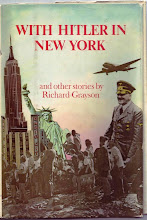
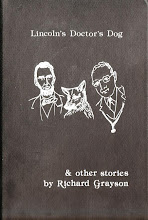
Brooklyn College in New York City was no exception, and his account of the day-by-day events at the school, acclaimed author and diarist Richard Grayson (The Brooklyn Diaries, With Hitler in New York, Lincoln's Doctor's Dog), then an 18-year-old freshman, gives a young student's perspective to this scary, exhilarating time in American history.

Sunday, December 26, 2010

"MIAMI BEACH CONVENTION: A 21-Year-Old Looks at the Democrats, 1972" by Richard Grayson now available at Amazon Kindle Store


Richard Grayson's MIAMI BEACH CONVENTION: A 21-Year-Old Looks at the Democrats, 1972 is now available at Amazon's Kindle Store for 99¢ from its publisher, Art Pants Company.

Here is the promo material for the 45-page $5.99 paperback edition from Superstition Mountain Press:
It's July 1972, four years after the tumultuous and riot-torn Democratic National Convention in Chicago. Republican Richard Nixon is seeking re-election, and a different kind of Democratic party - spearheaded by young people, feminists and antiwar activists - meets in Miami Beach to nominate the populist peace candidate George McGovern.

Acclaimed author and diarist Richard Grayson (The Brooklyn Diaries, With Hitler in New York, I Brake for Delmore Schwartz) is 21, and he and three other college students from Brooklyn and Queens have trekked to the convention after they'd gotten Mikey, one of the group, elected as an official delegate. Grayson's diary entries, at once naive and knowing, provide a fascinating look at this seminal moment in American politics.

Thursday, December 16, 2010

Fifty Years Ago in Brooklyn: Park Slope Plane Crash


As lots of media reports have noted for the past week, today was the day, fifty years ago, that two planes collided in midair in New York City and one crashed right into the middle of Park Slope.

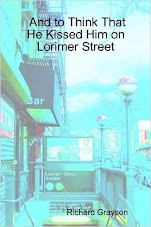
We have a clear memory of that day and have written about it in places, on the blog Syntax of Things but mostly in our story, "The Boy Who Fell to Brooklyn," which first appeared in the University of Miami literary magazine Mangrove in 2005 and then as the last story in the collection And To Think That He Kissed Him on Lorimer Street.

We reprint it here:
THE BOY WHO FELL TO BROOKLYN

In 1931, my grandmother was locked up in the psychiatric ward of Kings County Hospital for trying to strangle the obstetrician who would deliver me twenty years later.

Grandma Ethel always attributed her temporary insanity to all the blood she lost in the delivery of her only child, my mother. Apparently she tried to choke the doctor with his own necktie.

Jacob Levine didn’t hold a grudge. He knew it was because of her mental illness. She was only nineteen. Dr. Levine remained her doctor after she got well and became my mother’s after she came of age.

He delivered me at Beth-El Hospital in 1951 and four years later he performed my grandmother’s hysterectomy.

Dr. Levine was a thin man, always elegantly dressed. He had white hair and a mustache by the time I knew him. I never saw him without a vest.

When I was nine, my mother got pregnant again. When Mom was in her seventh month, on Friday, December 16, 1960, she fell down the stairs in our house in Flatlands. It was only six well-carpeted steps and she didn’t seem hurt, but still. Dr. Levine told her to come to his office at 50 Plaza Street, just off Grand Army Plaza.

When I got out of my fourth grade class at P.S. 203 for the day, my parents were waiting for me with the car. We were going to make sure Mom and the baby were all right. Freezing rain fell as we drove up Flatbush Avenue.

That morning, two planes had collided over New York Bay. One plane, bound for La Guardia, crashed in a vacant field in Staten Island. The other plane, a DC-8 jet trying to get to Idlewild, crashed into a church on the corner of Seventh Avenue and Sterling Place, just a few blocks from Dr. Levine’s office.

It looked as if the pilot had been trying to land in Prospect Park. If so, he fell about five hundred feet short.

It was the worst disaster in aviation history. One hundred and thirty-four people were killed, including four on the ground in Park Slope. By 4 p.m., the time we got to the area, the worst of the chaos was over.

Dad bought a New York Post at the newsstand at Grand Army Plaza as we walked to Dr. Levine’s office. It was an Extra edition, about the plane crash.

On the front page was a picture of a boy around my age, sitting dazed in a snowbank. His face was so blackened, I couldn’t tell if he was white or Negro.

Stephen was the only survivor from the two planes. A woman picked up the burned boy and drove him the thirteen blocks down Seventh Avenue to Methodist Hospital.

People were in and out of Dr. Levine’s waiting room as we sat there, all talking about the crash, describing the rain of metal and fire. Two women said the little boy’s survival was a miracle and they were going to a special Mass at their church to pray for him.

Park Slope was a decaying neighborhood back then. Storefronts on Seventh Avenue were boarded up, and the only supermarket, an old A & P, was the filthiest grocery store I’d ever been in.

Dr. Levine’s young associate, Dr. Sidney Silverman, examined Mom. She and the baby were going to be just fine, he said. Dr. Silverman told me maybe I’d have a little sister like he did. His sister Beverly was going to be an opera singer.

“Or you could have a little brother,” Dr. Silverman said. “As long as the baby is healthy, it doesn’t matter.”

The boy from the plane died the next morning. He’d been supposed to come from Chicago with the rest of his family for a Christmas visit, but he had a sore throat and so his trip was delayed. His parents and sisters were already in New York.

They said he must have been sitting on a stewardess’s lap in the jump seat, and the door must have opened somehow. That’s how Stephen fell from the sky.

At Methodist Hospital, they found four dimes and five nickels in his pocket and gave them to his parents. As they left the hospital the next morning, after Stephen was gone, his father put the coins in the collection box.

It was the snowiest winter I can remember. The schools were closed several times, including the day of John F. Kennedy’s inauguration, which I watched on TV. We stopped having winters like that years ago.

A light snow was falling eight weeks after the crash, the Friday Mom went into labor. She called Dr. Levine’s office and Dr. Silverman took the call. He told her if she could hold out till 8 p.m. before going to the hospital, they wouldn’t charge her for the extra day.

So we sat around my grandparents’ apartment in East Flatbush as darkness fell.

Always nervous, I asked Mom, “Are the pains really bad?”

She nodded and said, “Pretty bad.” But she was smiling.

I was worried because I knew my mother, like me, had an incredibly high pain threshold. (Our dentist, Dr. Hersh, liked us because we never took Novocain, no matter how deep our cavities that needed drilling. “Guts dentistry,” Dr. Hersh called it.)

I was afraid my new sibling was going to pop out then and there in Grandma Ethel’s kitchen, so I made sure that Dad drove Mom over to Beth-El Hospital. That way they’d be just outside in case she had to go in before 8 p.m.

Asleep in the Castro convertible in the living room that night, I dreamed I had a baby sister. But when I woke up, I saw that my grandfather had written on a piece of construction paper with a crayon, “IT’S A BOY!”

As long as it’s healthy, I thought.

After Dr. Levine died, Dr. Silverman moved his office to Kings Highway, closer to the part of Brooklyn where we lived. He remained Mom’s gynecologist for years. Except for the problems with her Dalkon Shield IUD, I never heard Mom complain about Dr. Silverman.

When I was in the MFA program at Brooklyn College, my girlfriend was a patient of Dr. Silverman’s, too.

I accompanied her to his office once when she had a yeast infection. In the waiting room, I introduced myself to Dr. Silverman as Marilyn Grayson’s son, and we shook hands. By that time, his sister, Beverly Sills, was very famous.

My friend Jerry was impressed when I told him about Dr. Silverman being the gynecologist of both my mother and my girlfriend.

When Jerry was in Sheepshead Bay High School, he once began an essay on the topic “My Favorite Place” with the sentence: “My favorite place is the vagina.”

“It’s cosmic about Dr. Silverman,” Jerry told me. “He knows where you came from and he knows where you’re going.”

But I never left Brooklyn.

My grandparents did, but just across Jamaica Bay for a beachfront co-op in Rockaway. Of course they’re dead now, but Grandma Ethel lived long enough to be helped by Prozac.

In the 1970s, my parents moved to Florida, and later, to Arizona. My brothers live out of state, too.

Dr. Sidney Silverman retired to Florida and died there in 1999.

Jerry had apartments near Brooklyn College, on Ocean Parkway, and then in Brooklyn Heights, but eventually he moved to Manhattan. He works a few blocks from ground zero.

He’s got a son now, too. When I see Jesse, I always greet him the same way: “Hey, homeboy.” I’ll keep doing it as long as the kid keeps smiling.

Park Slope has changed a lot, as I’m sure you know. I teach writing workshops in an elementary school not far from Dr. Levine’s old office on Plaza Street, not far from Seventh Avenue and Sterling Place.

The kids reacted in different ways to 9/11. One third-grade girl wrote these depressing stories about Eggy, a giant egg guy to whom terrible things kept happening. But by the end of the school year, there was a change. As she put it in one story, “One morning Eggy just perkered up.” That story was called “Eggy Goes to Hawaii.”

This final story is called “The Boy Who Fell to Brooklyn.”

In December 2000, a group of us who could remember the crash gathered at noon on Sterling Place and Seventh Avenue. It was the only memorial to mark the fortieth anniversary of the disaster, at a street corner where the sole reminder is a vacant lot amid rows of million-dollar brownstones.

The only official memorial to the collision is in the hospital chapel: a tiny plaque that includes Stephen's coins. Sometimes, after I get annoyed with the selection of books at the Barnes and Noble down the block – you won’t find this book there – I stop by to look at the plaque.

It says: “Our tribute to a brave little boy.”

Staring at the coins, I get lost in my thoughts and sometimes get depressed.

But eventually, walking along the streets of Park Slope, I perker up.


The story also appears as the title story in our 99-cent Amazon Kindle ebook, The Boy Who Fell to Brooklyn, a collection of nine stories published over the past four decades.

One of our favorite Times reporters, David W. Dunlap, today published an amazingly wonderful City Room blog post about Stephen's life.

Monday, December 6, 2010

Richard Grayson E-Books Now Available for Under $1 at Google E-Bookstore and Indie Stores like Changing Hands, Powell's, WORD and Greenlight Bookstore


With the launch today of Google's E-Bookstore, many titles of books by Richard Grayson are now available as Google eBooks for 95 cents each. We are working at getting other titles online as soon as possible.

You will soon also be able to buy Google eBooks by Richard Grayson at some of our favorite indie bookstores like Tempe's Changing Hands Bookstore, Fort Greene's Greenlight Bookstore, Greenpoint's WORD and Portland's Powell's Books.

Other favorite indie bookstores we've loved over the years that will be selling our Google eBooks are Books & Books in Coral Gables and Miami Beach, Elliott Bay Book Company in Seattle, Skylight Books in L.A., The Garden District Book Shop in New Orleans, and Kepler's in Menlo Park.

Wednesday, December 1, 2010

"RAP ON TRIAL: 2 Live Crew, Obscenity, and South Florida Justice, 1990" by Richard Grayson now available at Amazon Kindle Store


Richard Grayson's RAP ON TRIAL: 2 Live Crew, Obscenity, and South Florida Justice, 1990 is now available at Amazon's Kindle Store for 99¢ from its publisher, Art Pants Company.

Here is the promo material for the 68-page $5.86 paperback edition from Superstition Mountain Press:
In 1990 the rap group 2 Live Crew's album, "As Nasty As They Wanna Be," with its hit single, "Me So Horny," was declared obscene by a federal judge in South Florida. Broward County subsequently arrested 2 Live Crew for a live performance of the banned album at a Hollywood nightclub and also arrested a Fort Lauderdale record store owner for selling the forbidden CD. Acclaimed author and diarist Richard Grayson (The Brooklyn Diaries, With Hitler in New York, WRITE-IN: Diary of a Florida Congressional Candidate) here takes us back to the courtrooms of Broward County in that tumultuous fall of 1990. Grayson's diary entries from those two obscenity trials -- both with shocking verdicts -- make for an amazing historical record of a time when hiphop music was considered not fit for "civilized" people.

Sunday, November 28, 2010

Sunday Morning on the Lower East Side: Going to Long Island City in a Vintage Subway Car


We got to the Second Avenue/Lower East Side subway stop of the F/M lines at 9:45 a.m. on this bright, wintry morning to catch the first of the holiday's vintage subway cars going to Queens Plaza in Long Island City via the Sixth Avenue local stops.

This was the first year we had the schedule in advance (thanks to Bernard Ente and Justin Ferate) and were free to get to the premier run of vintage R-1/9 trains that are running every Sunday from now until Christmas.

You could tell the subway aficionados waiting for 10 a.m. Nearly all of them were middle-aged men, many African-American, and they discussed all kinds of arcane stuff with an insider's knowledge. We overheard an interesting (to us, anyway) discussion of the merits of different combinations of subway and bus routes to get from Manhattan to Starrett City. And we learned that MTA can stand for "More Trouble Ahead" and "Money Thrown Away."

But the cynicism was replaced by excitement as the old train came into the station although some guys complained once it settled in about the front car, which didn't look quite the same as the others. (It was a slightly lighter green but we don't know the specific technical stuff.)

But we're grateful for whatever the MTA spent to let us ride the vintage subway.

It was gorgeous, ran as fast as today's trains though a little bumpier maybe, and yes, the lights flickered.

That was our childhood first impression of the subways -- the flickering lights -- probably gathered from subway cars like the ones we rode on today (it was legal here to move from car to car, just like back in the day).

Our first definite memory of riding the subway was when we were four years old and accompanying our dad to work.

We gripped a little attache case which contained an Archie comic and a Hershey's bar. That ride from Utica Avenue to Union Square on the IRT seemed dark, grown-up, and both thrilling and pretty scary.

What's really scary is that we still say "IRT" in 2010 and get mostly blank looks. Anyway, we rode mostly in cars and buses as a kid -- after 1958, our home was a 20-minute bus ride from the nearest subway stop at best -- and our only other clear memory was when we were nine at our summer bungalow on Beach 56th Street/Place in Rockaway, when our mom's 16-yo cousin Suzi took us to the planetarium. It felt like an expedition, from Beach 60th Street to West 81st Street, and there was a double fare to and from the Rockaways in those days!

We're pretty sure they had these R-1/9 (there were various models starting from the 1940s) when we were a weekday commuter from our house in Old Mill Basin to our tenth grade classes at The Franklin School on West 89th off Central Park West in 1965-66. (New Year's Eve was the start of the massive subway strike and showdown between TWU president Mike Quill and brand-new mayor John Lindsay.)

To get home, we took the CC train from 86th to 59th/Columbus Circle, where we switched to the D (then the Culver Line) to 34th Street, and then we transferred once more, to the Q train to Kings Highway, where we caught the Pioneer Bus Company's Mill Basin bus home. (The Brighton Line wasn't the Q train much longer, but of course it is now and has been for years.) By then the BMT lines had some newer trains without the wicker seats, white fans, and naked light bulbs that these trains had.

Some of the people waiting at the stops today weren't subway buffs but unsuspecting Sunday commuters. One woman seemed very annoyed by the lack of recorded announcements, although the older cars still don't have them today.

In one car, a passenger took it on himself to announce, "Making M train stops to Queens Plaza" and then giving the train's next stop.

The wicker seats seemed oddly raised but were quite comfy.

Mostly there were good-natured subway-system fans, taking photos, inspecting the work of the cars, looking at the vintage ads and signs and maps. One guy had baked cookies for the MTA workers aboard.

It felt like a giddy journey into the past. We remembered that Twilight Zone episode we saw around the time of these subway cars, where the old businessman takes a train to his past in a bucolic hometown.

The signs -- advertisements, announcements, feature -- in all the cars were amazing nostalgia.

We actually remember when "I Am an American Day" was something, although we first learned about it in a Superboy comic book and thought it sounded old-fashioned then. Mayor Wagner was mayor from when we were 2 until we were 14, and when we were little, we thought he'd be mayor forever. We were in the nurse's office at J.H.S. 285 one day for something when we heard his (first) wife died, and everyone was very sad.

Before there was National Public Radio, there was WNYC. Mornings you could catch "About New York" in the days before "Morning Edition" and "The Takeaway."

We certainly didn't know about the fiftieth anniversary of the Fifth Avenue Association in 1957, although maybe our family did, since their Art Pants Company offices were at 95 Fifth Avenue at East 18th Street. The previous year the building's owner offered to sell it to Grandpa Nat for $10,000, but he didn't think it was worth it. (The "place" later moved down the block to 87 Fifth, where it remained until it closed in 1974.) We mostly remember 1957 now as the year the Dodgers left Brooklyn But we do remember that 1958 was International Geophysical Year because a kid couldn't get out of hearing or reading about it. (It was even in a Little Lulu comic, we recall, when she explained that IGY wasn't the character Iggy.)

An announcement that the subway fare would go up to ten cents in 1948. The fare was raised to 15 cents in 1953 and that's the fare we remember paying until we were 15 in 1966 -- after the transit strike. In sympathy, the price of a slice of pizza also jumped to 20 cents.

This announced free Brooklyn subway transfers from the elevated lines to the underground ones on Fulton Street at both Franklin Street and Rockaway Avenue.

Many of the ads seemed so old-fashioned. One had Aunt Jemima selling not her pancakes or syrup but as a kind of celebrity spokeswoman for the NYC Transit Authority urging people to ride subways and buses instead of cars; the ad's purpose seemed to be to "save energy," perhaps during World War II. Here's an ad for Wrigley's twins, Spearmint and Doublemint gum. We remember the Doublemint Twins only as squeaky-clean real-life adolescents.

If Aunt Jemima was advocating "green-friendly" policies regarding transportation, Heinz Ketchup here was touting its being free of "bezoate of soda," which sounds like they were pushing "natural foods" way back when. All we knew was that Heinz Ketchup went on our burgers, french fries, scrambled eggs and was especially delicious on spaghetti with melting Breakstone salty butter.

Grape Nuts used to be popular, too, although we thought it tasted like rocks.

New York City was a 24-hour town in the days before 24/7, back when men were told to use Burma Shave and not be litterbugs. This anti-littering ad predated Phil D. Basket.

Last stop, Queens Plaza.

We watched the nostalgia train as it went off to get ready for its ride back from Queens to the Lower East Side, but decided against a return voyage.

Since the G train wasn't running this weekend (is it ever running normally on the weekend? of course they're improving the system all the time, right?), we exited and at the corner of Queens Boulevard and Jackson Avenue, we got a quick shuttle bus back to Williamsburg

and were home an hour after we got on the subway to our childhood and adolescence.