Showing posts with label New York Times Book Review. Show all posts
Showing posts with label New York Times Book Review. Show all posts
Monday, April 10, 2023


Sunday, October 3, 2021
Richard Grayson Letter in New York Times Book Review

Tuesday, March 27, 2018

Wednesday, December 13, 2017

Saturday, July 15, 2017

Sunday, April 19, 2009
Adding It Up: We review the April 19, 2009 Sunday New York Times Book Review

For the second week in a row, the New York Times Book Review for April 19, 2009 is 28 pages rather than just 24 like most of this year's issues.
And for the second week in a row, we're sure that the increased length of the review has to do with the section's most important feature: the advertising.
This week we count 7.6 pages of advertising, including 6 full-page ads. (Actually, one ad - for books by Alexander McCall Smith - spans two facing pages). That's just 4/10 of a page less than last week's Easter paper, and the second week in a row, advertising (not for the New York Times itself or its products) makes up more than a quarter of the section.
We've turned a corner! Kudos to the display advertising department. To show our admiration and gratitude, this week we are sending you a Brooklyn blackout cake from Ladybird Bakery.
Sunday, April 12, 2009
Adding It Up: We review the April 12, 2009 Sunday New York Times Book Review
The New York Times Book Review for April 12, 2009 is 28 pages, 4 pages more than all but one issue this year, and no wonder (spoiler alert): a full 8 pages of the 28 are devoted to ads! On this Easter Sunday, we shout Hallelujah! The New York Times Book Review has risen!
Is the Great Ad Drought over? Why is tonight's book review different from all other recent book reviews?
Easter and Passover congratulations to the Times display advertising department on this great leap forward. We are sending you a dozen currant rolls from Lords Bakery by the Junction in Brooklyn!
Sunday, April 5, 2009
Adding It Up: We review the April 5, 2009 Sunday New York Times Book Review
The New York Times Book Review for April 5, 2009 is 24 pages, and the publication is much, much better than last week's in what's most important for a book review - namely, the number of ads it contains. Last week had a paltry 1.25 pages of ads. But Palm Sunday has brought a miracle comeback, praise the Lord and the Times display advertising department. Thanks also to the advertisers, who are fighting the Thrift Paradox at least for this issue.
The cover, of course, has no ads.
Page 2: The Editors' "Up Front" is flanked on the left by a decent-sized ad from Hachette imprint, for Sarah Dunn's Secrets to Happiness. Lots of ads, we think. The New York Times Store ad on the right flank doesn't count, so we'll call this 40% of a page. We're behind last week already, but that will change soon.
Page 3: Table of contents page has side ad for, um, something or other, titled "What Do Best Selling Authors Read?" with ads for four spiritual-themed books, two from Rowman & Littlefield, two from Simon & Schuster, with a bottom logo of Barnes & Noble. Counts as another 40% of a page.
Page 4: Another 40% of a page ad to the left of the letters for The Jewish Body, a new book by our oldest friend from P.S. 203 Linda Konner's cousin Melvin.
Page 5: Next to the review of a new terrific collection of stories by Kevin Wilson is a little review of Mary Roach's Bonk. Counts as 20# of a page. We're only on page 5, but already we beat last week!
Page 6: A left-hand ad for the New York Times Store. Counts as no ads.
Page 7: The great Beckett, continued, but no ads.
Page 8: No ads.
Page 9: Surprisingly, an ad. In recent weeks, there have been no page 9 ads. Hurray for Hunting Eichmann! Another 40% of a page.
Page 10: No ads.
Page 11: No ads.
Page 12: No ads, but photos from one of our favorite recent photography books, Store Front: The Disappearing Face of New York by our friends James T. Murray and Karla L. Murray.
Page 13: Nada.
Page 14: Zilch.
Page 15: Nothing in the way of ads.
Page 16: Nope.
Page 17: No ads.
Page 18: No ads.
Page 19: After a week's hiatus, page 19 is back in top form, with a full-page ad from Bose. for its Acoustic Wave Music System II
Page 20: No ads.
Page 21: The right-hand ad is not for a New York Times product for a change but an advertisement by Grand Central Publishing for the great Christopher Hitchens and the not-so-great God. (Those who think Christopher Hitchens is God would undoubtedly say the author isn't so great.) Counts as 40% of a page.
Page 22: Um, on the left 20% of the page is one classified ad, one New York Times ad, and another ad half that size for an Edgar Allan Poe event, Nevermore 2009, in Baltimore. On the right, another New York Times ad. Let's count this as 10% of a page.
Page 23: The essay page has got poetry but no ads.
Page 24: Bauman Rare Books is back with a back-page full-page ad.
Adding it up: We count 4.3 pages of ads, more than three times as many as last week.

Congratulations to the Times display advertising department. We are sending you a dozen slices of baklava from the wonderful Damascus Bread & Pastry Shop on Atlantic Avenue. Inshallah, you'll do even better next week!

Sunday, March 29, 2009
Adding It Up: We review the March 29, 2009 Sunday New York Times Book Review
The New York Times Book Review for March 29, 2009 is 24 pages, and sadly, the news about the book review's most crucial function - to bring in advertising revenue for the company - has reached its nadir.
We said the same thing five weeks ago, when we counted 3.95 pages of ads. But this week's issue is much, much worse.
One reason we stopped doing these "Adding It Up" looks at ad pages, in addition to our illness, was that we began feeling they smacked of snark and Schadenfreude, and we have no reason to be unkind to a publication that we've been reading since maybe 1963 - when Mrs. Sanjour, our ninth grade English teacher at Meyer Levin J.H.S. 285 in East Flatbush used to give us Monday quizzes on the Sunday Times.
The New York Times Book Review generously reviewed two of our books, and we've been lucky enough to be mentioned in NYTBR columns several times. So let's make it clear: we like NYTBR and we admire Sam Tanenhaus and the other people who work there.
None of the readers who came here via mentions in the blog of the terrific poet Ron Silliman or our own self-serving comments on Levi Asher's weekly astute content reviews at Literary Kicks took enough offense to write us, but the tone of the posts, on rereading, bothered us.
Anyway, this week we just wanted to note the critical situation in regards to advertising in the Book Review, which has been averaging about 4-5 pages of ads in recent weeks.
The cover, of course, has no ads.
Page 2: The Editors' "Up Front" is flanked on the left by a decent-sized ad from Grand Central Publishing, a Hachette imprint, for Susan Jane Gilman's Undress Me in the Temple of Heaven and on the right by a smaller ad book on prostate cancer from the Dattoli Cancer Foundation. Counts as 60% of a page.
Page 3: Table of contents page has side ad for The Fortune Cookie Chronicles: Adventures in the World of Chinese Food by one of the Times' most stylish local-beat writers, Jennifer 8. Lee. (We loved the book, but an hour after finishing it we wanted to read it again.) Counts as 40% of a page in our estimation. And that means we've got one page of ads out of the first three. It's downhill from here.
Page 4: An ad for the New York Times Book Review on the letters page doesn't count as an ad, but maybe the subscriptions they will get can offset the lack of advertiser revenue. Counts as no ads.
Page 5: First book review of the issue, for the very funny Russell Brand's My Booky Wook, has a smaller version of the NYTBR ad on the opposite page. Counts as no ads.
Page 6: A left-hand ad for the New York Times Store. Counts as no ads.
Page 7: A graphic book review by the great Alison Bechdel, whose Fun Home we've taught at Fordham. We're glad it takes up the whole page, but that means no ads.
Page 8: Pic of a wonderful short story writer, Wells Tower, but no ads.
Page 9: No ads.
Page 10: No ads.
Page 11: No ads.
Page 12: Bupkis.
Page 13: Nada.
Page 14: Zilch.
Page 15: Nothing in the way of ads.
Page 16: Nope.
Page 17: No ads.
Page 18: No ads.
Page 19: This page has lately been where ads start to appear again after the middle-of-the-review drought, but there's nothing today.
Page 20: No ads.
Page 21: The right-hand ad is for The New York Times Almanac, which is published by Penguin, whose website address is given, but the order information is for The New York Times Store. Maybe this is a co-op arrangement, but until someone tells us otherwise, we will count this as no ads.
Page 22: Um, on the left 40% of the page is one classified ad, two New York Times ads, an ad for the New York Antiquarian Book Fair, and another ad half that size for an Edgar Allan Poe event, Nevermore 2009, in Baltimore. Let's count this as .25 of a page.
Page 23: The essay page never has ads.
Page 24: Just as on February 22, the last time we surveyed, the back page, a primo space to put ads, has an ad for a New York Times book, Obama: The Historic Journey. It's distrubuted by Riverhead Books, an imprint of Penguin Group (USA) but the website and phone number for ordering info are from The New York Times Store, so we cannot count this as an ad.
Adding it up: The ads on pages 2 and 3 total one full page. The only other page with ads (.25) is page 22.
There are just 1.25 pages of ads in today's New York Times Book Review. Sad.
Due to ongoing renovations at Dumbo Books HQ, we have been spending a few days at the splendid Best Western Brooklyn Bay on Emmons Avenue and enjoying the salt air of Sheepshead Bay, easy access by the B44 Limited bus to our weekend classes at Brooklyn College, cheap and delicious dinners at the Roll-n-Roaster across the street (we were going there back in Ford administration) and the pleasures of the UA Sheepshead Bay 14 multiplex on the spot where, when it was the Deauville Beach Club, we had our bar mitzvah reception 45 years ago.
But as soon as we return home to Williamsburg, we will walk down the block to Settepani and ordering some Panettone Mandorlato for the Times display advertising department so they won't have to stand in a Great Recession breadline.

Times are hard at the Times.
Saturday, February 21, 2009
Adding It Up: We review the February 22, 2009 Sunday New York Times Book Review
The New York Times Book Review for February 22, 2009 is back to where it was the first two weeks in February, at 24 pages, and sadly, the news about the book review's most crucial function - to bring in advertising revenue for the company - has reached its nadir.
The cover has no ads. Since other sections of the paper, including the front page, now have ads, we still think ads would be a good idea here. There's a lot of space devoted to an old B&W pic of the pool at the Fontainbleau (pronounced "Fountain-blue"). Feh. We always preferred the pools further north at the Carillon and the Sheraton Bal Habour, places where we could see old-time celebrities in bathing suits (Ronnie Dyson, cute; George Meany, not so much).
Page 2: Full-page ad for a Maeve Binchy novel published by Knopf, that publisher again coming thru to rescue page 2.
Page 3: Table of contents page has side ad for two Ana Grey mysteries by April Smith. Or maybe it's two April Smith mysteries by Ana Grey? Whatever. Counts as 40% of a page in our estimation.
Page 4: The Editors' "Up Front" flanked on the left by a decent-sized ad for a Little, Brown scary book or two. Counts as 60% of a page, which means we've so far got two full pages of ads out of four pages. If only the whole issue could be half and half! Alas, no.
Page 5: Boring letters and some "postcript," about Susan Sontag, whose heirs should have known better than to publish her immature diaries. But also a 40% right-hand ad from Henry Holt, another detective book.
Page 6: A left-hand ad for the New York Times Store. Counts as no ads.
Page 7: A little right-hand ad for some conference on Southern literature in Chattanooga. We can't afford choo-choo fare, but it counts as 25% of a page (we're in a generous mood).
Page 8: Pic of Crockett and Tubbs from our days in South Florida but no ads. From here on in, ads are going to be as scarce as pastel unconstructed sports jackets.
Page 9: No ads.
Page 10: No ads.
Page 11: No ads.
Page 12: Bupkis.
Page 13: Nada.
Page 14: Zilch.
Page 15: Nothing in the way of ads.
Page 16: Nope.
Page 17: No ads, but a nice pic of Miller Williams, whom we last saw in September 2001 when he and the missus joined us, our pal Crescent Dragonwagon and others at a Fayetteville restaurant for a bite after a poetry reading.
Page 18: No ads.
Page 19: We'll count this as 50% of a page, ignoring the New York Times Store ad for another food book. There's two Abraham Lincoln-related ads, and as we can personally attest, Lincoln always sells books. Apparently Honest Abe is good for ads too.
Page 20: No ads.
Page 21: Two right-hand is from NYTBR ad stalwart Other Press, who've earned a link (probably sausages too). Counts as 40% of a page.
Page 22: Um, on the left 40% of the page are two classified and an ad for Traveler's Language Courses, as well as to no-count ads for the New York Times Store. Let's count this as 30% of a page. We're in a good mood.
Page 23: An essay called "Can't. Stop. Writing." But. No. Ads.
Page 24: This is the shocker, folks. The back page: a primo space to put ads. And what do we have? An ad for a book about Ted Kennedy, whom we love, but it seems to be from The Boston Globe although the book's published by Simon & Schuster. It's by a team of Boston Globe reporters. The Boston Globe is owned by the New York Times Company, just as we own The Los Angeles World-Telegram & Star.
We need a decision from the ref. Ref?
He says it doesn't count as an ad! No ad on the back page of this week's New York Times Book Review! The crowd goes wild!
Adding it up: Last week we had seven and a half pages of ads out of 28 pages. This week, out of 24 pages, only 3.95 pages of ads. (Check our arithmetic and comment if we're wrong.) Last week we had 4 full-page ads alone. Sell your stock! As of yesterday, they're not giving dividends anyway.
We are sending a red velvet cake from Brooklyn's CakeMan Raven to the Times display advertising department to tide them over until the layoff notices arrive.
Don't forget to eat the crumbs, guys! It's going to be a long recession!
Sunday, February 15, 2009
Adding It Up: We review the February 15, 2009 Sunday New York Times Book Review
The New York Times Book Review for February 15, 2009 is 28 pages, four pages more than recent issues, and it's also doing better where it's most crucial: in ad copy.
The cover has no ads. Since other sections of the paper, including the front page, now have ads, we still think ads would be a good idea here. There's too much wasted space around the first three paragraphs to Joe Nocera's great review of a book about the last Great Depression. This would be a great place for New York Review of Books-style personals.
Page 2: Full-page ad for a novel by a doctor published by Knopf. Much better than the recent ads for New York Times products, which didn't count.
Page 3: Table of contents page has side ad for a First Lady roman a clef from Random House not as good as Gore Vidal's Washington, D.C., which has a cameo by a thinly disguised version of the author's half-sister's half-sister's half-sister, in which a young faux-Jackie shakes hands with Harry Truman and is breathless at how sexy he is. Counts as 40% of a page, we'd say.
Page 4: The Editors' "Up Front" flanked by, on the left, a Bantam ad for a memoir copy describes as "hilarious and heart-tugging," and, on the right, a New York Times Store product about food, which doesn't count. Another 40% of a page.
Page 5: Wow, a full-page ad for the reprints of a "classic novel" made into film with attractive celebrities and other books by the dead author. There's 23 pages left and already this week's NYTBR has beat out the entire Feb. 1 issue's entire ad space. Way to go, Display Advertising! Those cannolis we sent must have helped!
Page 6: Another 40% ad on the left next to the boring letters to the editor. It's for some Irishy book with the obligatory Frank McCourt blurb.
Page 7: OMG. Yet another full-pager, for Bose. Wasn't that Oscar Wilde's pet name for his bf?
Page 8: No ads except for the NYTBR itself. Nice pic of the Barry Sisters, though.
Page 9: Little right-hand column ad for a book with "Boca" in the title. What a coincidence: we just ate a Boca burger (seriously!) and used to write a little right-hand column for the Boca Raton News.
Page 10: No ads.
Page 11: No ads.
Page 12: Bupkis.
Page 13: Bottom half-page ad for a book that's changed the way people think about changing the world. (No, it's not Skinny Bitch.)
Page 14: Zilch.
Page 15: Nothing in the way of ads.
Page 16: To the left of the children's best sellers list (do any actual children look at this?) is a 40% ad for non-book products related to "The Sisterhood of the Traveling Pants," a series we can't resist since our grandfather's company Art Pants and our father's Pants Set stores kept us in mass-market paperback money for the first thirty years of our life.
Page 17: No ads.
Page 18: No ads.
Page 19: Nothing.
Page 20: No ads.
Page 21: Two right-hand ads for a writers conference at a once-good Southern college and a book about something serious involving Sinhalese and Tamils. Counts as 40% of a page.
Page 22: No ads.
Page 23: Another 40% of a page ad on the right, for a novel written with compassion and hilarity, a sequel to a beloved bestseller, published by Forge.
Page 24: No ads.
Page 25: Yet another 40% of a page ad on the right, for a book from Other Press, which is a mainstay of NYTBR's ads.
Page 26: Down to two little classifieds and two ads for New York Times products. Counts as no ads.
Page 27: Since Jim Holt's controversial Essay (its thesis: death ain't so good for you) is oh so cleverly shaped like a tombstone, there is white space on the left and right but no ad copy there. A bigger waste than death, if you ask us. We'd at least squeeze in some plugs for the New York Times Store there.
Page 28: Full-page ad in the back. Bauman Rare Books comes through again! Where were you guys last week when we needed you?
Adding it up: Four full page ads. One half-page ad. Seven ads we'll count as 40% each equals 2.8 pages. We'll give another one-fifth of a page for the Boca Knights ad. That makes seven and a half (7 and 1/2) pages out of 28 pages. That's more than a quarter (25%) of this week's New York Times Book Review given over to the important stuff.
We are impressed, since two weeks ago only a little more than a tenth (10%) of the Feb. 1 issue was devoted to ads.
We are sending two dozen rugelach to the Times display advertising department as a reward and an inducement to keep up the good work.
If you guys are the types that need negative reinforcement, keep your copies of today's last Washington Post Book World handy!
Saturday, January 31, 2009
Adding It Up: We review the February 1, 2009 Sunday New York Times Book Review
The New York Times Book Review for February 1, 2009 is 24 pages.
The cover has no ads. Since other sections of the paper, including the front page, now have ads, we think ads would be a good idea here.
Page 2: Big ad for The New York Times Almanac with The Editors' "Up Front" column. Sorry, counts as no ads.
Page 3: Table of contents page has side ad for Rowman & Littlefield Publishers, Inc. (a competitor of Dumbo Books!).
Page 4: Letters page has bigger side ad for Delta Trade Paperbacks' Polly Evans.
Page 5: First inside review page has little side ad for Delacorte Press.
Page 6: Little side ad for Other Press. (Notice the caps: we are not just trying not to name a competitor!)
Page 7: No ads.
Page 8: No ads.
Page 9: Nada.
Page 10: Nope.
Page 11: No ads.
Page 12: Bupkis.
Page 13: Nice pic of Joseph P. Kennedy, but no ads.
Page 14: Zilch.
Paga 15: Nothing in the way of ads.
Page 16: No ads.
Page 17: No ads.
Page 18: No ads.
Page 19: Nothing.
Page 20: No ads.
Page 21: Finally, big side ad next to paperback best sellers list. Wait, it's for The New York Times Store. Sorry, this doesn't count. Again, no ads.
Page 22: Okay, we have on the left side two real ads for University of Virginia Press and, oh, wait, it's The New York Times store again. And on the right, going down the page, a little box for the memoirs of a psychoanalyst that is available at amazon.com and barnesandnoble.com, just like Dumbo Books books! Then the book exchange with three classified ads (two "books wanted," one "printing related services") and then a larger ad for. . . The New York Times Store. Well, it is for a book.
Page 23: Essay page has no ads. What would Sontag do?
Page 24: Full-page ad in the back. Bauman Rare Books comes through again! Thanks, fellas! You are indeed a rare find.
Adding it up: Generously, two and one-third pages of ads out of 24 pages.
We are sending a dozen cannolis to the Times display advertising department so they will have something to keep their energy up this week.
Sunday, August 17, 2008
Twenty-Five Years Ago This Weekend: The New York Times Book Review & "I Brake for Delmore Schwartz"

Twenty-five years ago this weekend, we got our first book review in The New York Times Book Review. It was our third book of stories, and how the review got in there is a story in itself.
We'd sent a copy to a fiction writer we admired, Ivan Gold, whom we'd been introduced to by our creative writing professor at Brooklyn College, the great Jonathan Baumbach (to whom our new book Summer in Brooklyn is dedicated).
Gold sometimes reviewed books for the Times Book Review - just the year before he'd reviewed our friend and neighbor Tom McHale's last novel (Tom committed suicide soon after that, though we wouldn't call the events related) - yet we didn't really think of that. We just liked Gold's books - especially Nickel Miseries - and wanted him to have a copy.
It turned out that Gold was at the time reviewing another book, by the very talented David Evanier, for the Times Book Review, and he thought our book was worth including in the review. So he wrote the Times Book Review's editors, and they agreed. He also tried to get in touch with our publisher, Zephyr Press, who were in the Boston area near him, but at the time they were in a communal house in Somerville and the phone message got waylaid.
There were all kinds of complications - because he couldn't get another copy easily, Gold had to rip out the half-title page in which I'd inscribed the book to him when he sent it to the Times for the editors to check out - so it's amazing that it ever appeared. But finally our publisher Ed Hogan got word the review would appear on Sunday, August 14, 1983.
We knew the Times Book Review was usually available by Wednesday at some bookstores, and then living in South Florida, we called around and found it was at the Waldenbooks in the Pompano Beach Mall. It was about a 20-minute drive and we were really nervous about what the review would say.
But, skimming it after we took it from the racks, it seemed okay. In a feature article on us a couple of months later, the Wall Street Journal described the NYTBR review as "mildly favorable." We'll take "mildly favorable" and so were pretty happy that day 25 years ago when we first saw the review.
Since you won't find the review in the online New York Times database - we think because of New York Times Co. v. Tasini, 533 U.S. 483 (2001) - and it's hard to find even in library databases - we're vain enough to want some record of it on the Web.
(It's been on our old MySpace blog for awhile, but that means it's virtually invisible, impossible to find even on MySpace's useless search engine of its own site.)
So we beg your indulgence and display it here after typing it up from our fading photocopy:
The New York Times Book Review
Sunday, August 14, 1983
Page 12 (continued on page 29)
"Uneasy in Brooklyn"
THE ONE-STAR JEW
By David Evanier.
223 pp. Berkeley, Calif:
North Point Press. Paper, $15.
I BRAKE FOR DELMORE SCHWARTZ
By Richard Grayson.
95 pp. Somerville, Mass:
Zephyr Press. Paper, $4.95.
By IVAN GOLD
A character named Bruce Orav has been spooking David Evanier for a good part of Mr. Evanier's creative life. Orav is a writer from Brooklyn, with divorced parents (a real couple of characters) to whom he remains in emotional bondage. He has an equivocal sense of his Jewishness; a number of idiosyncratic shrinks (some of whom he abandoned, some of whom abandoned him) trail in his wake; and he is a party to a never-ending quarrel, most of its battles lost, with the recalcitrant stuff of life, in his attempt to wrestle it into some kind of fictional shape.
Orav was about to turn 30 when Mr. Evanier's earlier account of his misadventures, "The Swinging Headhunter" (1983), came to a halt, and Orav has just had his 40th birthday as "The One-Star Jew" ends, or almost ends: These 14 stories that jounce Orav (along with his wife, Susan, and stepson, Danny) through his 30's are not quite chronologically arranged. Thirteen of them have appeared previously in magazines (three in The Paris Review, of which Mr. Evanier is fiction editor), and the title story was reprinted in "Best American Short Stories, 1980," so that there would seem to be some sort of consensus—although I am not able to share it—that each Oravian chunk has enough density to stand on its own.
These first-person narratives range in size from three pages to 42. In an example of the former ("A Safe Route on Eighty-Third Street"), Orav and his wife, who remains an extremely shadowy figure in these pages, endeavor to sublet an apartment from a dotty lady on the East Side, then think better of it. The story "The One-Star Jew" is, on the other hand, a lengthy account of Orav's employment at "JFI" ("Jews for Israel"). Or more accurately, since Orav, despite his first-person narration and a liberal but arbitrary smattering of his dreams and memories, is not much more clearly rendered than his wife, it is the account of the quirks and crochets and sex lives and medical histories of the two men in their mid-50's with whom Orav works most closely. There is probably a first-rate novella to be written about office politics and personalities in a fund-raising organization, with or without the Jewish touch, but this is not it.
Fortunately, Orav's attempts to reduce his parents to subject matter are continually thwarted by these bouncy individuals themselves. Orav's short story entitled "My Mother Is Not Living," which she has read, is probably think indeed next to the woman in the flesh, eked out by Orav's painful memories of her old maternal failings—for example, the time she neglected to rescue him from the attentions of her hairdresser, who, making a house call, fondled the 10-year-old in the bathroom, under the cover of cutting his hair. And the fact that his father ("I have used my father as a guinea pig for my stories and poems most of my adult life") totes around with pride a copy of an unflattering description of himself written by Orav, and "whips it out to show to strangers," is a far more arresting piece of business than the description itself.
But the book's most splendid creation lives in the story "The Lost Pigeon of East Broadway." Widowed and crippled, the 84-year-old Annie Blocker survives quite nicely, thank you, the do-good weekly visits of Orav and Susan as well as the barbed attentions of a series of "black Home Care workers," who, if they bear her no ill will to begin with, are soon enough sucked in by her cantankerous combativeness. Annie Blocker ponders the larger questions: Is a wheelchair really any less humiliating than a walker? Can a Jewish man be a crook? (Yes, she decides, when she remembers Rabbi Louis Ribman, "king of the nursing homes.") She is bigoted, canny, loving, ungrateful, witty and obscene. Where do they come from, Orav wonders, these people still clinging to life on the Lower East Side, "these new old Jews?" The whole of this collection may or may not add up to more than the sum of its parts, but Annie Blocker is worth the admission price.
A less hefty tariff will gain you access to Richard Grayson's fifth book, "I Brake for Delmore Schwartz," whose title may have had life as a bumper sticker before it was placed on this collection of 15 short stories, all previously published in little magazines like The Smudge and Street Bagel. The stories generally revolve around a chap named Richard Grayson. This character, like Mr. Evanier's, is a writer from Brooklyn, uneasy in his Jewishness and very concerned with the esthetics and mechanics of turning things into fiction, and fiction into things.
Mr. Evanier's and Mr. Grayson's stories are full of insanity, nutty therapists, cancerous relatives, broken homes, fiction workshops, youthful theatricals at Catskill bungalow colonies and the morbid wizardry of telephone-answering machines. Writing at less than the top of the their forms, both writers appear as sensibilities in search of story, grab bags of meaningful memory, acute perceptions and mordant social comment, which neither seems able to sift through and transform into art. Yet now and again for Mr. Grayson the shticks become inspired, as in a two-page meditation on the letter "Y" ("Y/Me") in the present volume and in the story "Inside Barbara Walters" in "Disjointed Fictions" (1981).
The histories of some of Mr. Grayson's other characters, like that of Saul in "That's Saul, Folks," are artfully telescoped and given equal valence with the history of the times. That is to say, where were you, reader, when the lights went out for the city of New York? In "Is This Useful? Is This Boring?" fictional beings named Joyce Carol Oates and Donald Barthelme square off over the issue of the fragment as a viable literary form, but then they patch up their differences. The title story threatens for a while to turn into a well-made story about two friends involved with the same woman, and both fearful, in the computer age, of continuing to lead the hand-to-mouth artistic life, but it pulls back just in time. If one is not blessed with a gift for extended narrative (a problem Mr. Grayson faces squarely in "How Not To Write a Novel" in "Lincoln's Doctor's Dog and Other Stories," 1982), then why not go for the spring? And in a 24-page pamphlet, "Eating at Arby's" (1982), Mr. Grayson mastered, or invented, a style equidistant between Hemingway's short stories and Dick and Jane, a feat probably useful and, at that length, far from boring.
In "Nice Weather, Aren't We?" in the present collection, the grandfather of the character Richard Grayson has been leafing through an anthology of Jewish stories put together by a famous writer named "Ballow." "He looked at me conspiratorially. 'Personally,' he said, 'I prefer your little antidotes,'" Others may, too.
________________________________________________________________________
Ivan Gold is the author of "Nickel Miseries," a collection of stories, and "Sick Friends," a novel.

Friday, March 15, 1996
New York Times Book Review reviews Richard Grayson's I SURVIVED CARACAS TRAFFIC

This Sunday's New York Times Book Review contains a review of Richard Grayson's I Survived Caracas Traffic:

The New York Times Book Review
Sunday, March 17, 1996
Page 20
Books in Brief
FICTION & POETRY
_____________________
I SURVIVED CARACAS TRAFFIC
Stories From the Me Decades.
By Richard Grayson.
Avisson Press, 3007 Taliaferro Roa,
Greensboro,N.C. 27408, $21.

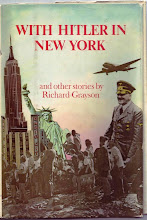
The scrambled nature of things and events isn't what gets your attention in Richard Grayson's new book of short stories. No, it's the incessant familiarity of the writer's secret self that makes his world entertaining and bizarre. The latest in a line of oddball collections with names like "With Hitler in New York" and "I Brake for Delmore Schwartz," "I Survived Caracas Traffic" features stories that are thickly populated with accident-prone people. One piece portrays a man whose great-great-grandfather made a liverwurst sandwich for the surgeon and medical researcher Walter Reed. (Reed died, but not from the sandwich.) Another has its protagonist slouching around a Brooklyn apartment with the Pope, who suggests they go out for a beer: " 'Oh, I don't know, Your Holiness, I feel awfully guilty about not writing anything lately. . . .' 'Don't be like that,' he admonishes me. 'You know what a useless emotion guilt is.' " The dialogue is consistently, even ingeniously funny. However, it's unsettling to find that you've polished off this entire batch of stories but can't remember exactly what they're about. Mr. Grayson excels at diverting the flow of action so nothing expected ever happens. But his results are inconclusive. This book is a perplexing piece of gadgetry: hard to come to grips with, not sturdy enough to make a good can opener for the conscience, far too bright and keenly made to flick casually away.
Sally Eckhoff
Friday, August 12, 1983
New York Times Book Review reviews Richard Grayson's I BRAKE FOR DELMORE SCHWARTZ


This coming Sunday's New York Times Book Review features a review of Richard Grayson's I Brake for Delmore Schwartz:
The New York Times Book Review
Sunday, August 14, 1983
Page 12 (continued on page 29)
Uneasy in Brooklyn
THE ONE-STAR JEW
By David Evanier.
223 pp. Berkeley, Calif:
North Point Press. Paper, $15.
I BRAKE FOR DELMORE SCHWARTZ
By Richard Grayson.
95 pp. Somerville, Mass:
Zephyr Press. Paper, $4.95.
By IVAN GOLD
A character named Bruce Orav has been spooking David Evanier for a good part of Mr. Evanier's creative life. Orav is a writer from Brooklyn, with divorced parents (a real couple of characters) to whom he remains in emotional bondage. He has an equivocal sense of his Jewishness; a number of idiosyncratic shrinks (some of whom he abandoned, some of whom abandoned him) trail in his wake; and he is a party to a never-ending quarrel, most of its battles lost, with the recalcitrant stuff of life, in his attempt to wrestle it into some kind of fictional shape.
Orav was about to turn 30 when Mr. Evanier's earlier account of his misadventures, "The Swinging Headhunter" (1983), came to a halt, and Orav has just had his 40th birthday as "The One-Star Jew" ends, or almost ends: These 14 stories that jounce Orav (along with his wife, Susan, and stepson, Danny) through his 30's are not quite chronologically arranged. Thirteen of them have appeared previously in magazines (three in The Paris Review, of which Mr. Evanier is fiction editor), and the title story was reprinted in "Best American Short Stories, 1980," so that there would seem to be some sort of consensus—although I am not able to share it—that each Oravian chunk has enough density to stand on its own.
These first-person narratives range in size from three pages to 42. In an example of the former ("A Safe Route on Eighty-Third Street"), Orav and his wife, who remains an extremely shadowy figure in these pages, endeavor to sublet an apartment from a dotty lady on the East Side, then think better of it. The story "The One-Star Jew" is, on the other hand, a lengthy account of Orav's employment at "JFI" ("Jews for Israel"). Or more accurately, since Orav, despite his first-person narration and a liberal but arbitrary smattering of his dreams and memories, is not much more clearly rendered than his wife, it is the account of the quirks and crochets and sex lives and medical histories of the two men in their mid-50's with whom Orav works most closely. There is probably a first-rate novella to be written about office politics and personalities in a fund-raising organization, with or without the Jewish touch, but this is not it.
Fortunately, Orav's attempts to reduce his parents to subject matter are continually thwarted by these bouncy individuals themselves. Orav's short story entitled "My Mother Is Not Living," which she has read, is probably think indeed next to the woman in the flesh, eked out by Orav's painful memories of her old maternal failings—for example, the time she neglected to rescue him from the attentions of her hairdresser, who, making a house call, fondled the 10-year-old in the bathroom, under the cover of cutting his hair. And the fact that his father ("I have used my father as a guinea pig for my stories and poems most of my adult life") totes around with pride a copy of an unflattering description of himself written by Orav, and "whips it out to show to strangers," is a far more arresting piece of business than the description itself.
But the book's most splendid creation lives in the story "The Lost Pigeon of East Broadway." Widowed and crippled, the 84-year-old Annie Blocker survives quite nicely, thank you, the do-good weekly visits of Orav and Susan as well as the barbed attentions of a series of "black Home Care workers," who, if they bear her no ill will to begin with, are soon enough sucked in by her cantankerous combativeness. Annie Blocker ponders the larger questions: Is a wheelchair really any less humiliating than a walker? Can a Jewish man be a crook? (Yes, she decides, when she remembers Rabbi Louis Ribman, "king of the nursing homes.") She is bigoted, canny, loving, ungrateful, witty and obscene. Where do they come from, Orav wonders, these people still clinging to life on the Lower East Side, "these new old Jews?" The whole of this collection may or may not add up to more than the sum of its parts, but Annie Blocker is worth the admission price.

A less hefty tariff will gain you access to Richard Grayson's fifth book, "I Brake for Delmore Schwartz," whose title may have had life as a bumper sticker before it was placed on this collection of 15 short stories, all previously published in little magazines like The Smudge and Street Bagel. The stories generally revolve around a chap named Richard Grayson. This character, like Mr. Evanier's, is a writer from Brooklyn, uneasy in his Jewishness and very concerned with the esthetics and mechanics of turning things into fiction, and fiction into things.

Mr. Evanier's and Mr. Grayson's stories are full of insanity, nutty therapists, cancerous relatives, broken homes, fiction workshops, youthful theatricals at Catskill bungalow colonies and the morbid wizardry of telephone-answering machines. Writing at less than the top of the their forms, both writers appear as sensibilities in search of story, grab bags of meaningful memory, acute perceptions and mordant social comment, which neither seems able to sift through and transform into art. Yet now and again for Mr. Grayson the shticks become inspired, as in a two-page meditation on the letter "Y" ("Y/Me") in the present volume and in the story "Inside Barbara Walters" in "Disjointed Fictions" (1981).
The histories of some of Mr. Grayson's other characters, like that of Saul in "That's Saul, Folks," are artfully telescoped and given equal valence with the history of the times. That is to say, where were you, reader, when the lights went out for the city of New York? In "Is This Useful? Is This Boring?" fictional beings named Joyce Carol Oates and Donald Barthelme square off over the issue of the fragment as a viable literary form, but then they patch up their differences. The title story threatens for a while to turn into a well-made story about two friends involved with the same woman, and both fearful, in the computer age, of continuing to lead the hand-to-mouth artistic life, but it pulls back just in time. If one is not blessed with a gift for extended narrative (a problem Mr. Grayson faces squarely in "How Not To Write a Novel" in "Lincoln's Doctor's Dog and Other Stories," 1982), then why not go for the spring? And in a 24-page pamphlet, "Eating at Arby's" (1982), Mr. Grayson mastered, or invented, a style equidistant between Hemingway's short stories and Dick and Jane, a feat probably useful and, at that length, far from boring.
In "Nice Weather, Aren't We?" in the present collection, the grandfather of the character Richard Grayson has been leafing through an anthology of Jewish stories put together by a famous writer named "Ballow." "He looked at me conspiratorially. 'Personally,' he said, 'I prefer your little antidotes,'" Others may, too.
________________________________________________________________________
Ivan Gold is the author of "Nickel Miseries," a collection of stories, and "Sick Friends," a novel.
Friday, January 14, 1983
New York Times Book Review column "About Books and Authors" features Richard Grayson and LINCOLN'S DOCTOR'S DOG

The January 16 1983 "About Books and Authors" column of the New York Times Book Review features an item about Richard Grayson and Lincoln's Doctor's Dog:
New York Times
January 16, 1983
Book Review
Page 22
ABOUT BOOKS AND AUTHORS
By EDWIN MCDOWELL
An Anemic Send-Off
APRIL may be the cruelest month for poets and taxpayers, but for booksellers nothing approaches the cruelty of the first and second weeks after Christmas, when sales typically plummet by about 65 percent. Unit sales of hard-cover fiction during the last week of 1982 fell 71 percent compared with Christmas week, while sales of books on the hard-cover general list dropped 66 percent.
Given that anemic send-off into the new year, it is hardly surprising that most of the book industry can't wait for warmer weather. Look at January 1978:
According to New York Times computer-ranked sales of best sellers, sales of hard-cover fiction best sellers totaled only one-third of those of the previous month. The comparison was slightly better the following year. Last January, after an especially poor December, sales rose to 55 percent of the previous month's total. Sales of hard-cover general best sellers have followed a similar pattern over the past five years.
In some parts of the country the lag continues well into February. ''We usually don't pick up again until almost March,'' a bookseller in Philadelphia said, adding that January is a great month for browsers, ''because they have the store practically to themselves.'' Yet because sales depend on the weather as well as on the availability of big books, January has occasionally lost out to February, April or even May as the worst month for hard-cover book sales.
During slow seasons, however, there is still considerable movement in the relative position of individual titles. A good example is ''In Search of Excellence: Lessons From America's Best-Run Companies'' by Thomas J. Peters and Robert H. Waterman Jr. The book sold few copies in the major chain stores during Christmas week and ranked only No. 29 on the Times list. But now it is eighth on the list, with the chains accounting for 31 percent of total sales.
Happy Anniversary
FEW books remain on the Times best-seller list for more than a couple of months, but this week ''Jane Fonda's Workout Book'' marks its 52d week, even moving up a notch to second place. Meanwhile, although Shel Silverstein's ''A Light in the Attic'' slipped from 5th to 13th place, the book of cartoons and verse is currently celebrating its 61st week as a best seller.
Unforgettable Titles
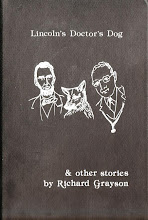
WE reported here some months back that Richard Grayson, searching for a formula that would guarantee best sellerdom, had titled his forthcoming collection "Lincoln's Doctor's Dog & Other Stories." A number of readers noted that George Stevens published a book titled "Lincoln's Doctor's Dog & Other Famous Best Sellers" in 1939. Mr. Grayson said he had not known of the Stevens book, but he was so taken by his version of the title that he decided to stick with it.
The idea sounded good in theory: Since individual titles about Lincoln, doctors and dogs have tended to do well, one that combined all three subjects might do three times as well. Alas, that has not been the case. Sales figures for the Stevens book are not available, although it does not seem to have been a best seller. But the Grayson book, published last spring, has sold fewer than 200 copies. ''The only thing I can come up with,'' the author said after making it clear that he does not regard the sales figures as a literary judgment, ''is that Lincoln isn't as popular as he used to be.''
Mr. Grayson, who teaches creative writing at Broward Community College in Fort Lauderdale, Fla., has written four books that have sold a total of about 1,350 copies. Whether or not they are memorable as literature, their titles tend to be unforgettable: An earlier Grayson book was "With Hitler in New York," and Mr. Grayson's latest effort, a paperback for which he received $3,000 from the Florida Arts Council, is titled "Eating at Arby's." Scheduled for publication next month is a new opus: "I Brake for Delmore Schwartz."

Sunday, May 3, 1981
Richard Grayson letter in The New York Times Book Review: "Mass Sensibility"

Richard Grayson and his brother Jonathan Grayson have a letter in the New York Times Book Review today (May 3, 1981), "Mass Sensibility":
To the Editor:
In his review of Michael Arlen's "The Camera Age" (April 12), Robert Brustein supposes that the literary sensibility and the mass sensibility never meet in today's world. He poses the question, "How many readers of this review can actually identify the lead actresses in 'Laverne and Shirley,' or the host of 'The Price is Right,' or the central characters in 'Dynasty' -- names that are bywords to millions of fellow Americans?"
In the interest of healing the great American cultural schism, we thought we'd answer Mr. Brustein's questions: (1) Penny Marshall and Cindy Williams; (2) Bob Barker (formerly Bill Cullen); (3) Denver oil tycoon Blake Carrington, his unfaithful wife, homosexual son and nymphomaniac daughter.
These were easy. Can we come back next week and try for more prizes?
JONATHAN GRAYSON, RICHARD GRAYSON, Davie, Fla.
Subscribe to:
Posts (Atom)