Showing posts with label 1969. Show all posts
Showing posts with label 1969. Show all posts
Monday, September 20, 2021


Thursday, April 6, 2017
A 30-Year-Old’s Diary Entries From Late July, 1981 | Thought Catalog

This post marks the close of the twelve years (and 1.4 million words) of diary entries published on Thought Catalog that cover age 18 to age 30, August 1969 to July 1981.
Friday, January 18, 2013


Thursday, January 10, 2013

Friday, January 4, 2013

Wednesday, December 26, 2012

Monday, December 17, 2012

Thursday, November 29, 2012

Saturday, December 31, 2011
Art Pants Company publishes Richard Grayson's BOY MEETS BROOKLYN


Richard Grayson has been keeping a daily diary compulsively since the summer of 1969, when he was an 18-year-old agoraphobic about to venture out into the world -- or at least the world around him in Brooklyn. His diary, approximately 600 words a day without missing a day since August 1, 1969, now totals over 9 million words, rivaling the longest diaries ever written.

But Grayson is not merely an eccentric with graphomania. His nonfiction has appeared in PEOPLE, THE NEW YORK TIMES, THE ORLANDO SENTINEL, THE SAN JOSE MERCURY NEWS, THE ARIZONA REPUBLIC, THE NEW YORK POST and numerous other periodicals.
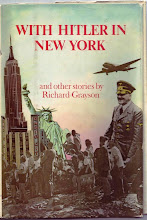
ROLLING STONE called Grayson’s first short story collection, WITH HITLER IN NEW YORK, published in 1979, “where avant-garde fiction goes when it becomes stand-up comedy,” and NEWSDAY said, “The reader is dazzled by the swift, witty goings-on.”
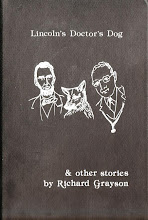
Grayson’s other short story collections have also received acclaim. LIBRARY JOURNAL called LINCOLN’S DOCTOR’S DOG (1982) “excellent” and said of I BRAKE FOR DELMORE SCHWARTZ (1983) that “Grayson is a born storyteller and standup talker.” THE NEW YORK TIMES BOOK REVIEW said Grayson’s I SURVIVED CARACAS TRAFFIC (1996) was “entertaining and bizarre” and “consistently, even ingeniously funny.”
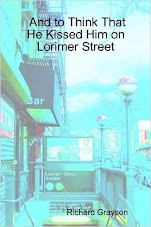
PUBLISHERS WEEKLY called Grayson’s THE SILICON VALLEY DIET (2000) “compulsively talky and engagingly disjunctive”; KIRKUS DISCOVERIES termed Grayson “an audacious and wickedly smart comedic writer” in its review of HIGHLY IRREGULAR STORIES (2005); and THE PHILADELPHIA INQUIRER, reviewing AND TO THINK THAT HE KISSED HIM ON LORIMER STREET (2006), said, “Grayson has a fresh, funny voice.”
Boy Meets Brooklyn begins in August 1969 and ends on New Year's Day 1971.

Grayson has already published the next six volumes of the diaries of his late teens and twenties as THE BROOKLYN DIARIES, featuring SUMMER IN BROOKLYN: 1969-1975; WINTER IN BROOKLYN: 1972-73; SPRING IN BROOKLYN, 1975; AUTUMN IN BROOKLYN, 1978; MORE SUMMERS IN BROOKLYN: 1976-1979; and A YEAR IN ROCKAWAY, 1980.
The second set of six volumes of his diaries have been published as THE EIGHTIES DIARIES, which include SOUTH FLORIDA WINTERS, 1981-1984; LATE SPRING IN SUNRISE, 1982; WEST SIDE SUMMERS, 1984-1987; INDIAN SUMMER: PARK SLOPE, 1985; SPRINGTIME IN LAUDERHILL, 1986; and EIGHTIES’ END: AUTUMN, 1987-1989.
Five volumes of THE NINETIES DIARIES published include SUMMER IN NEW YORK: 1990, LAST SUMMER IN ROCKAWAY: 1991, FIRST FALL IN GAINESVILLE: 1991, SPRING IN GAINESVILLE: 1992-1994, and AUTUMN IN GAINESVILLE:1994-1996.

Friday, September 23, 2011
Friday Afternoon in Williamsburg: After 41+ Years, Watching the Last Episode of "All My Children"

We were 18 years old and in our first semester at Brooklyn College on Thursday, December 11, 1969 when we read this article in The New York Times:

SOCIAL ACTIVISM GRIPS SOAP OPERA
Heroine on Serial on A.B.C. to Be a Mother for Peace
By George Gent
The daytime serial, or soap opera, is in the process of going activist.
Behind the agonized cries emanating from the traditional themes of troubled marriages, misalliances and fortune-hunting males, a soul engagé is apparently struggling to emerge and, if the signs are right, its time may have come.
The latest indication of what may be a trend comes from the American Broadcasting Company, which has announced that it will televise, starting Jan. 5 at 1 P.M., a new daily daytime series entitled "All My Children," whose heroine will be a peace activist married into a wealthy conservative family.

We were then involved in the antiwar movement, having worked in the New York headquarters of the Vietnam Moratorium in October, and active politically as a volunteer in Mayor John Lindsay's re-election on the Liberal Party line a few weeks before. The week All My Children premiered, we were in the viewing audience most days, except when we had our draft physical and French final.
We also loved soap operas, which had gotten us through some hard times in our teenage years and which we'd be watching for the rest of our life.

After a few weeks, All My Children didn't seem all that radical. A Sunday Arts and Leisure article in the Times dealt with the Vietnam War storyline, but clearly the usual soap opera plots held sway in Pine Valley. That was fine with us, too, and we kept watching -- not totally faithfully, but periodically and sporadically, as we moved into our twenties, thirties, forties and fifties.

Wherever we moved to, whatever our problems, we could turn on ABC at 1 p.m. or 12 p.m. or whatever time All My Children was on in that TV market, and we'd see familiar faces from our past.
Now we're 60 years old and All My Children aired its last TV episode this afternoon. (It will reappear next year as an online serial from Prospect Park (a different one than we've been going to since the 1950s).
Heavy rain and an age-related sports injury (torn gluteal muscle) prevented us from getting up to the Upper West Side to Soap Opera Digest columnist Carolyn Hinsey's farewell viewing party at Blondies Sports Bar, just a few blocks from the apartment where we used to watch the show in the 1980s.

But it was nice to see the finale at home by ourselves, the way we usually watched the show.
Saturday, March 13, 2010
"18 X 1969" by Richard Grayson now available at Amazon Kindle store

Richard Grayson's 18 X 1969 is now available at Amazon's Kindle Store for 99¢.
Here is the promo material for the 104-page $6.99 paperback edition from Art Pants Company:

In 1969, an 18-year-old boy becomes obsessed with an actress from an X-rated movie. Teenage Tarzan wants to get to know the southern parts of Nashville Pussycat. College students face pregnancy scares and speeches by racist physicists. In Wisconsin, David can't fall asleep next to his ex-girlfriend for fear that he'll get an erection during the night. A young superhero rescues his beloved psychologist from an evil gorilla but falls into a depression afterwards. A drug-addled adolescent mourning the death of his sister flirts with his father's young wife in his maternal grandparents' bedroom. A 16-year-old girl meets a boy on a bus who correctly guesses that she plays the flute.
In these weirdly affecting, sweetly sensuous stories, Richard Grayson paints portraits of the generation that came of age in the Age of Aquarius. First published decades ago, these stories prove every bit as relevant today as they did back when peace symbols first became fashionable and summers of love lingered too long.
These stories originally appeared, in somewhat different form, in the following literary magazines: Mississippi Mud, 1978; Junction, 1976; Snapdragon, 1979; Chunga Review, 1980; Maxy’s Journal, 1978; Westerly Review, 1976; Not Guilty!, 1981; and Waters, 1978.
Thursday, October 15, 2009
Forty Years Ago Today in New York: The Vietnam Moratorium, October 15, 1969

Forty years ago today, October 15, 1969, was the Vietnam Moratorium. We're reprinting Richard Grayson's memoir, "Moratorium," which was originally published on the 35th anniversary in 2004 by Rouse Magazine (long since gone) and later reprinted at Hackwriters.com:

On Saturday, October 5, 1969, I got up early and took the subway from my home in Brooklyn to the Manhattan headquarters of the Vietnam Moratorium Committee at 150 Fifth Avenue.
The Committee’s office was four blocks from the factory and showroom loft where my father, grandfather and cousin ran Art Pants Company, our family business. I was 18 and had started Brooklyn College a few weeks before. Thirty-five years ago I was sure of maybe three things. I wanted to try to be a writer. I loved the New York Mets. And I hated the stupid war in Vietnam.
Richard Nixon had been President since January and had done nothing to bring a conclusion to the conflict that had driven Lyndon Johnson from office. Things actually seemed to be getting worse. The Paris peace talks were going nowhere. Every day soldiers were still being sent to Vietnam. Thousands of them had already been killed or injured. Tens of thousands of Vietnamese had died in the war.
The Moratorium was going to be a national day of protest on Wednesday, October 15 – a kind of general strike by the peace movement, with all sorts of different local activities, from rallies and prayer vigils to marches and reading aloud the names of the war dead. Its leaders were people like D.C.s Sam Brown, active in the Clean for Gene student movement backing peace candidate Eugene McCarthy in 1968, and New York’s Adam Walinsky, who’d been a speechwriter for Senator Robert Kennedy. These were activists who, like me, still believed in the political process. I’d worked for peace candidates since I was 16 and that fall was working in the campaign of New York Mayor John Lindsay, running for re-election on the Liberal Party line.
Planning for M-Day had started on college campuses, but its leaders wanted to involve all kinds of people – in churches and union halls and businesses and small towns.
When I walked into the Moratorium office that Saturday morning, my only intention was to buy some buttons, so I went straight to a table where some high school girls were selling peace-related merchandise. I was pretty shy but I could deal with high school girls. For three dollars, I bought thirty dark blue buttons that said “moratorium” in white lower-case sans-serif type. I also got a big blue-and-white poster with a dove on it that said Vietnam Moratorium: October Till The End Of The War.
I was considering whether to buy some candles or black armbands – sold with free safety pins – or some “Work For Peace” ribbons when suddenly this girl in her mid-twenties grabbed my arm, saying, “I need a strong young man to carry up some boxes from downstairs.” I was anything but strong. Still, I was delighted to put my stuff down on the table and be led around by this girl, who was at least a head taller than me.
Her name was Peggy, she told me as I struggled to keep up with her as we ran down the stairs. She said she’d just walked in one day like I did, and they’d put her to work right away. Suddenly Peggy found herself organizing things and people.
A delivery truck had dropped off about twenty cartons in front of the building. It occurred to me that if my grandfather were still at work just down Fifth Avenue – he came in on Saturday mornings to sell pants wholesale to people in the know – I could go over there and get one of Grandpa Nat’s hand trucks and save us a lot of effort.
But Peggy had already hoisted up one carton and I didn’t want her to think I was a pussy, so I grabbed a carton and went back into the building with her. Some other guys and girls joined us, and it didn’t take as long as I’d thought to carry everything upstairs. Then Peggy told me to open the cartons and put the literature in them in packets. Some needed to be mailed out, and others had to be sorted and sent to the various campuses or other locations for M-Day events. That first day at the Moratorium HQ, Peggy had me answering phones and stapling anti-war signs to sticks and getting people sandwiches and drinks from Squire’s Coffee Shop across the street.
After I’d been there about five hours, she introduced me to Adam Walinsky, calling me “one of our hardest workers.” “Great,” Adam said. “We can always use people like you.” He was about the only guy in the office who wore a white dress shirt and a tie.
At the end of the day Peggy and Adam let me sit at the merchandise table alongside a grizzled Vietnam vet who wore a leather jacket that said 'When I die I’m going to heaven ‘cause I’ve spent my time in hell'. He shocked me by saying he was only 23.
Just before we were about to close around 5 p.m., the vet was telling me a long story about how he got off smack when two society ladies sauntered in, the kind of Park Avenue “beautiful people” I’d only read about it in magazines. One of these woman said she was looking for a black rosette for her Yorkie to wear on M-Day. 'Sorry, we don’t have any rosettes,” I said. I made a mental note to look up the word in the dictionary when I got back home. They bought some buttons and posters, and one lady was about to take a cloth black armband for her husband – I imagined him to be on the board of some big corporation – when the other lady said not to because they were selling silk black armbands at Abercrombie and Fitch. The vet snorted. As we left the office, he told me he didn’t even need a cloth black armband; one made of crepe paper was good enough for him and should be good enough for anyone.
I said I was glad all kinds of people were taking part in the Moratorium.
On the subway heading toward Brooklyn, I felt more exhilarated than tired even though I’d been working all day. An elderly black lady sitting next to me on the 3 train pointed to my rolled-up poster and asked, “Is that a Beatles poster?” “No,” I said, and unrolled it for her to look at.
She just smiled and nodded her head. Mom let me put the poster in our living room window with scotch tape, and on Sunday, doing my French homework on our porch, I kept staring up at it, thinking how cool it looked.
But the next morning, the sanitation men wouldn’t unload our garbage cans until Mom ran out and yelled at them, saying what they were doing was illegal, that they had to empty our garbage cans no matter what they thought of our poster. The sanitation men grumbled, but finally they put our garbage into their truck. I told Mom we should take the poster out of the window, that I’d rather have it in my room anyway.
The next ten days, I alternated between working in the Manhattan headquarters and doing Moratorium-related stuff at Brooklyn College. Somehow I managed to go to all my classes and do my homework and freshman comp essays and take my quizzes, too. And I watched the Mets on their incredible march to the pennant.
Everyone seemed to be talking about the Moratorium all the time, and I became optimistic that the war would end soon. I knew October 15 would not just be another day and that Nixon would have to listen to the thousands of people telling him we wanted to get our troops out of Vietnam.
Sixteen U.S. senators – eight from each party – had endorsed the Moratorium, along with over 50 House members, and other elected officials. Several Roman Catholic cardinals, Protestant groups, and the American Jewish Congress announced their support, asking people to take part in peace-related activities.
At City University of New York, our Board of Higher Education approved a resolution saying faculty and students at all the schools could take part in M-Day, and campuses across the country announced that classes were being suspended on October 15. Mayor Lindsay said city flags would fly at half-mast that day. Adam opened the Manhattan moratorium headquarters early on Sunday morning, October 12. There was still a lot of work to do. Someone brought in a TV and on CBS’s Face the Nation, Sam Brown talked optimistically about how the outpouring of nationwide antiwar sentiment on Wednesday would change everything.
Later, as I worked on getting last-minute mailings out, I heard Adam and Peggy saying how important the New York rallies outside the city were. Adam was going to go to rallies around the state that day, in places like Buffalo and in Syracuse, where New York’s Republican Senator Goodell, who had introduced a bill calling for all troops to be out of Vietnam by the end of 1970, would be the lead speaker.
The Moratorium Committee had rented a little plane for Adam. Peggy’s brother, who was a pilot, was going to fly him from place to place and then back to New York City.
“Wow, I’m glad I don’t have to go with Adam and your brother,” I told Peggy in a rare moment when she wasn’t too busy. “I’m not crazy about flying even in regular jets. Actually, the one time I flew, I was really freaked out.” Peggy assured me that I’d get used to airplanes when I got older and more experienced.
The next day was the Columbus Day holiday, so I came in to the city to work. Things were getting frantic, but by then we actually had more volunteers than could comfortably fit in the office. By early afternoon, when we were working on pulling together packets of literature for the various demonstrations, there weren’t enough seats for everyone. Adam said I could sit at his desk when he went out to lunch with Peggy and her brother, and that’s where I sat when I was interviewed for TV, twice – once for the news on WOR, New York’s channel 9, and once by a crew from the BBC.
When Adam and Peggy came back from lunch – her brother had to go to the Brooklyn Navy Yard, she said – I relinquished Adam’s chair, and as I excitedly told him about being interviewed, he patted my head and said, “And I thought you said you were shy.”
When I came back from fetching coffee and cokes from Squire’s, a Columbia grad student with granny glasses and a goatee showed me a copy of that afternoon’s New York Post.
In his column, Pete Hamill had written about us! I hadn’t realized he’d been in the headquarters on Saturday. “Something oddly magnificent is happened in that queer-shaped yellow-walled office,” Hamill wrote, and then said of the Moratorium, “It’s going to be the biggest, loudest 'NO' anyone’s heard… The way to get out of Vietnam is to just get out.” The grad student from Columbia talked about the momentum being unstoppable. There were going to be all kinds of actions everywhere, from Wall Street to Madison Avenue to Harlem. Kids from elementary school to college were going to be demonstrating on Wednesday.
I told the Columbia guy that he was lucky because Mayor Lindsay was speaking at his school. We weren’t going to have anyone that famous at Brooklyn College. He said it was still important for everyone to go back to their own schools or neighborhoods. I said goodbye to everyone, including Adam and Peggy, before I left Manhattan on Monday night.
The next day, as I arrived on campus at BC, my oldest friend Linda – we’d known each other since second grade – and her boyfriend Howie, a disc jockey on the campus radio station, ran over to congratulate me for my appearance on the channel 9 news the night before. I’d forgotten to watch it myself.
On the quadrangle, we started an hours-long reading of the names of the soldiers who had died.
Some Young Americans for Freedom, right-wing students who supported Nixon and the war, started shouting that we were all commies, but there were a lot more of us than there were of them and eventually they got tired and left.
At 4 p.m., the reading over, I went to my health ed class, which back in those days was just for boys. Mr. Aronin, the teacher, had us talk about the war, which is what we all wanted to do. Not one person, not even the vets, spoke for the President’s policy.
The next morning I woke up early and put on WBAI, Pacifica radio, which promised 19 consecutive hours of coverage. For mid-October, it was a chilly, blustery day. I got to Brooklyn College at 9 a.m. and someone gave me leaflets to hand out at the Junction, the intersection of Nostrand and Flatbush Avenues, right by the subway stop.
Within five minutes of my standing there, someone spit at me and two people told me I should go back to Russia. I wiped off the spit and didn’t say anything. An old white lady must have taken pity on me or something and came over to tell me how her nephew had had his legs shot off in this “horrible, horrible war.” Then she started crying, and then I started crying, which I hadn’t done when the people were harassing me.
Eventually Linda and Howie came by with our friend Jeane, who I went to Midwood High with, and on the campus quadrangle the four of us positioned ourselves up front.
The rally at Brooklyn College didn’t have the biggest names – our speakers included Howard Samuels, an upstate industrialist running for governor; Manhattan Assemblyman Jerry Kretchmer; Mrs. Cora Weiss of Women’s Strike for Peace, who’d just come back from North Vietnam; and the Village Voice writer Joe Flaherty – but we all cheered them loudly as they each called for immediate withdrawal of our troops.
Then the “peace marshals” lined us up behind the pallbearers of a symbolic black coffin made of plywood, containing the lists of the thousands of soldiers who had died in the war, and we started marching up Flatbush Avenue, two by two. In the middle of the long line of demonstrators, Howie and Linda held hands in front of me and Jeane as we chanted “Peace now” and sang “We Shall Overcome.” Some passing drivers stuck their hands out the window of their cars and joined us in making the “V” sign for peace.
Others, driving with their headlights on in support of the war, cursed us. At one corner, two policemen made “W” signs for war. Suddenly the marshals stopped us from marching because a fight had broken out up front. The pallbearers were being attacked by half a dozen creeps who carried a 10-foot sign that said “BOMB HANOI!”
Howie, who worshipped Bob Dylan, said, “Something is happening, but those guys don’t know what it is.” Jeane wanted to go help the pallbearers, but Linda reminded her we were here precisely because violence wasn’t our thing. Linda said the cops would take care of it. Linda turned out to be right: the cops did break it up, but instead of arresting the war hawks, they took away one of our guys. We started jeering. “I wish they’d arrest me,” Jeane said. “It would be a badge of honor.”
Linda said that an arrest would look bad on your record, no matter what it was for. She wanted to be a magazine writer and editor, but preferred writing features about fashion and food to stuff about politics. I tried not to get depressed by all the people who were against us. Why didn’t they get it? We stopped at Church Avenue, by Erasmus Hall High School, then walked across Flatbush Avenue to the old Dutch Reformed Church, and started marching back toward the Junction and Brooklyn College.
I cheered up when I passed The Book Worm, a little store where I used to buy my paperbacks, and saw Irv, the owner, in the doorway holding up a sign saying “War Is Not Healthy for Children and Other Living Things.” He recognized me and we exchanged peace signs. When we got back to school, Linda, Howie, Jeane and I went for hot chocolate at the Sugar Bowl. None of them were as into politics like I was, although Jeane sort of had this aggressive flower-child mentality. Still, like everyone my age that I knew, they were against the war. Howie was graduating in two years and Linda was afraid that even so far in the future, he could get drafted.
“That’s impossible,” I told her. “The war will be over long before 1971.”
My friends decided to call it an M-Day, but I got on the subway and took it to Times Square. I wanted to make the afternoon rally at Bryant Park.
The crowd there was enormous and I could barely hear the speakers, even with the amplification. I wished I had taken my transistor radio so I could listen to what they were saying over WBAI.
I stood on my tiptoes to catch a glimpse of Senator McCarthy or Mayor Lindsay, but I couldn’t really see them too well. The one remark that I did hear that most struck me came from the Yale chaplain, Rev. William Sloan Coffin: “Silence is treason when good men die in a bad war.” For some reason I felt depressed as I took the train downtown.
I decided to stop off at my family’s pants factory to see if I could get a lift home with my father. When Dad and I started out in his Cadillac from Union Square, I noticed that some kids about 15 or 16 were yelling at us. I opened the window and heard them shout, “Fascist!” Puzzled, I realized only while we were going over the Manhattan Bridge that the kids must have mistaken us for hawks because Dad had put his headlights on. But he’d done that only because it had started to get dark.Vietnam Moratorium (CBS) from Vietnam Moratorium Committee on Vimeo.
After watching the nationwide demonstrations on the 7 p.m. CBS Evening News with Walter Cronkite, I wondered how Adam and Peggy had spent M-Day and where the peace movement would go from here. I talked about it with my younger brothers – like them, over ninety percent of the kids in New York City schools had stayed home that day – and then I went to my room and studied for a Science quiz and fell asleep for ten hours.
When I got up on Thursday, things were no different in Vietnam despite what millions of us had done the day before. American involvement in that guerilla war would not end until the last helicopter left Saigon in defeat in 1975. On the other hand, I’d have to wait only a couple of weeks to see the New York Mets win the World Series in 1969.
More than 35 years later, Linda and I are still friends. Now a high-powered literary agent after a successful career as a magazine editor and nonfiction author, Linda is friendly with celebrities like Phyllis Diller and Richard Simmons. Her penthouse is just off Fifth Avenue, across the street from the old Art Pants Company loft and four blocks south of where, for a few months in the fall of 1969, the New York Vietnam Moratorium Committee had its headquarters. Most clothing manufacturers have left the now-fashionable neighborhood, which got a new name: the Flatiron District.
When I visit Linda, we often go to lunch at an expensive restaurant on the same block as 150 Fifth Avenue.
Soon after graduating from Brooklyn, Howie moved upstate to Woodstock and became a deejay for a station in Kingston. He and his wife named their son Dylan. Dylan has kids of his own by now.
Jeane is also a grandmother. Widowed young, she moved to Long Island and never remarried.
Adam Walinsky became the Democratic candidate for New York State Attorney General the year after the Moratorium. After a day of classes at BC, I walked over to the Junction to hear him make a campaign speech from the back of a pickup truck. I went up afterwards to see if he remembered me. Adam said of course he did, but I could see in his eyes that he really didn’t.
After losing to Attorney General Lefkowitz, the Republican-Liberal candidate, Adam became a neo-conservative. In a few years he was best known as the leading opponent of a proposed New York City gay rights ordinance. He spoke and wrote on the evils of homosexuality. In 1977, some friends I knew from the Gay Activist Alliance told me they were planning a “zap” of Adam’s house in the wealthy suburb of Scarsdale. I couldn’t go. I wanted him to be the way he was in October 1969 and remembered how he patted me on the head.
The Scarsdale “zap” was an important event in New York City gay history, “the night they raided Walinsky’s.” They said Adam’s wife was so upset she pressured him into not talking about gay rights again. He eventually became New York Commissioner of Investigation and lobbied for the Police Corps, a proposal that finally passed Congress in the Clinton administration.
Unlike Adam, most of us from the Moratorium days are still pretty liberal. Many of us have been actively opposing the Iraq war. I started to going on antiwar marches and attending peace rallies and candlelight vigils in early 2003 as a member of Peace South Florida. The night before we invaded Iraq, friends from the group Pax Christi and I read interfaith prayers at St. Maurice Catholic Church in Dania Beach.
Sam Brown, the national coordinator of the Moratorium, served as director of the Peace Corps in the Carter administration and later as ambassador to the Organization for Security and Cooperation in Europe. Sam and his wife Alison Teal criss-crossed the country in 2004, raising funds for candidates against the Iraq war.
Peggy, too, is still involved in politics. At an age when most of her friends were busy with grandchildren, she and her husband, an administrator at CUNY, adopted a baby from China, a girl probably abandoned by birth parents who wanted a son instead. Taking care of her little girl and working at her job at the U.S. Mission for the United Nations doesn’t leave Peggy much free time, but she became active in politics again. At the 2004 Republican convention, Peggy participated in an abortion rights march over the Brooklyn Bridge, and for in the fall she gave speeches in support of Democratic candidates.Vietnam Moratorium (NBC) from Vietnam Moratorium Committee on Vimeo.
As for Peggy’s brother, the pilot who flew Adam around the state on the day of the Moratorium – well, only in recent years did I find out that he had actually seen what went on in Vietnam for himself.
I saw Peggy’s brother only once at the Moratorium headquarters, on Columbus Day, and I never actually got to talk to him. But 35 years after the Vietnam Moratorium, hoping to end a different war, I voted for him for President.


Saturday, September 12, 2009
Saturday Morning in Midwood: Breakfast at Brooklyn College

Forty years after we started as a freshman at Brooklyn College in the fall of 1969 - we actually took our first course, Poli Sci 1, that summer - we were back on campus this morning as we have been on Saturday mornings since January 2008.
We're lucky enough to be teaching a 9 a.m. to noon class, The Short Story, for the wonderful Borough of Manhattan Community College's weekend BMCC@Brooklyn College program.

We've also been teaching classes for BMCC on the BC campus on Friday evenings - so we were here until 8:15 p.m. last night teaching a creative writing workshop. It's all been incredible, being back on this campus where long ago we had so many of our formative experiences.

We finished our B.A. in Poli Sci here in June 1973, then came back for the start of Brooklyn College's MFA program in creative writing from 1974 to June 1976. Before we moved to Florida, we taught day and evening sections of remedial writing for the English Department as well as the old Veterans Outreach Program and the Liberal Studies for Adults Program during the spring 1979 and fall 1980 semesters.

So all around us are memories. We took these pics on this damp silent morning as we made our way from the Hillel Gate to our classroom in Boylan Hall, stopping to sit on a bench and have a bite to eat.
Here's a view of parts of Gershwin Hall, the outdoor amphitheater and Whitman Hall. Our June 1965 graduation from Meyer Levin Junior High School (J.H.S. 285) at Whitman Auditorium was the first time we stepped on the campus.

Our friends from college who have not been at BC for years wouldn't recognize a lot of the campus. The library has expanded to what seems like four times its size in the old days, and these parts of the library are seamless additions to the old building we knew in the 70s.

We get here early on Saturday mornings, taking the B48 bus from the corner of Lorimer Street and Metropolitan Avenue around 7 a.m. The route takes us through the Latino and Hasidic south side of Williamsburg and then through Bedford-Stuyvesant and what we call Crown Heights but may be Prospect Heights.

Neighborhoods in Brooklyn don't have the same names we knew growing up in the 50s and 60s, or represent different parts of the borough. At Franklin Avenue and Eastern Parkway we get off the bus for the 2 train to the last stop, Flatbush Avenue-Brooklyn College.

Looking back to the Hillel Gate where we have to show our photo ID to the security guard, we can remember when anyone could get on any college campus without an ID. (The technology may not even have existed back then for photo IDs; our driver's licenses didn't have pics of us, either.)

As a junior and senior at Midwood High School in 1966-68, we'd often take a shortcut through the BC campus on our way from the Flatbush Avenue B41 bus or our Grandpa Herb's car on the days when he picked us up on his way to work at the Slack Bar on Fulton Street from his apartment in Rockaway.

We once went up to the bell tower of what used to be LaGuardia Hall late one Friday in the fall of 1970. A friend of a friend somehow had a set of keys to a lot of buildings and he took us up to the top, via a series of fire-escape-type ladders, at a time when the campus was otherwise deserted. Somehow we overcame our extreme fear of heights and were really impressed with the view. It was thrilling.

In those days, there was never any sound coming out of the bell tower. Now it chimes every fifteen minutes, and when we got out of our class at noon today, it played a long sweet melody. Brooklyn College stands in for Yale in the TV show Gossip Girl.

Although the Georgian buildings have the same dignity they did back in the day, like a lot of New York City, the campus was run-down and tacky in the 1970s.
This cat is one we've seen before. He used to be a lot skinnier.

Back in the late 60s and early 70s, kids who in retrospect look like hippies - um, that would be us - sat on the quadrangle and other places until it was mostly dirt and only patches of scraggly grass. The gingko trees and others seemed pretty but less majestic 35 years ago, and where the cat is standing there was one of four ugly temporary buildings to handle the overflow of baby-boomer students (more than twice as many as today).

The prefab temporary buildings were called T-1, T-2, T-3 and T-4 and we wrote in a school paper suggesting a "name that temp" contest to give them more memorable monikers. We suggested the one housing the Financial Aid offices should be called Monty Hall.

We can't tell if Whitehead Hall always had this much ivy or we just don't remember it. Back in the 60s and 70s, Whitehead, built in 1962, was the "new" building, and it held the social sciences departments like economics, poli sci, sociology ("sosh") and anthropology ("anthro").

In the Whitehead basement, about a month before our graduation, we were one of two students - our friend Carole Robinson was the other - who appeared along with Dean Nathaniel Jones and some alumni on a CUNY TV show about new careers or something. We wore a fake-velvet turquoise Edwardian sports jacket and came down with the chicken pox the next day.
When the show finally came on TV, our family and girlfriend were excitedly watching in our house's "finished" basement. At the first glimpse of ourselves, we ran upstairs screaming and only came back to watch after being coaxed that we didn't look or sound "that bad."
The Whitehead cafeteria was here when we were undergrads. The student radicals used to hang out here, as opposed to the fraternity and house plan kids who hung out in the much larger Boylan Cafeteria. By the time we were in grad school, it had become Kosher Country or maybe Kosher King, a low-rent, short-lived McDonald's/Burger King clone.

Now there's an addition to the building and all of it is the Library Cafe, open at all hours, with lots of computers for students. It's a comfy place with some tables, counters, and plush chairs and couches. They proudly serve Starbucks coffee here too, though never when we're there on Friday evenings and Saturdays.

This Saturday morning, we got our usual perfect oatmeal and venti unsweetened black iced tea at the Starbucks on the corner of Hillel Place and Kenilworth Place. It was the wonderful Greek greasy spoon Sugar Bowl in our day.

"Lime rickey for Blondie Boy," Andreas would say when we came in. (Old photos taken from the now-gone Brooklyn Junction blog.)

This looks toward the lower campus, to the quadrangle. This is Boylan Hall. It's pretty odd these past few terms to be teaching English for BMCC in rooms where decades before we took Afro-American Literature I with Prof. Dan Mayers or Dosteovsky in Translation with our favorite BC Russian professor, Spencer Roberts.

Sometime in 1971, a student came up to our second-floor LaGuardia Hall office of The Ol' Spigot, the day session (College of Liberal Arts and Sciences, "CLAS") student government newspaper, to complain that his bike had been stolen from the unlocked bicycle racks here. We were assigned to write an article and found a bunch of students whose bikes were also stolen.

Both student papers published editorials calling for better security, and the college created a little guardhouse for one of the Wackenhuts - the BC-contracted private security force back then - to stand watch over the bicycles.

In August 2002, when the 2003 edition of The Best 345 Colleges, published by the Princeton Review, ranked Brooklyn College number one in the country for the beauty of its campus, it caused much hilarity among our friends from undergrad days, who thought the designation must be a joke.
Most of our friends have lived outside New York for years - back in the 1970s we'd all sit around talking how none of us could wait to leave the city (we waited till January 1981, when suburban Fort Lauderdale and a job at Broward Community College beckoned). We tell them it's a lot prettier these days than it used to be. Whoever did the landscaping performed the highest of mitzvahs.

This is the front entrance to the library. In our day, in a different form - no side door, no grand steps, just a creaky revolving door in the entrance to the tattered lobby where we hung out amid forlorn-looking chairs and lumpy discount couches - this was the entrance to LaGuardia Hall.

LaGuardia housed the student affairs offices and student organizations - student government, newspapers, yearbook, etc. - and some random college offices as well as the day-care center our friends successfully fought for in 1970.

BC didn't have dorms, of course - it will soon have one - but LaGuardia Hall was basically where we lived from 1969 to 1975 or so. A lot of our current close friends, including our BFF whose family's Williamsburg house serves as Dumbo Books HQ, we met in LaGuardia Hall. This plaque is really the only thing left to indicate that LaGuardia Hall existed.

At the base of the bell tower is the clock, which didn't work that well back when Lindsay and Beame were mayors and John W. Kneller, who passed away recently, was Brooklyn College president.
It was most famous because a ball was stuck between two numerals - I think it was within "III" - and was visible in every photograph. How they got it out - or when - we have no idea. In the two years we've been working on campus, the clock has been working perfectly.

So we sit on our bench in front of the former LaGuardia Hall with 40 minutes to go before class - teachers really need to be in the room at least ten minutes early to set up and put stuff on the board - with our oatmeal and iced tea and have our breakfast.
The campus is mostly still at this hour on a Saturday morning, the only sounds occasional chirping by birds. Back in the 60s and 70s, there were never any classes on weekends, and we came only for the library and special events like films, plays, and sit-in strikes.

As we get up to leave, we can look towards Bedford Avenue to see the brand-new West Quad and the new big building across the street. While we were students here in the 70s, they built an overpass over Bedford Avenue and steps leading to the quad (now, we suppose, the "east quad," destroying the Bedford Gate entrance. (Photo courtesy the indispensible Forgotten New York.)

A hideous cubelike structure called the Plaza Building went up. (Old overpass pic courtesy of the great Flatbush Pigeon blog.)

When we taught a class in the Plaza Building's basement in the fall of 1980, we'd sometimes have to walk through an inch or more of water as it flooded frequently. The only nice thing about the structure was the view of the campus from the overpass, as in this pic Jeffrey W. posted to Yelp:

The Plaza Building and overpass were demolished four or five years ago, replaced by the West Quad building, which is a big improvement.

The pics here are only from a small part of the campus, the part we traveled on our way to class. There are many more beautiful places on the Brooklyn College campus, like the lily pond - again, back in our day it wasn't as pretty as in this pic from the BC website.

On the G train going home after class, we saw a hipster with a Gators T-shirt and asked him who UF was playing today. "Troy," he told us. "It will be a slaughter." He had been, of course, a University of Florida undergrad; we went to law school there and later worked at UF, so we go "Go Gators!" too.

But we're pretty loyal to Brooklyn College and we even served on the Board of Directors of the Alumni Association and wrote the "Class Notes" for its bulletin from our graduation in 1973 till when we moved to Florida in 1981. (There's stuff about that from 1978 in our new book, Autumn in Brooklyn.)

So we're really grateful to Borough of Manhattan Community College (we've taught at seven community colleges in three states and BMCC is really well-run: start there, go anywhere) for giving us the privilege of coming back to the Brooklyn College campus to teach.

Subscribe to:
Posts (Atom)